




























































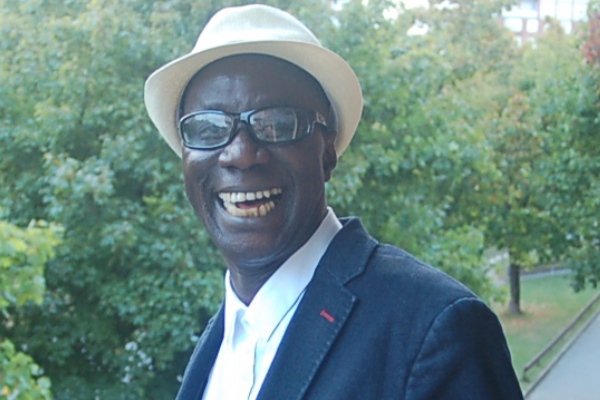


The Gambian kora player Lalo Kebba Drammeh, was born in the village of Kwenala in Kiang. He spent most of his adulthood in Senegal, cruising between Cassamanse and Dakar, Kolda and many other parts of Senegal and The Gambia and Guinea Bissau. He had two brothers Lalo Din Din Drammeh and Kabura Drammeh. He lived and worked in Dakar with the Daniel Sorano Senegal National Troupe.
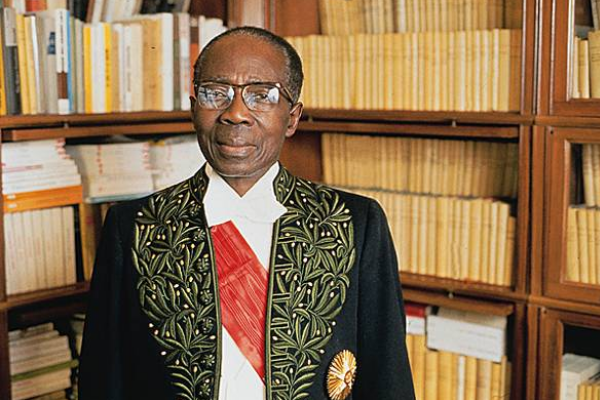
Lalo was named and christened under the eldership of Foday Burama Sagnia. He became a heavy pipe smoker, with a deep speaking voice and a sharp, soft tenor singing voice. He was favoured by President Lepold Sedar Senghor.
A master of the Kora instrument, he tuned his kora once and never between songs as done by most Jalis. Before playing the kora, he’d lose the strings from previous tunings and re-tune the Kora tightly with a special technique in a pattern that allowed him play all kora tunes fluently according to the kora scale patterns.
There are four kora scale patterns used in playing the varied notes to make a coordinated tune. They are the Silaba, the Swauta, Hadirin and the Tomoroba. All of these kora scales are incorporated in Gambian kora music unlike the kora sound of Mali, Guinea, Guinea Bissau and Senegal. In these countries musicians play one scale and use it as a national sound symbol identified as the national local tune. This difference makes the Gambia kora player more versatile than others and creates more songs and anthems than others.
Lalo Kebba Drammeh married Njai Bah, granddaughter of Wandifing Joberteh, as first wife. Joberteh was a kora player and renowned griot. He travelled on horseback and would never get off the horse unless he was asked to play and then he will set his demands, which were high. He composed many epic kora songs including Alla la ke and Tare Jatta and many more. Once he played for a king and requested his wife. The king assented. Wandifeng Joberteh was like the Holy saint St. Francis of Asisi: When he played birds would flock around him whistling and singing his songs.
Lalo Kebba was a mystical person who attributed his powers to spirits and prayer. He disappeared from his family for eight days and no one could find him and on his appearance again he said that all he could remembered was that his friend Malang Sabally appeared to him and asked him to sit on his back, eyes closed and he flew off with him. He said he stepped on water and couldn’t remember the rest, but believed that he was taken by the Jinns and anointed with special powers.
This spiritual journey led Lalo Kebba to compose the epic song ’Djembaseng’. The Djimbaseng rhythm is a yenyengo rhythm; its rhythm pattern was used by Cassamance Kora player but made popular by Lalo Kebba Drammeh. Lalo Kebba made huge success with the yenyengo swing rhythm and blended it with his soft, sharp high pitched voice to claim the kora throne as the ultimate kora king that ever lived.
Lalo Kebba playing and singing hypnotized President Leopald Sedar Senghore who requested Laklo Kebba naturalize and become Senegalese.
Lalo Kebba refused. At the time President Senghor knew that The Manding Conference in London was fast approaching and as he was artistically aware, he demanded that Lalo Kebba performs under the banner of Senegal. He was also approached by musicians he knew and worked with for years as Samba Jabare Samb, Ndye Mbaye” Jitma” and many other Senegalese professionals of the Senegalese National Troupe but Lalo respectfully disagreed.
In the Gambia, President Jawara was also planning to send a troupe to England and also had Lalo Kebba on his list. The battle for Lalo Kebba was on, nail and tooth both countries were hoping that he will perform his yenyengo style under their banner. Lalo Kebba married his second wife before going to the Manding Conference, a young girl from Bwiam by the name of Kura Mbissan. He went to London with Kura Mbissan with a line up of Gambian musicians including the great Falaba Kanuteh, Nona Sakiliba, Nyama Lali, and Balabo Jeng as the Gambia National troupe.
They were joined by the late Alhagi Sankung Bayo who flew into London by jet and another young Gambian by the name of Solo Darboe who flew from Congo to London to boost the morale of the Gambian troupe. They played at the Manding Conference and straight away the BBC world service broadcast on air that the Gambia troupe was the winner of the musical presentation.
The knowledgeable BBC producers discovered that there was more variation and substance in the Gambian style of kora music than the single tone of the well-dressed Senegalese, the Malian and Guinean troupes. They were voted unanimously as the best and the most exciting group in the conference festival. News media the world over engulfed Lalo Kebba and the syndicated world press published the Gambian musicians, led by Lalo Kebba, as the undisputed mystic revelation of the Manding conference. This gave The Gambia number one position as best group present in England at the Manding conference in the contesting cultural ensembles.
The group played a song called 'Silatenyaling', the song was even misplaced and called ‘Massanneh Ceesay’ but it was later clarified when he played the same scale but different configuration which means that he took a slice of Massanneh Ceesay and blend it with a new improvisation to produce 'Silatenyaling'.
Lalo’s music goes beyond the mere imitation of ballads, theme technique to create more varied and complex structures. The result is that while on one level his ballads are simple and direct and another level they are deeply ironic and complex in technique. Thus through infusing of ballads, inter-version of syntactical structures is also common, perhaps to maintain earlier narratives.
Lalo meets the demands of two ostensibly audience, the Jaliya audience with the emphasis on family values, genealogy, social and moral message structures. In the process Lalo recovered the kora phrasing tradition by using theme and technique, which he re-invigorates by infusing it with new themes and variation. Finally he critiqued the tradition using new techniques.
He used refrains and repetitions of phrase or parallel, often a refrain is repeated with only slight change creating what is called in musicologist language an incremental.
There are many variations and exceptions to the rules of music but for the purpose of transposing and interfacing, these core conventions serve as a guide in assessing how Lalo Kebba Drammeh uses tradition and how he departs from it in some of his most powerful epic compositions.
For most of his life, Lalo Kebba was married to Kura Mbissan until his death. He seemed to know it was his last day. He woke and asked his brother Kabura to bring him the Kora to play some of his favourite tunes, after playing he called Kura and gave him something to swallow and then whispered in her ear followed by a prayer (for guidance and protection) and then he went to sleep and never woke up again.
Lalo Kebba was buried in Dakar and his tomb was made into a shrine as directed by the Gambian President Yahya AJJ Jammeh to then Ambassador Antouman Saho. A magnificent tomb for kora king Lalo Kebba as an honour and a tribute by the people of the Gambia.
Then Ambassador Njogu Bah together with Buba Senghore, 13 Badjie, and Sana Bojang approached the widow of Lalo Kebba Drammeh and extended an invitation to Kura Mbissan to come to the Gambia to meet with the President. She came to the Gambia and on her return to Senegal she was offered a number of gifts by the President including financial and non-financial assistance to sustain the welfare of the Lalo Kebba Drammeh family and to uphold the legacy of the supremo kora maestro.
The songs of Lalo Kebba are well alive in the beautiful voice of Kura Mbissan which can be heard on her performances with RTS and the National ensemble of Senegal.
Lalo Kebba‘s kora music is anonymous, transmitting oral traditions, and telling stories, often about events well known to his audience. Whatever affects the thoughts and emotion of a community may become a subject in his music composition but most frequent themes are pleasantness, unfaithfulness, mysterious happenings, and good over evil, genealogy and praises to the almighty God.
First published by The Observer


Most popular

Top Naija songs of 2026
31 Mar 2026

Ghana: Mr Eazi and MOLIY’s ‘Comfort’ earns Urban Music Awards nomination
21 Oct 2026

Top Afrobeats songs of 2026
19 Mar 2026

Top amapiano songs of 2026
16 Feb 2026

Open call: CANEX Music Business Lab and Songwriting Camp
15 Oct 2026
Nigeria: CANEX WKND unveils 2026 programme
21 Oct 2026
Disclaimer: Music In Africa provides a platform for musicians and contributors to embed music and videos solely for promotional purposes. If any track or video embedded on this platform violates any copyrights please inform us immediately and we will take it down. Please read our Terms of Use for more.

Subscribe to our monthly Newsletter
Follow us on social media


Please log in to post a comment.