

















































By Mayamiko Seyani
Archaeological research traces Malawi’s cultural origins back to the Early Stone Age Period at least 2.5 million years ago, as confirmed by the discovery of a hominid called Homo rudolfensis and a few crude stone tools[i] (Bromage et al, 2012). History suggests a lot of migration during The Iron Age period. The earliest groups of migrants came to Malawi with the first movements of Bantu-speaking people from areas northwest of Malawi such as Cameroon and the Congo[ii] (Phiri 1975).
The arrival of Arabs and Europeans, of Islam and Christianity, and the subsequent colonialism during the second half of the 19th century greatly affected the cultural status quo. These were responsible for profound changes in the traditional cultural values of the people. Colonialism, Christianity and trade caused European cultural influence to penetrate Malawi’s culture. This influenced the way people governed themselves and significantly changed the socio-economic welfare of the people.
In 1964, Malawi gained independence from Britain. This came with its own cultural implications, for example through censorship and the suppression of creative works that were viewed to be disrespectful to political leaders.
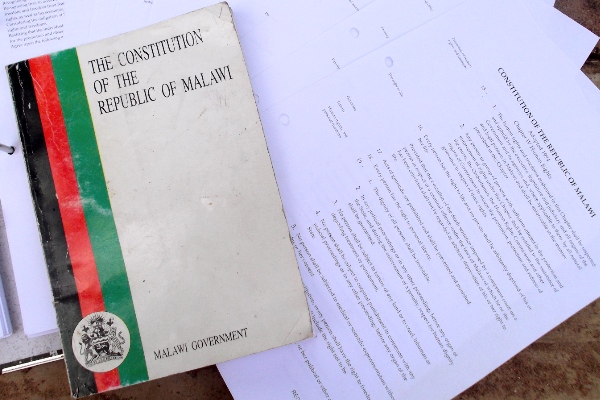
The dawn of multi-party democracy in 1993 also came with a lot of changes, which created greater opportunities for the growth of cultural industries. A new national constitution that provided for freedoms of expression and association was prepared and Malawians’ free speech and creativity was enhanced. A number of arts associations, non-governmental organisations, cultural heritage foundations and media houses began to emerge. New technologies for creating, producing, distributing and promoting cultural goods and services began to infiltrate the nation.
The ongoing lack of a Cultural Policy
Malawi’s cultural industry became chaotic due to the absence of an official Cultural Policy. There was no coordinating structure to anchor the operations of various players in the cultural industry. Individual players and groups were acting in isolation, with no cohesion in the cultural industry. One clear example of this lack of organisation in the industry during the absence of the policy was in 2010, when the Lake of Stars, the Mwezi Wawala Theatre Festival and the Sand Music Festival all clashed on the same weekend.[iii]
That year, the Ministry of Culture asked the respective organisers to submit the dates of their festivals so that there could be coordination in the organisation of the events. But the government’s intentions were limited by the fact that there was still no clear policy for them to effectively coordinate the festivals. As a result, in 2014, four major festivals clashed again: the Sand Festival, Mwezi Wawala Theatre Festival, Umhlangano Wa Maseko (a ngoni cultural heritage festival) and Likoma Festival.
The policy gap resulted in poor development of the cultural support infrastructure to promote the development of arts and culture. By comparison, the sports sector has been relatively well-funded through the National Sports Council, but because there is no arts council, the arts have suffered from a lack of funding throughout the years.
Organisations and development partners have long been a saviour when it comes to funding the arts. For example, through the Cultural Support Scheme, the Royal Kingdom of Norway helped local arts industry through its support of the Copyright Society of Malawi (COSOMA).
Piracy has been another major problem affecting Malawi’s cultural industry, again because of a lack of coordination between players in the industry.
Malawi’s cultural policy is supposed to inform the legal and regulatory framework which could possibly help in curbing the various problems affecting actors in the cultural industry, including piracy. The absence of such a policy has resulted in lack of guidance in the formulation and review of the sector’s legal and regulatory frameworks. In most cases, such reviews have been quite slow and haphazard, frustrating many actors who stand to benefit from such a framework.
According to the cultural policy document, the first attempts to have a national cultural policy in Malawi were made as early as 1981. This followed the work carried out by Charles Philip, who was commissioned by UNESCO to conduct research and prepare a report that would assist the Government of Malawi to elaborate its cultural development policy and to offer advice on integration of the plan with the UNESCO Global Economic and Social National Development Plans.
The report acknowledged the positive steps that were taken then to preserve and conserve Malawi’s cultural heritage and made a number of structural recommendations, most of which are still operational to date. For instance, the report recommended the establishment of the Departments of Arts and Crafts, Antiquities and Museums, which are currently operational. It further recommended the creation of the Department of Fine and Performing Arts at Chancellor College, whose programmes incorporate arts promotion, creation, education and research, as well as the circulation of cultural materials and the provision of facilities and Infrastructure.
A draft Cultural Policy was first submitted to Cabinet in 2003. However, it was never discussed, largely due to other emerging issues (such as Malawi’s endorsement of the 2003 Convention on the Safeguarding of the Intangible Cultural Heritage[iv] and the 2005 Convention on the Protection and Promotion of the Diversity of Cultural Expressions[v]) necessitating the revision of the draft policy document.
Since then, the Cultural Policy has been tossed back and forth between the Ministry of Culture and the Office of Cabinet and the President for 10 years. Musicians such as Joseph Tembo, Lucius Banda and Billy Kaunda have entered politics, contesting as Members of Parliament.
The new Cultural Policy
In February 2015, the Cultural Policy was finally adopted by cabinet, exciting several key players in the cultural and creative industry[vi]. The policy aims to ensure the preservation, conservation and safeguarding of Malawi’s culture for national identity, education and posterity. It will also ensure the development and promotion of Malawi’s culture for sustainable socio-economic development and ensure the availability of resources for cultural development. With the cultural policy in place, the government is finally obliged to fund the arts and cultural institutions.
The most important element of Malawi’s Cultural Policy is the establishment a parastatal organization called the National Arts and Heritage Council (NAHEC) which will help coordinate the arts, cultural and creative industry.[vii]
The policy also offers guidelines for laws to be made with the aim of promoting, preserving and safeguarding culture and arts in the country. For example, the Ministry of Culture has already drafted a revised copy of Malawi’s Copyright Act. In it the punishment of copyright offences will be revised. In the past, piracy attracted a minimum sentence of between K200 (less than US$1) to a maximum of 15 000 (about $27) or a maximum one-year jail sentence. The new act will raise the penalty to between K200 000 (about $360) to K7 million (about $13 000) and a maximum sentence of five years in jail.[viii]
Through the new Cultural Policy, other ministries and government institutions in Malawi are obliged to work towards the promotion of culture. For example, the Ministry of Finance is to release financial resources to NAHEC, while the police and the courts are obliged to fight piracy.
After many years of delays and debate, the recent passing of Malawi’s Cultural Policy bodes well for the future of Malawi’s vibrant cultural sector, provided it can be properly enforced and the appropriate structures are established and maintained.


Most popular
Call for applications: ACCES 2026 Emerging Artist Spotlight Competition
01 Oct 2026

Top amapiano songs of 2026
16 Feb 2026

Top Naija songs of 2026
31 Mar 2026

Top Afrobeats songs of 2026
19 Mar 2026
Open call: 2026 Gender@Work music industry training in Johannesburg
03 Oct 2026
AFRIMA 2026: All the winners
12 Jan 2026
Disclaimer: Music In Africa provides a platform for musicians and contributors to embed music and videos solely for promotional purposes. If any track or video embedded on this platform violates any copyrights please inform us immediately and we will take it down. Please read our Terms of Use for more.

Subscribe to our monthly Newsletter
Follow us on social media


Please log in to post a comment.