































































By Bram Posthumus
This text provides an overview of the media in Mali, particularly as it relates to the local music scene.
Independent since 1960, Mali’s media were initially entirely state-controlled. Like its counterpart in neighbouring Guinea, the Malian state instructed its media to promote a national identity, based on what it had declared to be traditional culture[i].
Radio
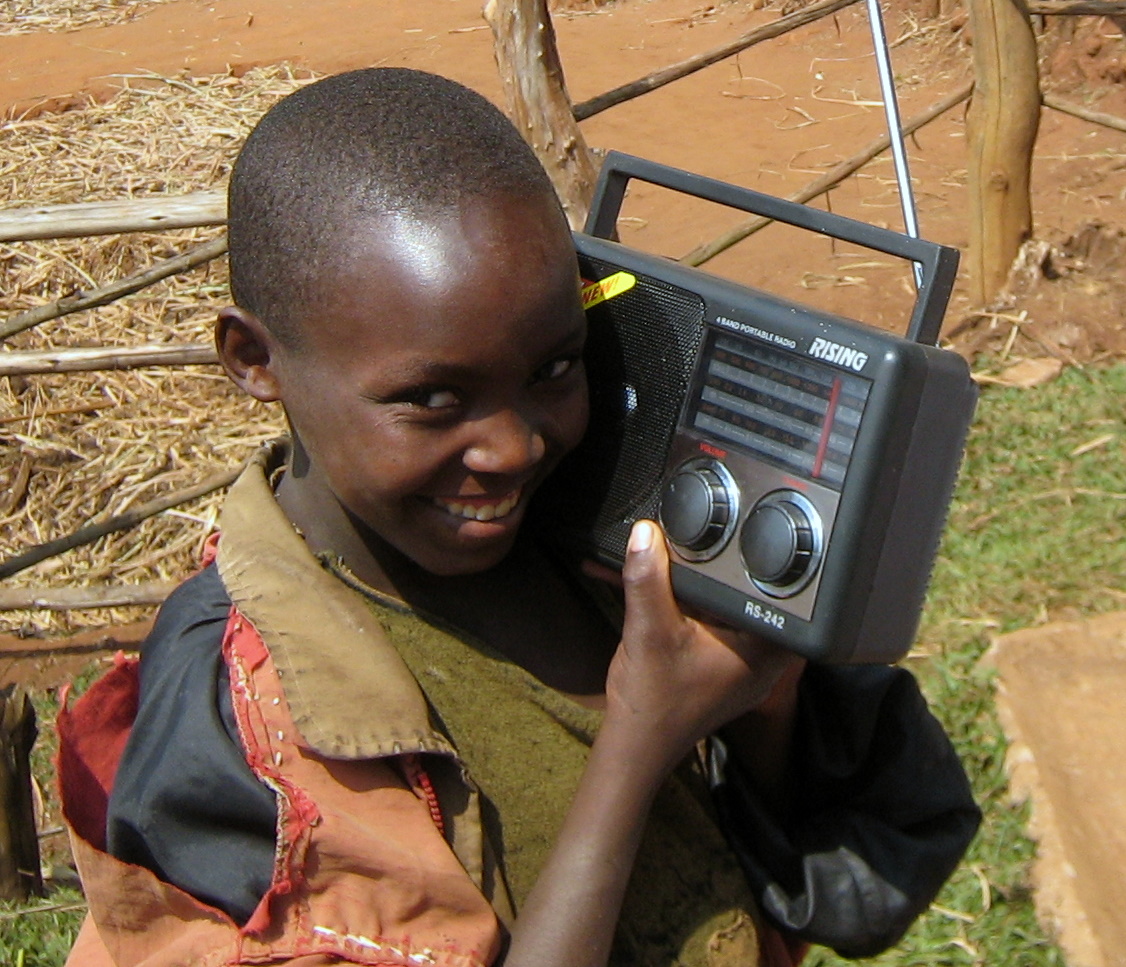
Music played a central role in the effort to promote a national identity. Instrumental kora music became the country’s signature (listen to the album Cordes anciennes, recorded in the early 1970s, for example). Music groups were formed in all parts of the country and their work received guaranteed airplay. The entire enterprise was state-run and its principal vectors were live performances and radio.
Mali’s state-sponsored live music scene was much diminished when the army deposed Mali’s first president, Modibo Keita, in November 1968. But even as Mali has continued to encounter political turbulence, with an interruption between 1991 (the arrival of multiparty democracy) and late 2009 (the first major drugs-related incident on Malian soil involving a large air transport of cocaine[ii]), the country’s radio stations continue to promote and highlight local content and continue to air locally produced music that tapsthe dazzling variety of musical styles from all corners of the country.
The capital, Bamako, and other major citiesare home to commercial and community radio stations that cater to various musical tastes and information demands[iii]. These days this constitutes a mix of R&B, hip-hop and the ever-popular reggae. These last two can either be made abroad but are equally likely produced at home. Mali has a thriving hip-hop scene and in spite of external pressures (such as low-intensity conflict in the north, Wahabist encroachment on Mali’s cosmopolitan culture, terrorist attacks, political pressures and occasional state repression),a modern, youth-orientedmusic scene is still very much in evidence. Commercial radio reflects this and station managers know that without a large dose of local content they will lose their target audience[iv].
Some radio station include Radio Malijet[v], Radio Tabalé and Radio Mamelon[vi], all broadcasting from Bamako, and Radio Tenin[vii] from Konobougou.Radio France International (referred to as RFI) is widely listened to in Mali. It has its own frequency on FM in Bamako. The daily music show ‘Couleurs Tropicales’ is a favourite that frequently highlight music from Mali. [viii]
The other type of radio that has emerged in Mali is community-based[ix]. These are small-scale stations that exist in both urban and rural settings, serving the local population with a mix of information and discussion programmes (mostly in the languages that are actually spoken in their catchment area[x]), some of which are paid for by international donors, UN agencies or NGOs[xi]. Music plays a less prominent role here but again the content is extremely likely to be local.
Television
The entity that runs state-run national and regional radio and two national television channels is the, Office de la RadiodiffusionTélévision du Mali (ORTM)[xii]. It is not uncommon to see long slots on national television being devoted to concerts by local musical celebrities or stars from neighbouring countries, particularly Senegal and Guinea. These shows are, by and large, of the praise-singing variety. Music that challenges existing political and above all religious power structures does not have access to state television. Reggae and hip-hop, the two styles widely popular among Mali’s young and much more challenging to existing power structures, do appear on ORTM but in sanitized form[xiii].
Print media[xiv]
Mali has few daily newspapers and an enormous variety of publications, which look exactly like newspapers but appear only once a week[xv]. The vast majority of these are political publications, as they are owned by political operators. Music is not a priority for these publications and so there is hardly any in-depth coverage of the many strands and trends in Malian music. However, major events are covered, such as new CDs, concerts, prize-winning ceremonies, galas and obituaries for musicians. Issues that also gain coverage in the press are the failure on the part of music distributors (including radio stations and increasingly mobile phone companies) to pay royalties, as well as music piracy. Coverage on the press of these issues is, by and large, sympathetic to artists.
To the best of the writer’s knowledge, Mali does not have any publication devoted to its rich and varied music scene and is unlikely to have in the foreseeable future. There are two reasons for this. First, the vast majority of Malians are illiterate and get access to music through radio and television. Second, even among those Malians who are literate, most will not be able to afford to buy such a publication. As a result, music journalism as a subset of the media profession is practically non-existent.
Foreign writers have covered Mali’s music intensively and over many decades but their work appears in music magazines in the UK (Songlines, fRoots) and on websites like Afropop Worldwide (US), Mixedworldmusic.com (Netherlands), Africultures.com (France) and many others. These, however,hardly ever if at all reach a Malian reading public,with the possible and limited exception of French language titles.
Online media
With the explosion of the internet in Africa, helped along by an ever wider availability of broadband access and the increasingly popular smartphone, a whole host of news sites has sprung up. Sites such as Malijet.com, Abamako.com, Maliweb.net, Maliactu.net and Maliactu.info, Malinet.net, Koulouba.com, Niarela.net and others typically operate along the same lines as print publications. They will cover music, sympathetically, but without any depth. Some, like Koulouba, Maliweb and Malinet, have a section dedicated to music; others will tuck these away in sections called ‘Arts and Culture’, ‘Society’ or ‘Various’.
The main role of these news sites is arguably not to promote Malian music. They exist to provoke online discussion. Music rarely is a subject in those debates. Like the newspapers, they will report musical events and related issues[xvi]and are frequently seen to copy newspaper articles or stories from RFI’s website on these subjects[xvii].
Social media get used for marketing purposes. A well-known example is Bamada City, the Malian hip-hop house that has a Facebook page[xviii]. Bamada also busies itself with distribution through mobile devices, organises shows and promotes new artists. Still, there are also artists who use their own channels to sell their music, like the hugely popular Mylmo N-Sahel[xix]. Bamako360[xx] is the closest you can get to an all-encompassing portal that provides access to a wide variety of artistic expression, including music. However, the site appears to be largely dormant.


Most popular

Ghana: Mr Eazi and MOLIY’s ‘Comfort’ earns Urban Music Awards nomination
21 Oct 2026

Top Naija songs of 2026
31 Mar 2026

Top Afrobeats songs of 2026
19 Mar 2026

Top amapiano songs of 2026
16 Feb 2026

Open call: CANEX Music Business Lab and Songwriting Camp
15 Oct 2026

Nigeria: CANEX WKND unveils 2026 programme
21 Oct 2026
Disclaimer: Music In Africa provides a platform for musicians and contributors to embed music and videos solely for promotional purposes. If any track or video embedded on this platform violates any copyrights please inform us immediately and we will take it down. Please read our Terms of Use for more.

Subscribe to our monthly Newsletter
Follow us on social media


Please log in to post a comment.