






































NEFCISA
NEFCISA

The Music In Africa Foundation (MIAF) is proud of its partnership with the Industrial Development Corporation (IDC) as a Strategic Implementing Partner (SIP) for its Social Employment Fund (SEF). Through this collaboration, MIAF is running a national programme that is creating jobs, addressing skills gaps, and strengthening South Africa's creative industries — in line with the SEF's overarching goal to generate work for the common good and build community value through employment, social contribution, and inclusive economic participation. Operating under the banner NEFCISA (National Employment Facility for Creative Industries in South Africa), the initiative is recruiting and training participants, matching them with host organisations, and has already placed 1 500 workers across the country — surpassing its original target of 1 000. NEFCISA is delivered through a network of 20 host organisations spanning five provinces, who are actively hosting participants and contributing to work for the common good across South Africa's creative and cultural industries. Key Objectives: Support employment and entrepreneurship in the creative industries. Offer skills development and training programmes. Foster partnerships between public and private creative sectors. Promote South African creativity at both provincial and national levels Foster community development through social contribution.

ACCES
ACCES

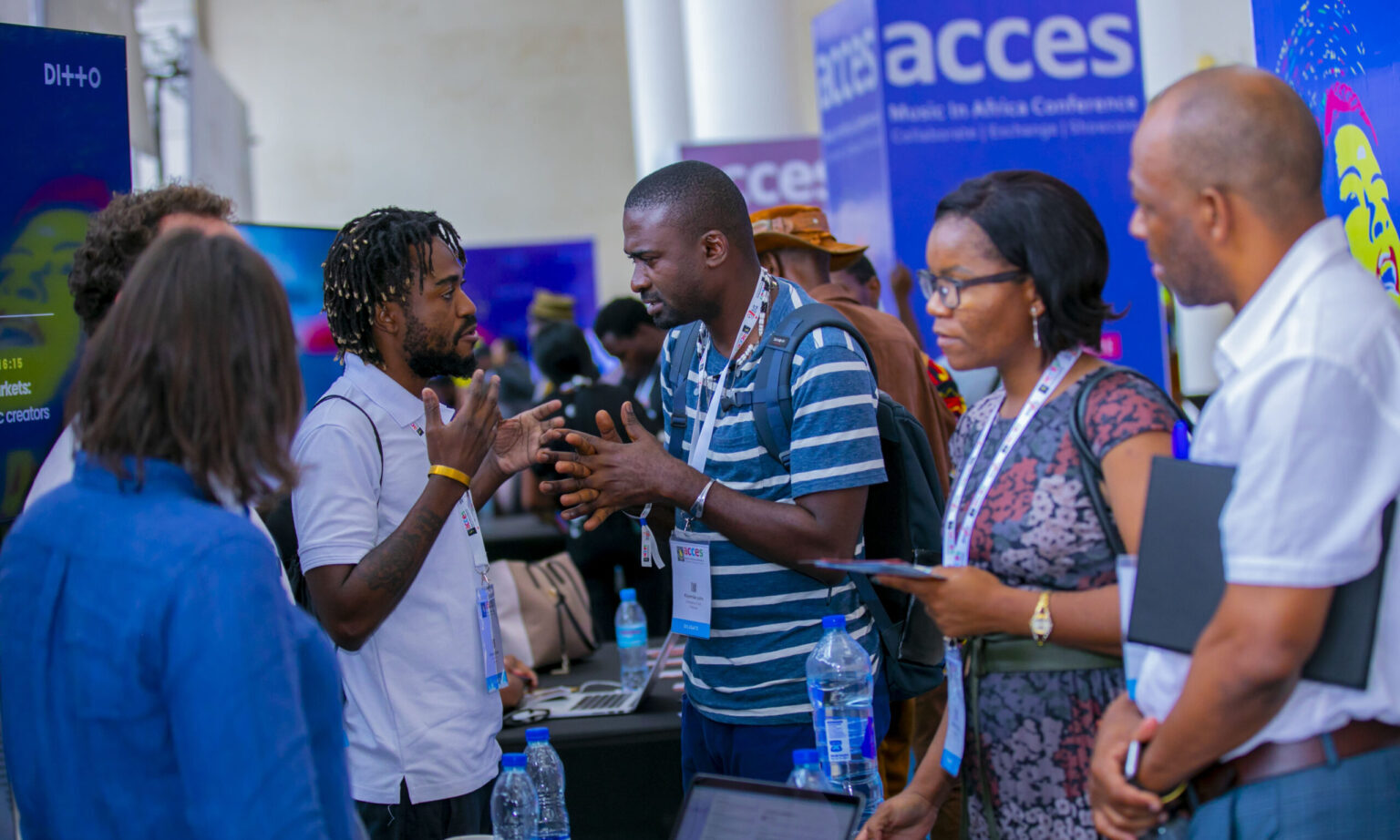
ACCES Conference and Showcase Festival is Africa's leading music industry gathering, bringing together the people shaping the future of the continent's music business. Artists, entrepreneurs, executives, investors, policymakers and cultural leaders from across Africa and around the world come to ACCES to build partnerships, exchange ideas, discover talent and create new business opportunities. Since its launch in 2017, ACCES has become the continent's premier platform for professional exchange and music market development. Combining a high-level conference with a curated showcase festival, networking, exhibitions and industry programmes, ACCES offers a unique space where creativity meets business and where African music connects with the global industry.

Gender@Work
Gender@Work

Music In Africa Gender @ Work is a three-year training programme aimed at upskilling and increasing the participation of female professionals in the African music sector. Launched by the Music In Africa Foundation (MIAF) in April 2019, the programme is connected to the MIAF’s ACCES music conference – a pan-African event held in a different African country every year. This connection enables the programme to reach new participants in a different African country every year. The programme marks the beginning of a more concerted effort by the Foundation to support the participation and inclusion of women in all facets of its programmes and the music sector in Africa as a whole. Over the three years, the programme will aim to address gender imbalances in the sector through training, lobbying, facilitating knowledge exchange and dialogues that foster the interest of women. The broader objectives of the programme are to: Provide industry training for women on critical music industry skills, focusing on: Stage management Electronic music production and recording Music business management Technical knowledge Provide an opportunity for both professional and aspiring women to benefit from the Music In Africa network and its broad range of activities in 2019, 2020 and 2021. Provide a solution-based platform in the form of a round table at ACCES with a view to identify challenges, discuss opportunities and lobby for the interests of female practitioners. Offer participants the opportunity to benefit from programmes offered by MIAF’s partners. Increase access to educational materials. Integrate participants in the broader ACCES programme to maximise experience and exposure to the industry. Record and present training materials on the www.musicinafrica.net, including but not limited to tutorials, templates and other best-practice materials. Communicate women-based themes that support the initiatives and messages of the programme. MAIN TRAINING ACTIVITIES Training in first country (Ghana): In the first year, participants will be trained on all aspects of stage management by a team of experienced stage managers from 10 to 17 November 2019. The programme will offer robust classroom training as well as practical, hands-on training in which participants will also be given the opportunity to manage various aspects of the ACCES performance programme. Training in second country: The second training iteration will take place at ACCES 2020 when the programme will diversify its course to include music production lessons and training on other music business topics. A round-table platform will also be introduced to coincide with the ACCES programme. Training in third country: The third training iteration will take place at ACCES 2021 in a different country, offering an advanced course. HOW DO YOU GET INVOLVED?  As a participant, facilitator or trainer: The programme enrolls up to 12 trainees every year. All opportunities are advertised publicly on this website, and will be added to this page. Please keep checking this page for new calls (below under UPDATES & CURRENT OPPORTUNITIES). As a partner Please contact Claire Metais at [email protected]. APPLY The call for applications for 2020 will be announced soon. The Music In Africa Gender @ Work programme is made possible with the support of the Prince Claus Fund, Siemens Stiftung and Goethe-Institut.

Sound Connects Fund
Sound Connects Fund

For cultural and creative practitioners and organisations operating in southern Africa, access to funding remains a major challenge. The COVID-19 pandemic has also had a massive impact on government policy, spending and the economy in general, and has seen spending on culture being moved further down the list of priorities. Further, the cultural and creative industries repeatedly cite four main areas where investment is needed for growth, which are increased visibility, mobility including access to new markets, finance and support structures.

Instrument Building And Repair Project

Experience the Vibrations African Instruments Exhibition online in 3D

Overviews

Music and religion in Cameroon

05 Oct 2015 - 10:46

cc-img flag-img

By Ngbwa Jean Fabrice

In Cameroon, the religious scene is shared between many Christian churches, whose faith is based on Jesus Christ’s life. Although music is a common reality, the way it is perceived and performed in each church is noticeably different. It is a sacred, biblical practice that plays a major role during ceremonies - mostly through choirs, which are numerous. Each of them has its very own way of recruiting members, teaching them and choosing songs. This text provides an overview of some of the key features of religious music in Cameroon.
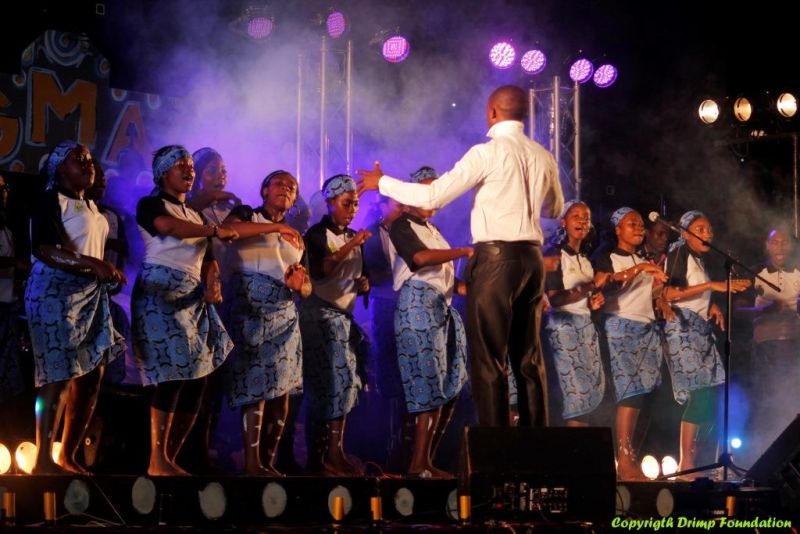
Gospel music awards. Photo: Drimp Foundation

Traditional churches

In the Catholic Church, music is known as liturgical singing when it follows catechism standard[i] and varies according to institutions and locations. For example, in convents and seminars, singing is a community obligation during services, eucharistic celebrations and community meetings[ii]. On the other hand, in parishes, music is dedicated to various types of choirs. Gregorian and classic chants are to be heard in cathedrals, polyphonic and folk styles in urban parishes, and strictly folk choirs in rural areas. Depending on the choir, songs are selected according to liturgic readings and to the course of the mass.

Classic choirs mostly use the following songbooks: The Most Famous Church Chants, The Rainbow and The Psalter. Catholic choir members are recruited on a volunteer basis, upon invitation from another member or upon request from a clergy leader.

What makes the difference between amateur and professional choirs is the introduction to music theory and harmony, and knowledge of instruments. So far, professional Catholic Church choirs are the most successful, thanks to the Madrigal Choir which was created in 1972 and which introduced polyphonic singing to Cameroon[iii]. Many talented choir conductors then established themselves, such as Ntonga, Hubert Minkoulou and Gaby Moudio. The Catholic choirs that truly distinguished themselves include the Great Classic Choir from the Cathedral Our Lady of Victories in Yaoundé, and the Voice of Cenacle, which combined the keyboard with local rhythms. Besides, the rise of Catholic folk choirs was boosted by the Ecclesia Synod in Africa in 1995, which promoted cultural integration within the church. The very same church that in the past had white missionaries such has Bishop René Graffin call balafons ‘evil’ instruments.[iv]

Christians accentuated this complex by harshly criticizing Ewondo songs and praising Gregorian chants[v]. Clergymen Léon Messi[vi] and Bishop Xavier Amara remarkably fought for the conservation of Southern and Central traditional music. New music genres emerged in churches: ekang, essani, olack, n’gneg, osila (initiatory types of music) performed with balafons and percussions such as drums (Mbè), tcheker (gnas), and tom-toms (Nkù). So far emerging Ewondo choirs are Marie-Reine of the Apostles of Mvolyé don’t, whose repertoire is composed by the clergy and choir masters.

Furthermore, the Presbyterian Church of Cameroon incorporates music into worship[vii]. It includes associations called the Children Association (Nsamba bongo), the Evangelical Protestant Action Youth that the Women Association (Samba binga), which masters the art of folk rhythms, tom-toms and drums[viii] ; as well as the Men Association. The two last associations specialize in praise and worship carols, thanksgiving, supplication and enlightment, according to the different stages of the service. Traditionally, classical and folk choirs sing two carols during the service.

Classical choirs are the most talented when it comes to singing masterpieces by Handel or Mozart while accompanied by a keyboard or a brass band[ix]. A good example is the Messianic Choir of Mendong. Folk choirs are characterized by a strong desire to value local genres. This is the case with Quram Holy Spirit with its ‘back to the roots’ concept[x]. The Presbyterian community find their carols in songbooks such as On the Wings of Faith, To You be the Glory, Bulu Carols and Hymn and Praises. In Presbyterian parishes of Mendong-Laodicée and Qumrân Holy Spirit, all new recruits have to go through an observation period of six to 12 months, during which they also learn music theory.

Pentecostal movements

Pentecostal religious movements have been on the rise for a while in Cameroon. They brought along a new genre: gospel music. Each and every congregation choir has its very own style, whether it is rock n roll, RnB, negro spiritual, rumba, reggae, coupé-décalé or local rhythms. The sermon is always strictly inspired by the Bible and the repertoire includes both original songs and hymns.

The rise of gospel music is related to the advent of structures such as the Drimp Foundation, which is investing in local gospel music[xi]. In 2014, the city of Yaoundé welcomed the 4th edition of the Gospel Music Awards, with an audience of 6500 people. The most recent award winners are Golden Voices and Joy Spirit Singers.

Other religious movements

The Bwiti movement is completely different from traditional churches or Pentecostal movements. It’s music is a unique genre that is performed with special instruments. In the Bwiti tradition, sacred music is a duty for the whole community[xii], which means that the proceedings of the service are closely connected with the process of learning to sing and play instruments[xiii]. One of the instruments is the obaka, a small dry tree trunk that is placed behind the altar and held by two wooden tripods. It is played exactly as drums to accompany a harp. The sounds of sticks hitting the obaka evokes the birth of the Creator. The ngomo, which is an intercession instrument, is an eight-string harp that represents the strength of the Holy Spirit.

Despite its rich diversity, across Cameroon and in all churches, sacred music still faces a lot of challenges, such as: recruiting new choir members, training and funding choirs, copyright issues and cultural integration. According to Dr Ngumu Pie-Claude, ‘Nowadays, we are witnessing the swift rise of a modern type of music that is pretending to be African (…) But when you take a closer look, you soon realize how empty and meaningless this new music is...” [xiv]

Religious music definitely needs to value African rhythms, especially in Pentecostal churches. Unfortunately, the quest for new sounds is putting years of tradition in the shade. The ultimate challenge is to bring in a large number of members, so some Pentecostal church choirs are on a mission to seduce people by playing and singing more ‘wordly’ music, with a twist. Nervertheless, exceptional figures such as Queen Eteme can still be a positive inspiration for devious minds.


[i] Martial Mvondo, former seminrian. Choir Master of the Classical Angelic Choir of Saint Achilles Kiwanuka of Mendong-Camp. Interview on 18 August 2014.
[ii] Désiré Manga, theology student at the Saint-Apostles Congregation, Nkolbison Residence. August 8th, 2014.
[iii] Félicité Bahane, «René Esso Elokan’s funeral » https://www.cameroontribune.cm, 06 August 6th , 2014.
[iv] R.B Onomo Etaba, Roman Pontiffs and the spatio-temporal evolution of the Catholic Church of Cameroon from the beginings to 1991. , Upper graduate level thesis in history, University of Yaounde I, 1999-2000, PP.143-144.
[v] Archives of the charity diocese departement, letter from Father Raymond spira to His Excellency Bishop Jean Zoa, Nlongkak, Yaounde, February 28th 1980.
[vi] L. Messi, gleanage of the colonial era, unpublished, Yaounde, 1990, P.27.
[vii] Mbeyo’o Ole Mois, church elder, choir master, Qumrân Holy Spirit Parish, Mendong Camp Sic-Yaounde, interview on July 25th, 2014.
[viii] Gérault Nlate, choir master, church elder at the Presbyterian Church of Yaounde, Ntem Parish Consistory, Mendong-Yaounde. Interview on August 11th, 2014.
[ix] Ibid.
[x] Daniel Ezo’o, Minister at the Presbyterian Church of Cameroon, Quram Holy Spirit, Mendng-Yaounde, Interview in June 2014.
[xi] www.drimpfounddation.org/gospelmusical
[xii] Lebel, harpiste et initié mbwiti, Messame Ndongo-Yaoundé, entretien du 24 Août 2014.
[xiii] Nathalie Mindzié, fidèle de la communauté mbwiti, initiée, Messa-Mendongo Yaoundé, 12 Août 2014.
[xiv] Ngumu, Pie-Claude, Les recherches ethnographiques en Afrique centrale, le cas du Cameroun, N° 2742 extrait de recherche, pédagogie et culture, N° 65/66, Paris, 1983, PP 65-66.

Please log in to post a comment.

Most popular

Disclaimer: Music In Africa provides a platform for musicians and contributors to embed music and videos solely for promotional purposes. If any track or video embedded on this platform violates any copyrights please inform us immediately and we will take it down. Please read our Terms of Use for more.

newsletter banner

Subscribe to our monthly Newsletter

Follow us on social media