
































NEFCISA
NEFCISA

The Music In Africa Foundation (MIAF) is proud of its partnership with the Industrial Development Corporation (IDC) as a Strategic Implementing Partner (SIP) for its Social Employment Fund (SEF). Through this collaboration, MIAF is running a national programme that is creating jobs, addressing skills gaps, and strengthening South Africa's creative industries — in line with the SEF's overarching goal to generate work for the common good and build community value through employment, social contribution, and inclusive economic participation. Operating under the banner NEFCISA (National Employment Facility for Creative Industries in South Africa), the initiative is recruiting and training participants, matching them with host organisations, and has already placed 1 500 workers across the country — surpassing its original target of 1 000. NEFCISA is delivered through a network of 20 host organisations spanning five provinces, who are actively hosting participants and contributing to work for the common good across South Africa's creative and cultural industries. Key Objectives: Support employment and entrepreneurship in the creative industries. Offer skills development and training programmes. Foster partnerships between public and private creative sectors. Promote South African creativity at both provincial and national levels Foster community development through social contribution.

ACCES
ACCES

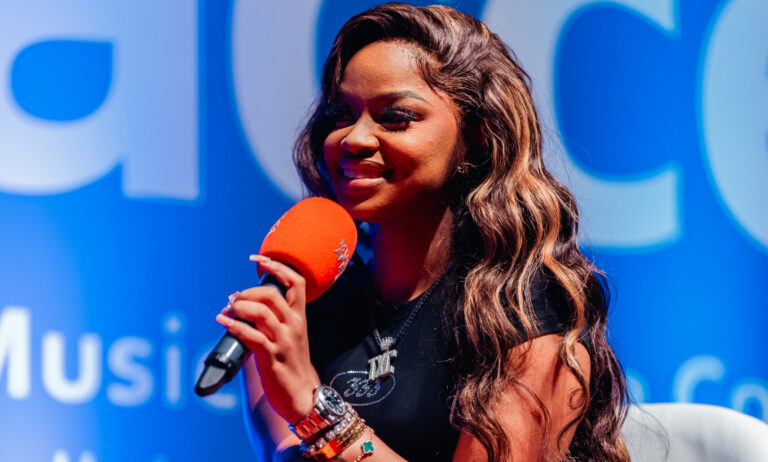
ACCES Conference and Showcase Festival is Africa's leading music industry gathering, bringing together the people shaping the future of the continent's music business. Artists, entrepreneurs, executives, investors, policymakers and cultural leaders from across Africa and around the world come to ACCES to build partnerships, exchange ideas, discover talent and create new business opportunities. Since its launch in 2017, ACCES has become the continent's premier platform for professional exchange and music market development. Combining a high-level conference with a curated showcase festival, networking, exhibitions and industry programmes, ACCES offers a unique space where creativity meets business and where African music connects with the global industry.

Gender@Work
Gender@Work

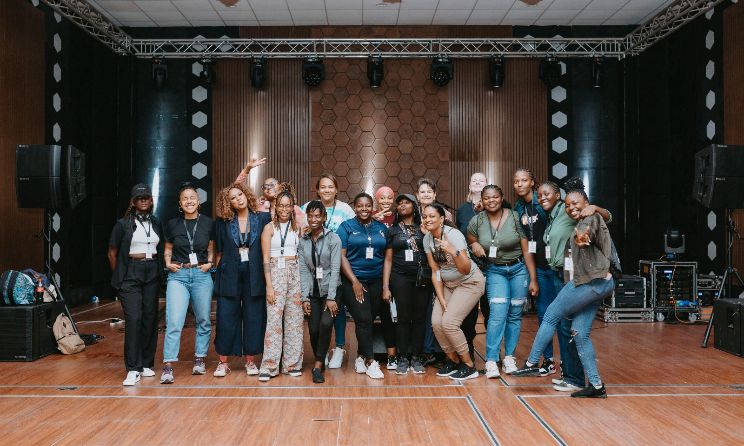
Music In Africa Gender @ Work is a three-year training programme aimed at upskilling and increasing the participation of female professionals in the African music sector. Launched by the Music In Africa Foundation (MIAF) in April 2019, the programme is connected to the MIAF’s ACCES music conference – a pan-African event held in a different African country every year. This connection enables the programme to reach new participants in a different African country every year. The programme marks the beginning of a more concerted effort by the Foundation to support the participation and inclusion of women in all facets of its programmes and the music sector in Africa as a whole. Over the three years, the programme will aim to address gender imbalances in the sector through training, lobbying, facilitating knowledge exchange and dialogues that foster the interest of women. The broader objectives of the programme are to: Provide industry training for women on critical music industry skills, focusing on: Stage management Electronic music production and recording Music business management Technical knowledge Provide an opportunity for both professional and aspiring women to benefit from the Music In Africa network and its broad range of activities in 2019, 2020 and 2021. Provide a solution-based platform in the form of a round table at ACCES with a view to identify challenges, discuss opportunities and lobby for the interests of female practitioners. Offer participants the opportunity to benefit from programmes offered by MIAF’s partners. Increase access to educational materials. Integrate participants in the broader ACCES programme to maximise experience and exposure to the industry. Record and present training materials on the www.musicinafrica.net, including but not limited to tutorials, templates and other best-practice materials. Communicate women-based themes that support the initiatives and messages of the programme. MAIN TRAINING ACTIVITIES Training in first country (Ghana): In the first year, participants will be trained on all aspects of stage management by a team of experienced stage managers from 10 to 17 November 2019. The programme will offer robust classroom training as well as practical, hands-on training in which participants will also be given the opportunity to manage various aspects of the ACCES performance programme. Training in second country: The second training iteration will take place at ACCES 2020 when the programme will diversify its course to include music production lessons and training on other music business topics. A round-table platform will also be introduced to coincide with the ACCES programme. Training in third country: The third training iteration will take place at ACCES 2021 in a different country, offering an advanced course. HOW DO YOU GET INVOLVED?  As a participant, facilitator or trainer: The programme enrolls up to 12 trainees every year. All opportunities are advertised publicly on this website, and will be added to this page. Please keep checking this page for new calls (below under UPDATES & CURRENT OPPORTUNITIES). As a partner Please contact Claire Metais at [email protected]. APPLY The call for applications for 2020 will be announced soon. The Music In Africa Gender @ Work programme is made possible with the support of the Prince Claus Fund, Siemens Stiftung and Goethe-Institut.

Sound Connects Fund
Sound Connects Fund

For cultural and creative practitioners and organisations operating in southern Africa, access to funding remains a major challenge. The COVID-19 pandemic has also had a massive impact on government policy, spending and the economy in general, and has seen spending on culture being moved further down the list of priorities. Further, the cultural and creative industries repeatedly cite four main areas where investment is needed for growth, which are increased visibility, mobility including access to new markets, finance and support structures.

Instrument Building And Repair Project

Experience the Vibrations African Instruments Exhibition online in 3D

Features

Music censorship: Tanzanian MPs speak truth to power

14 May 2018 - 12:43

cc-img flag-img

Across Africa government institutions tasked with promoting music are stifling the industry by arresting performers and banning music videos on the basis of indecency. Several Tanzanian MPs recently came out to protest against these laws. Though still a drop in the ocean, the outcry represents what African artists need to do to mitigate against draconian laws designed to oppress freedom of expression.
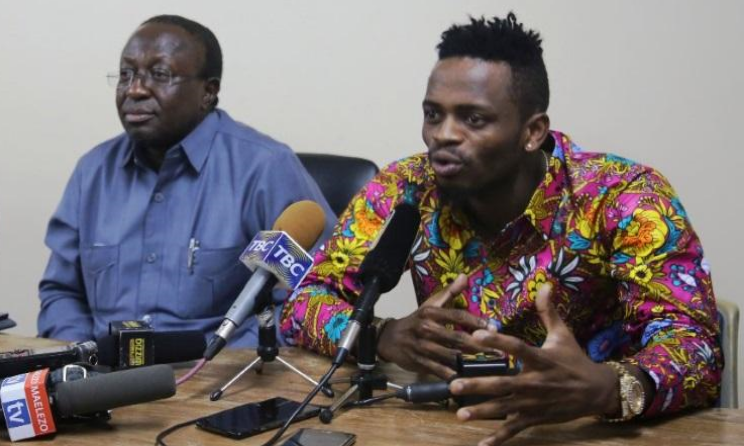
Minister of Information, Culture, Arts and Sports, Harrison Mwakyembe with Diamond Platnumz.

Early this year, Russian belly dancer Ekaterina Andreeva, 31, popularly known as Johara, was arrested in Cairo for 'inciting debauchery' and spent several days in jail. This happened in a country known as one of the originators of belly dancing. Late last year, an Egyptian court sentenced Shyma Ahmed, 21, to two years in prison for the 'sexually suggestive' video 'I Have Issues'.

Kenya's Sauti Sol, P-Unit and Noti Flow have all had their music videos banned from TV during the watershed period of 5am to 10pm. In the most recent incident, Sauti Sol’s megahit ‘Melanin’ featuring Nigeria's Patoranking was banned from daytime TV for being inappropriate for family viewing. Instead, the video has racked up more than 10 million views on YouTube.

A few months ago, the Tanzania Communications Regulatory Authority (TCRA) announced a ban on 13 songs. Most notable among them were two Diamond Platnumz international collaborations: ‘Hallelujah’ ft Heritage Morgan and ‘Waka Waka’ ft Rick Ross. The government partially lifted the ban last month.

Speaking during a recent parliamentary sitting, Tanzanian MP for the northwestern city of Geita, Joseph Musukuma, took the government to task. Addressing the Ministry of Culture, Arts and Sports, he protested the ban, arguing that Tanzanian artists depend on videos to sell concert tickets. He also put it to the minister that his mandate was to promote Tanzanian music, yet the ban was doing the opposite.

“The government has allocated a lot of money towards sports but it's our filmmakers and musicians who are world-renowned," Musukuma said. "What the government is doing will jeopardise our status as a country. Why do we ban our Tanzanian artists for indecency and allow foreign acts like Rihanna who displays the same kind of content?”

Musukuma went on to question the minister on the premise of the ban, challenging him to clarify just what standard of decency he had employed to justify it.

“In our traditional dances women only cover their breast and hip area. Can the minister explain which traditions our artists have gone against to deserve this ban? Instead of banning them, maybe the ministry should educate our artists on what is expected.”

Bongo star and Mikumi MP Joseph Haule (Professor Jay) also took issue with the government and addressed the National Arts Council of Tanzania (BASATA) in Parliament.

He questioned why BASATA was using just 69% of its allocated budget. Haule said Tanzanian musicians had many deep-rooted issues that outweighed 'indecent' videos.

“Though it is supposed to promote music and culture, BASATA has become a tool of oppression," he said. "Instead of educating artists and helping them improve, we are banning their videos and putting restrictions on them. Our artists need issues like piracy, distribution and promotion addressed, but instead we ban their music, summon them to our offices to answer charges and take selfies with them.”

During an appearance on the Kaa Hapa TV show early this month, the Minister of Information, Culture, Arts and Sports, Harrison Mwakyembe, defended the government's position to censor musicians. He insisted that the government was not deliberately targeting Tanzanian artists but only trying to hedge against the erosion of culture by modernity.

“Diamond is one of the top 10 artists in the world. He doesn’t need to sell himself with indecent videos," Mwakyembe said. "Only average artists resort to such cheap tactics to hide their inefficiency. Let other artists do these things but not our own. Our music must project our values and norms.”

Mwakyembe said the Tanzanian government was proud of the role artists played in building national pride. He went on to say that the government had sat down with all affected artists and reached an "amicable agreement".

It seems like Tanzanian musicians have scored a few political allies in the face of the government's hardline censorship policy.

Please log in to post a comment.

Most popular

Disclaimer: Music In Africa provides a platform for musicians and contributors to embed music and videos solely for promotional purposes. If any track or video embedded on this platform violates any copyrights please inform us immediately and we will take it down. Please read our Terms of Use for more.

newsletter banner

Subscribe to our monthly Newsletter

Follow us on social media