













































By Prisca Rananjarison
The musical landscape of Madagascar is as varied as the number of ethnicities, dialects and cultures that make up the country. Music-related beliefs or religions plunge the Madagascan, from childhood, into the wellspring of a natural and obvious acceptance of music. In a country where music accompanies everyone from birth until death, the challenges of music education remains nevertheless innumerable. Music practitioners are going about their work somewhat painfully, learning or refining the skills.
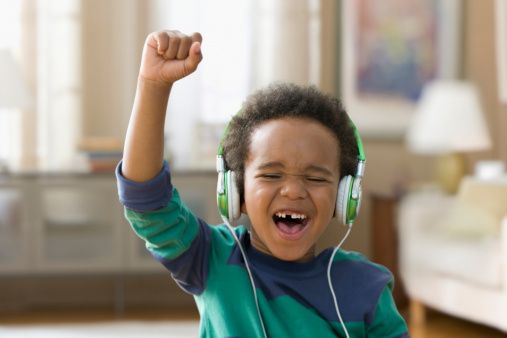
Music education centres
In Madagascar, the number of centres dedicated to music education will continue to grow. State-accredited centres, as well as semi-private and specialized structures provide tutoring. “This enthusiasm for music education structures is due to requests from parents, who wish to accompany the artistic life of their children,” says Roberto Rajaofetra, a music teacher.
Those who wish to deepen their musical knowledge are turning to structures such as the German-Madagascan Centre (CGM), the National Centre of Musical Studies (NCCM) or the Academy of Music Education of Ambatoroka. These provide formal lessons that form the basis for individual creativity. The CGM, one of the best musical centres of the capital, has about 680 students divided into several disciplines. “Here at CGM, piano is the instrument that most attracts the young,” says Mr. Benja, a music teacher.
In the last few years, Madagascar has seen a meteoric rise in private lessons. The Talenta Rajaofetra has on average 150 to 200 students per year. “Parents entrust their children to us so that music can support their personal development,” says Roberto Rajaofetra. Moreover, artists who are eager to share their knowledge give lessons at home. “I like to teach, especially as it helps me pay the bills at the end of the month. What can be better?” exclaims Herizo Ratri, a home-based guitar teacher.
Music education at university
Despite the absence of an artistic component in the national education curriculum, the lecturer-researcher Serge Henri Rodin campaigned for the creation of a sector dedicated to arts and culture at the University of Antananarivo. Given this commitment, the Mediation and Cultural Management (MMC), attached to the Department of French and Francophone Studies at the university, was created in 2003. “It is important that a cultural actor be equipped with a basic musical culture,” says Serge Henri Rodin. In addition to the instrumental practice, MMC students also studying ethnomusicology and the general history of music.
Workshops
Professional workshops organized as part of music festivals in Madagascar are an opportunity for music lovers to enhance their learning. One can highlight the Valiha workshops organized as part of Angaredona and the saxophone workshops at Madajazzcar, among others. “Every year, we bring foreign professional musicians to facilitate many workshops,” says Désiré Razafindrazaka, president of the organizing committee Madajazzcar. Besides festivals, CGM occasionally organizes percussion workshops. At the Alliance française of Antananarivo (AFT), singing, piano and guitar workshops are held regularly.
Informal music education
For some Madagascan artists, music is a gem transmitted naturally from generation to generation. It is often said that music education is done through familiarization with musical practices from an early age. This was the case with renowned artists like Fanja Andriamanantena, Rakoto Frah Junior, Silo and Njava Monica, among many others, who grew up in a family of artists. At the age of 11, Eusébia Fatoma became the backup dancer and singer in the group of her father Jaojoby. “Most Madagascan artists are self-taught. You observe, you interiorize, you develop self-learning and then practice,” she says.
In Madagascar, music education begins in the playground, in the university gardens and even on the street. Réné, young man experiencing financial difficulties, was initiated into street performance. “As I had nothing left to live on, I decided to learn sodona, traditional flute. I also learned all the songs and current pop songs. Today I continue to perform in front of City Hall to entertain passers-by,” he says.
Music education through religious tradition
A large majority of Madagascans acquire and develop their musical skills in the acoustic setting of the churches. It is said that about 80% of the Madagascan population is religious, and the greater part - especially the youth – are devoted to various musical experiments that take pride of place in liturgical settings. “Within religious communities, they chant and sing praises,” says Father Désiré Maurice. “This religious feeling is a source of inspiration and creation that generates a lot of paperwork and original musical compositions,” adds Joel Andrianjafy, a member of the choir of St. Joseph High School, Andohalo.
NGOs and music therapy
Many associations and NGOs work today in aid of Madagascan children and underprivileged youth. Laka, one such NGO, focuses on education through music and song. “We have expanded our business to the benefit of street children under Laka project. In 2013, we provided monthly free workshops to 1 000 children across the island,” says Holy Andriamampianina, director of the NGO. Workshops are both a source of fun and entertainment for children and emphasize their abilities and creativity.
Music therapy is a medical treatment based on listening to or practicing music. “It’s mainly used to cure or support a psychologically disturbed person,” says Rajery. When he is not teaching classes of Valiha to street children, Rajery conducts music therapy sessions in a service at Anjanamasina Hospital, located 20km from the capital. “During the sessions, music can relax and accompany the patient in the healing process,” he adds.
Challenges
If in the 1960s, music was mandatory in public elementary school, today it is only an optional extracurricular activity in schools that offer French programmes. Music is not a priority in the education policy of Madagascar. “Many elements are to be included in the curriculum. Unfortunately, music is not yet in the list of priorities. Moreover, we never talked about it in government and ministry,” says Paul Rabary, the Minister of Education, who does not deny the usefulness and importance of music in the curriculum.
The lack of reflection on the challenges of art education in the agenda of the last National Convention on Education in November 2014 reflects the lack of interest in the field (the same as mathematics), which nevertheless plays a fundamental role in the construction of a person’s identity. If we want music to be taught at schools tomorrow, it is important to reflect on the issue of arts education in a context of increasingly globalized world, where the construction of one’s identity comes through self-assertiveness and dialogue with the other.
- « Musique à Madagascar, son évolution selon les divers courants d’influence » par Mireille Mialy RAKOTOMALALA.
- Cours de musique au Cercle Germano Malgache, www.goethe.de/
- Écoles de musique de Madagascar, api-madagascar.e-monsite.com
- Académie d’enseignement musical à Madagascar http://aemmada.e-monsite.com/
- CNEMD : Bientôt converti en conservatoire national ! http://www.midi-madagasikara.mg/
- Vers la maîtrise du saxophone, www.craam.mg
- Haja Ravaloson: « Palier à l'absence de conservatoire», www.craam.mg
- Aft – Emmanuel Félicité en atelier, www.lexpressmada.com
- Le centre d'éducation musicale laka, lakainfos.e-monsite.com
- ·Laka project - carnet d'aventures, www.lakainfo.com
- ·C(h)oeurs d’enfants en images ! www.craam.mg
- La musicothérapie malagasy selon Rajery, le.phoenix.mg.voila.net
- Madagascar : "la musicothérapie contre l'Alzheimer", www.lexpressmada.com
- Le prince de la valiha, www.mitiki.com/


Most popular

Top amapiano songs of 2026
16 Feb 2026
Call for applications: ACCES 2026 Emerging Artist Spotlight Competition
01 Oct 2026

Top Naija songs of 2026
31 Mar 2026

Top Afrobeats songs of 2026
19 Mar 2026
Open call: 2026 Gender@Work music industry training in Johannesburg
03 Oct 2026
AFRIMA 2026: All the winners
12 Jan 2026
Disclaimer: Music In Africa provides a platform for musicians and contributors to embed music and videos solely for promotional purposes. If any track or video embedded on this platform violates any copyrights please inform us immediately and we will take it down. Please read our Terms of Use for more.

Subscribe to our monthly Newsletter
Follow us on social media


Please log in to post a comment.