






































NEFCISA
NEFCISA

The Music In Africa Foundation (MIAF) is proud of its partnership with the Industrial Development Corporation (IDC) as a Strategic Implementing Partner (SIP) for its Social Employment Fund (SEF). Through this collaboration, MIAF is running a national programme that is creating jobs, addressing skills gaps, and strengthening South Africa's creative industries — in line with the SEF's overarching goal to generate work for the common good and build community value through employment, social contribution, and inclusive economic participation. Operating under the banner NEFCISA (National Employment Facility for Creative Industries in South Africa), the initiative is recruiting and training participants, matching them with host organisations, and has already placed 1 500 workers across the country — surpassing its original target of 1 000. NEFCISA is delivered through a network of 20 host organisations spanning five provinces, who are actively hosting participants and contributing to work for the common good across South Africa's creative and cultural industries. Key Objectives: Support employment and entrepreneurship in the creative industries. Offer skills development and training programmes. Foster partnerships between public and private creative sectors. Promote South African creativity at both provincial and national levels Foster community development through social contribution.

ACCES
ACCES

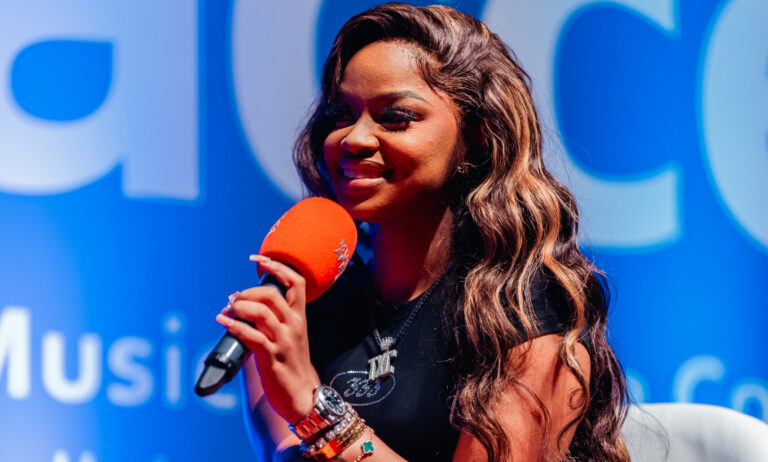
ACCES Conference and Showcase Festival is Africa's leading music industry gathering, bringing together the people shaping the future of the continent's music business. Artists, entrepreneurs, executives, investors, policymakers and cultural leaders from across Africa and around the world come to ACCES to build partnerships, exchange ideas, discover talent and create new business opportunities. Since its launch in 2017, ACCES has become the continent's premier platform for professional exchange and music market development. Combining a high-level conference with a curated showcase festival, networking, exhibitions and industry programmes, ACCES offers a unique space where creativity meets business and where African music connects with the global industry.

Gender@Work
Gender@Work

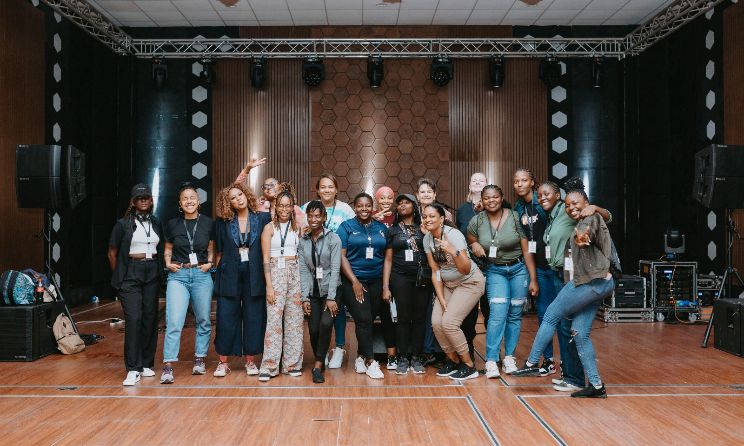
Music In Africa Gender @ Work is a three-year training programme aimed at upskilling and increasing the participation of female professionals in the African music sector. Launched by the Music In Africa Foundation (MIAF) in April 2019, the programme is connected to the MIAF’s ACCES music conference – a pan-African event held in a different African country every year. This connection enables the programme to reach new participants in a different African country every year. The programme marks the beginning of a more concerted effort by the Foundation to support the participation and inclusion of women in all facets of its programmes and the music sector in Africa as a whole. Over the three years, the programme will aim to address gender imbalances in the sector through training, lobbying, facilitating knowledge exchange and dialogues that foster the interest of women. The broader objectives of the programme are to: Provide industry training for women on critical music industry skills, focusing on: Stage management Electronic music production and recording Music business management Technical knowledge Provide an opportunity for both professional and aspiring women to benefit from the Music In Africa network and its broad range of activities in 2019, 2020 and 2021. Provide a solution-based platform in the form of a round table at ACCES with a view to identify challenges, discuss opportunities and lobby for the interests of female practitioners. Offer participants the opportunity to benefit from programmes offered by MIAF’s partners. Increase access to educational materials. Integrate participants in the broader ACCES programme to maximise experience and exposure to the industry. Record and present training materials on the www.musicinafrica.net, including but not limited to tutorials, templates and other best-practice materials. Communicate women-based themes that support the initiatives and messages of the programme. MAIN TRAINING ACTIVITIES Training in first country (Ghana): In the first year, participants will be trained on all aspects of stage management by a team of experienced stage managers from 10 to 17 November 2019. The programme will offer robust classroom training as well as practical, hands-on training in which participants will also be given the opportunity to manage various aspects of the ACCES performance programme. Training in second country: The second training iteration will take place at ACCES 2020 when the programme will diversify its course to include music production lessons and training on other music business topics. A round-table platform will also be introduced to coincide with the ACCES programme. Training in third country: The third training iteration will take place at ACCES 2021 in a different country, offering an advanced course. HOW DO YOU GET INVOLVED?  As a participant, facilitator or trainer: The programme enrolls up to 12 trainees every year. All opportunities are advertised publicly on this website, and will be added to this page. Please keep checking this page for new calls (below under UPDATES & CURRENT OPPORTUNITIES). As a partner Please contact Claire Metais at [email protected]. APPLY The call for applications for 2020 will be announced soon. The Music In Africa Gender @ Work programme is made possible with the support of the Prince Claus Fund, Siemens Stiftung and Goethe-Institut.

Sound Connects Fund
Sound Connects Fund

For cultural and creative practitioners and organisations operating in southern Africa, access to funding remains a major challenge. The COVID-19 pandemic has also had a massive impact on government policy, spending and the economy in general, and has seen spending on culture being moved further down the list of priorities. Further, the cultural and creative industries repeatedly cite four main areas where investment is needed for growth, which are increased visibility, mobility including access to new markets, finance and support structures.

Instrument Building And Repair Project

Experience the Vibrations African Instruments Exhibition online in 3D

Features

Music streaming in Kenya – an insider’s perspective

08 Mar 2022 - 14:33

cc-img flag-img

In March 2010, Kenya’s Just a Band set the internet on fire with the release of their single ‘Ha-He’ on YouTube. Composed of highly eclectic individuals who were unafraid to experiment, the group found it hard to break into the mainstream music scene.
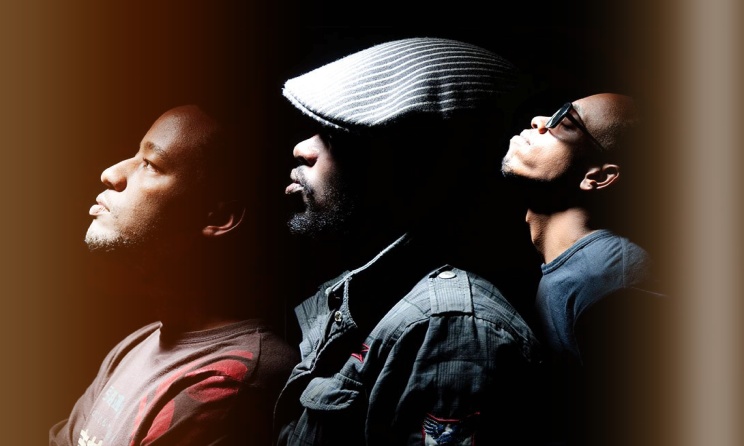
Just a Band owe their popularity to the viral properties of YouTube.

Operating on what many industry insiders considered an untenable music business model, the trio pushed on, happy to play for their handful of followers in Nairobi’s bohemian bars and cultural centres.

Then, in 2010, the unexpected happened: after routinely uploading the video of ‘Ha-He’ on YouTube, Kenyans, for some strange reason, took a liking to it... and the song went off the charts, earning Just a Band the recognition and appreciation they had never imagined possible. Although the group has since disbanded, with its members concentrating on individual artistic pursuits, that uncomplicated act of uploading a video online helped push Just a Band in the pantheon of Kenyan music.

Today, streaming is the standard of the music business. It involves a dizzying amount of money, with millions of artists benefiting in much the same way Just a Band did in terms of earnings and exposure. But as much as it has contributed to the success of many international acts, countless musicians in Africa are yet to fully reap the benefits, mainly because the continent was overlooked for a long time by major streaming platforms, and due to lack of access to affordable and stable internet.

According to Weetracker, as of June 2021, global streaming behemoth Spotify had set up base in more than 39 African countries, bringing renewed optimism to the continent’s underpaid artists. Currently there are more than 25 homegrown and international web and mobile music streaming platforms on the continent – all seeking to engage Africa’s 1.2 billion youthful population.

So does this mean that the ‘Promised Land’ is on the horizon for African musicians, or do we need to place our optimism on hold? To help us put things into perspective, Music In Africa spoke with industry insider Billy Warero, a sales executive at MTECH Communications, which specialises in digital solutions in some 10 African countries.

MUSIC IN AFRICA: What can you tell us about the music streaming business?

BILLY WARERO: I’d like to approach it from the perspective of where artists actually earn and platforms that actually bring in the revenue.

Which platforms are out there?

I would use CD Baby to put all my content on all digital platforms and earn royalties from Spotify, Apple, Music, Deezer, Tidal, YouTube, YouTube Music, Pandora, Amazon Music, Facebook/Meta, TikTok and Instagram. These platforms can provide artists with good revenue. Further, there are region-specific platforms such as Boomplay. South Africa has several of her own, and in Kenya we also have a number, like Safaricom Baze Music, that allow for direct purchase and streaming of content. Others exist and have existed such as Mdundo and Waabeh. However, ringback tones are reshaping content due to the mass market framework.

How is this helping artists in terms of revenue and growth?

Streaming revenue varies. Primarily, shows and gigs were the defining source of day-to-day income, with digital platforms supplementing income. In a COVID-19 world, artists have been forced to rely primarily on digital platforms. Streaming revenues are not at the same level with the gig economy. Big artists do get great payouts but concerts pay more. In Africa, digital ringback tone services have increased revenues significantly for artists. For some, it’s their primary revenue earner above the popularly known Spotify and YouTube. This is because the platform targets the mass market, and with monthly income from millions of subscriptions, it’s an easy way for short-form snippets to earn large amounts of revenue. Outside Africa, it is all about sync licensing, which involves content created and aligned to video games, movies, TV shows, ads, et cetera. It is doing much better than traditional streaming. This is also accessible on platforms such as CD Baby.

Are artists getting due compensation for their work?

Yes, in the models mentioned just before. When an artist signs up on global platforms, royalties are sent to the bank on a monthly basis.

What is the general state of streaming in Kenya?

Streaming is great in the formats of ringback tones and sync licensing. Global streaming is okay but only for big artists. There has been some downfall in regional platforms such as Mdundo and Waabeh, as the costs of maintaining such platforms outweigh earnings.

What can be done to make streaming more rewarding for artists?

The question is more about what the artist can do to grow their platform and make content that aligns with the most profitable models. A true commercial artist would be able to take this perspective. Today’s artists have to adapt or fail.

On which platforms can artists expect to earn the most money?

Platforms like CD Baby and TuneCore aggregate earnings from multiple digital service providers, not just YouTube, so earnings are broader. Currently, TikTok and Instagram are top earners for artists as novel models of content streaming.

Please log in to post a comment.

Most popular

Disclaimer: Music In Africa provides a platform for musicians and contributors to embed music and videos solely for promotional purposes. If any track or video embedded on this platform violates any copyrights please inform us immediately and we will take it down. Please read our Terms of Use for more.

newsletter banner

Subscribe to our monthly Newsletter

Follow us on social media