

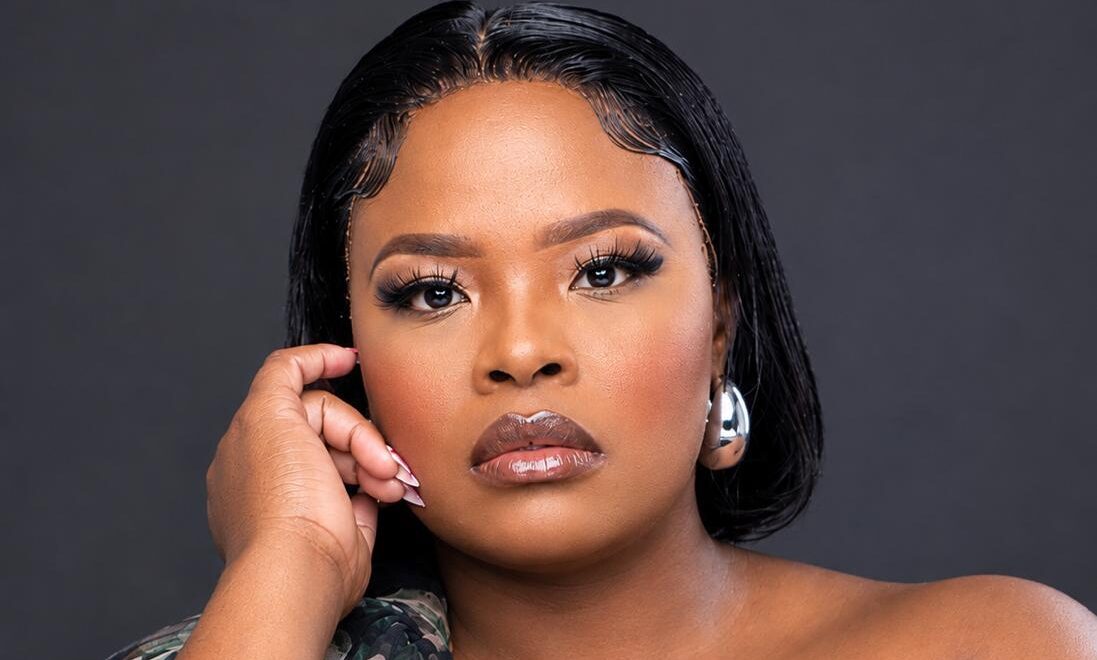

















































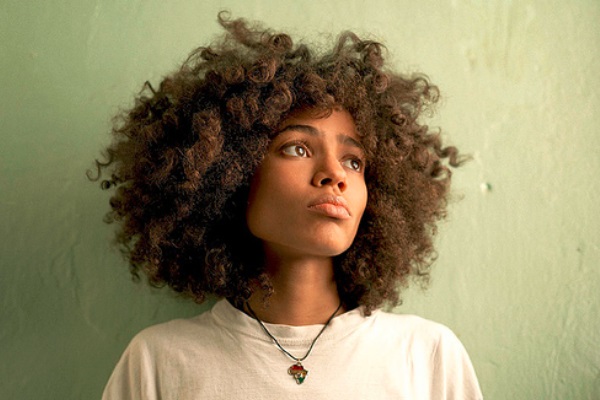
Perhaps Nneka has never quite enjoyed a strong following in the country of her birth because she showed up too late. The conscious reggae/soul hero came of age and mostly passed on before the public eye in eighties and early nineties Nigeria. Mandators, Majek Fashek, Ras Kimono—those are her precursors. Fast tempo, club hits, brainless pop are the competition. It is not a fair fight.
Her new album, My Fairy Tales, will not change the situation. Brainless pop remains the god every other genre bows to. Fortunately an acceptance of the status quo frees her. Somewhat. On evidence presented here, it frees her personally. Most obviously with the inclusion of the personal pronoun in the album title. 'Heartbeat', her first charting song in Europe, could reasonably be called ‘My Heartbeat’ but Nneka wasn't ready. It has taken her five albums to be comfortable with her listeners. So it will come as a surprise to hear her sing the words, ‘I like to please you…I like to be with you’ as she does on album closer ‘In Me’. In contrast, on 'Restless' off her last album Soul is Heavy (2012) her sights were trained on the loss of love: ‘You don’t need me no more/I set you free’. Not so anymore. She’s luxuriating in love. (On same album she asked ‘Do You Love Me Now?’ but it was never clear if she was addressing a lover.)
If the title 'My Fairy Tales' merely hints at romance, the love-theme is pointed on the album’s first single. ‘Deeper than any valley, my love will stand/ Higher than any mountain my love will be,’ she begins on ‘My Love, My Love’. On the chorus she adds, ‘My love, my love…your love, your love is farther beyond, farther beyond, farther beyond the human eyes can see.’ Of course, it won’t be Nneka if there isn’t a suggestion of the supernatural to mystify proceedings. But Nneka is hardly the first songstress to demote divinity to the carnal, or to elevate the sentimental to the spiritual. 'This is no ordinary love,’ Sade Adu, one of Nneka’s chief inspirations, sang a lifetime ago. Nneka carries the extra-ordinary theme forward: ‘In the light of your moon, I’ll make love to your ocean,’ she sings. The heavens bear witness: these women don’t love simply.
It is unclear if the freedom spreads to Nneka’s music. In today’s world of auto tune and electronically generated beats, the guitar wielder is ultimately a figure of musical conservativeness. Yet in stubbornly clinging to that instrument the guitar-heroine becomes a radical, a non-conformist. And so Nneka proves on Tales, with its spare production depending more than ever on Nneka’s voice to carry melody. In a regard this is a loss. The lush accessibility of Soul is Heavy is all but gone. With Nneka now an independent artist, the layering of that album’s sound is absent on this record. Might the album’s title be ironic? How much of a fairy-tale is possible with budget production?
What the loss of frills produces is Nneka. Nneka unfiltered through a quasi-pop sensibility. Nneka back to mostly reggae and a microphone. ‘I’ll be coming home,’ she says on album opener ‘Believe System’. Unfurl the red carpet. The lady’s back.
Always a conscious artist, activism joins heart on her sleeve. ‘My people dey suffer,’ she wails on ‘Babylon’. A head bopping tune, it works better than ‘Pray for You’ where her political naiveté is on show: Boko Haram/too many people don die/Blood dey for your hand/You no fit comot am lai lai. (roughly: 'Boko Haram, too many people are dead. You can't clean the blood on your hands') As anyone knows blood on the hands of Boko Haram, indelible or no, is hardly an issue for the group. ‘Book’ may be forbidden by the sect but blood is welcome.
The consolation is Nneka's aware of developments in her fatherland even upon relocation to Germany. This is a good sign because besides romance, the album is preoccupied with Nigeria. And nowhere on Tales is this clearer than on ‘Local Champion’. ‘I be Warri reggae,’ she chants on the song. ‘Dem born me near Ugborikoko’ (roughly: ‘I am a reggae girl from Warri,’ a town in South-South Nigeria. ‘I was born near Ugborikoko,’ a lower middleclass suburb in Warri).
Apparently directed at Lagosians, perhaps Nigeria's most citified citizens, the song is a ready anthem for people from the South-South region of Nigeria. Nneka is proudly from the region yet the resident Nigerian can tell that this song will be doubly resonant had the lady's singing voice carried a stronger flavour of that place, however indeterminate an accent is. Asa, her sister-in-guitar-heroism handles this by singing in the Yoruba language. The guys in mainstream pop, Timaya or Olamide, say, have their territories on their tongues. Nneka shows she's aware of the disparity when she addresses her biracial parentage wanly: ‘Shebi I be half-caste because I carry colour follow body/borrow pose’ (‘Am I half-caste because I am this skin colour?—it’s borrowed.’)
But, of course, provenances differ and, as the writer David Foster Wallace may have said, you end singing like yourself. My Fairy Tales shows Nneka as herself—as a citizen with contradictions, as a woman capable of intimacy, and as a musician newly comfortable with sharing ideas of that intimacy with her listeners. If in giving herself she makes us nod and do a jig, as she mostly manages, who are we to complain?


Most popular

Top Naija songs of 2026
31 Mar 2026
Ghana: Mr Eazi and MOLIY’s ‘Comfort’ earns Urban Music Awards nomination
21 Oct 2026

Top Afrobeats songs of 2026
19 Mar 2026

Top amapiano songs of 2026
16 Feb 2026
Open call: CANEX Music Business Lab and Songwriting Camp
15 Oct 2026
Nigeria: CANEX WKND unveils 2026 programme
21 Oct 2026
Disclaimer: Music In Africa provides a platform for musicians and contributors to embed music and videos solely for promotional purposes. If any track or video embedded on this platform violates any copyrights please inform us immediately and we will take it down. Please read our Terms of Use for more.

Subscribe to our monthly Newsletter
Follow us on social media


Please log in to post a comment.