









































NEFCISA
NEFCISA

The Music In Africa Foundation (MIAF) is proud of its partnership with the Industrial Development Corporation (IDC) as a Strategic Implementing Partner (SIP) for its Social Employment Fund (SEF). Through this collaboration, MIAF is running a national programme that is creating jobs, addressing skills gaps, and strengthening South Africa's creative industries — in line with the SEF's overarching goal to generate work for the common good and build community value through employment, social contribution, and inclusive economic participation. Operating under the banner NEFCISA (National Employment Facility for Creative Industries in South Africa), the initiative is recruiting and training participants, matching them with host organisations, and has already placed 1 500 workers across the country — surpassing its original target of 1 000. NEFCISA is delivered through a network of 20 host organisations spanning five provinces, who are actively hosting participants and contributing to work for the common good across South Africa's creative and cultural industries. Key Objectives: Support employment and entrepreneurship in the creative industries. Offer skills development and training programmes. Foster partnerships between public and private creative sectors. Promote South African creativity at both provincial and national levels Foster community development through social contribution.

ACCES
ACCES

ACCES Conference and Showcase Festival is Africa's leading music industry gathering, bringing together the people shaping the future of the continent's music business. Artists, entrepreneurs, executives, investors, policymakers and cultural leaders from across Africa and around the world come to ACCES to build partnerships, exchange ideas, discover talent and create new business opportunities. Since its launch in 2017, ACCES has become the continent's premier platform for professional exchange and music market development. Combining a high-level conference with a curated showcase festival, networking, exhibitions and industry programmes, ACCES offers a unique space where creativity meets business and where African music connects with the global industry.

Gender@Work
Gender@Work

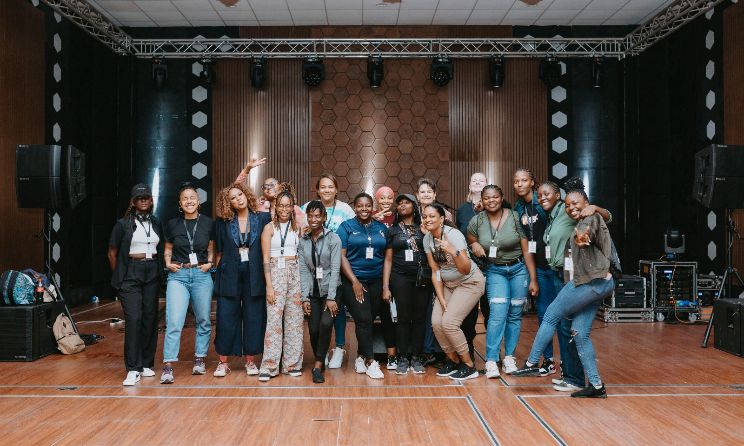
Music In Africa Gender @ Work is a three-year training programme aimed at upskilling and increasing the participation of female professionals in the African music sector. Launched by the Music In Africa Foundation (MIAF) in April 2019, the programme is connected to the MIAF’s ACCES music conference – a pan-African event held in a different African country every year. This connection enables the programme to reach new participants in a different African country every year. The programme marks the beginning of a more concerted effort by the Foundation to support the participation and inclusion of women in all facets of its programmes and the music sector in Africa as a whole. Over the three years, the programme will aim to address gender imbalances in the sector through training, lobbying, facilitating knowledge exchange and dialogues that foster the interest of women. The broader objectives of the programme are to: Provide industry training for women on critical music industry skills, focusing on: Stage management Electronic music production and recording Music business management Technical knowledge Provide an opportunity for both professional and aspiring women to benefit from the Music In Africa network and its broad range of activities in 2019, 2020 and 2021. Provide a solution-based platform in the form of a round table at ACCES with a view to identify challenges, discuss opportunities and lobby for the interests of female practitioners. Offer participants the opportunity to benefit from programmes offered by MIAF’s partners. Increase access to educational materials. Integrate participants in the broader ACCES programme to maximise experience and exposure to the industry. Record and present training materials on the www.musicinafrica.net, including but not limited to tutorials, templates and other best-practice materials. Communicate women-based themes that support the initiatives and messages of the programme. MAIN TRAINING ACTIVITIES Training in first country (Ghana): In the first year, participants will be trained on all aspects of stage management by a team of experienced stage managers from 10 to 17 November 2019. The programme will offer robust classroom training as well as practical, hands-on training in which participants will also be given the opportunity to manage various aspects of the ACCES performance programme. Training in second country: The second training iteration will take place at ACCES 2020 when the programme will diversify its course to include music production lessons and training on other music business topics. A round-table platform will also be introduced to coincide with the ACCES programme. Training in third country: The third training iteration will take place at ACCES 2021 in a different country, offering an advanced course. HOW DO YOU GET INVOLVED?  As a participant, facilitator or trainer: The programme enrolls up to 12 trainees every year. All opportunities are advertised publicly on this website, and will be added to this page. Please keep checking this page for new calls (below under UPDATES & CURRENT OPPORTUNITIES). As a partner Please contact Claire Metais at [email protected]. APPLY The call for applications for 2020 will be announced soon. The Music In Africa Gender @ Work programme is made possible with the support of the Prince Claus Fund, Siemens Stiftung and Goethe-Institut.

Sound Connects Fund
Sound Connects Fund

For cultural and creative practitioners and organisations operating in southern Africa, access to funding remains a major challenge. The COVID-19 pandemic has also had a massive impact on government policy, spending and the economy in general, and has seen spending on culture being moved further down the list of priorities. Further, the cultural and creative industries repeatedly cite four main areas where investment is needed for growth, which are increased visibility, mobility including access to new markets, finance and support structures.

Instrument Building And Repair Project

Experience the Vibrations African Instruments Exhibition online in 3D

Reviews

Olamide — The Glory

30 Jan 2017 - 13:04

cc-img flag-img

Artist: Olamide
Album: The Glory
Label, Year: YBNL, 2016

The Glory by Olamide album art

The Glory, Olamide's sixth studio album in six years, was released on the same day he shut down Eko Hotel for the third year running with the Olamide Live in Concert gig. An attendance of over 7,000 fans prompted many to suggest a stadium for his next concert.

The rapper's new album is the most stylish rap album of 2016. Unlike Eyan Mayweather, it has guest spots, but as with all of his albums, there are no foreign acts, an asseveration of his commitment to follow Fela's footsteps. "Baba Fela never begged anyone for Collabo," he once said in an interview, recalling an episode in which the afrobeat man accused Paul McCartney of coming to the continent to exploit African music.

While other Nigerian artists fly out of the country to collaborate with foreign artists and shoot videos in South Africa, Olamide has developed an insularity that has profited him. He has not collaborated with foreign artists, just as he has shot all his videos in Nigeria.

The new album, along with Rapsodi (his debut), has something in common with his sophomore. All are compact arrangements. The Glory arrives on the wings of an intro which opens with talking drums that last the entirety of the song and ends with a diabolic laughter typical of juju priests in Yoruba movies. This is a mild shift from his days of sampling Enya and other western occultic tunes.

The intro is followed by 'Letter to Milli', a sequel to 'Toriomo' from his Eyan Mayweather album. He tells his son, Maximilliano, to learn from his father's experiences and use them as platform to succed further. The rapper says to his son that he can be president; and for him not to want to end up like everybody else, he must do what everybody isn't doing. This is followed by 'Journey of a thousand Miles' where he exhibits some Adekunle Gold influence in his use of folkloric tunes while at the same time employing producer ID Cabasa-like melodies reminiscent of Rapsodi's.

'Pepper dem Gang' features Davolee, Lil Kesh's replacement in the YBNL camp. Unfortunately Davolee is incapable of giving Olamide a run for his money the way Lil Kesh did in 'Oga Nla' and 'Bang' on the Street OT album. Neither does he render the kind of performance Kesh rendered on 'Ladi', subduing Olamide and Phyno both lewdly and lyrically. The outstanding line on the song, "Omo to dope die bi ti Whitney" is Olamide's.

On 'Lori tit Yi', Olamide captures the sad reality of Nigeria's future, albeit unknowingly. At the begining, a kid is asked what he would like to be in future. "*Mo fe ma se yahoo yahoo," he replies just the same way his counterparts in Warri respond with, "Ayiri go school?" when advised to focus on their studies rather than dabble in oil bunkeering. Although the song tries to mask it off as a random comment from a ghetto child since it is street-themed song, it is nevertheless an exposure of a failing society and its realisation piques at one's conscience.

If the first half of The Glory album is where the regular rap songs are, the latter half is where Olamide indulges his listeners and long time fans who know his album is incomplete without a DaGrin reference. The reference is provided on the chorus of the Burna Boy-featured 'Omo Wobe Anthem' in which Burna recaptures his past by providing a hook unrivalled by any in his ouevre. His verse is a delicious blend of more than one style that shifts every few seconds without losing grip. Also in the latter half of the album is the superbly rhymed 'Owo Blow' that provides a sort of sharpness and direction for the entire album. 'Who you Epp', the most sampled song of 2016, sits at the heart of this half. It does the opposite of what 'Owo Blow' does—it makes the album jaunty in a joyful way and reminds listeners of the Wande Coal from Mushin2Mohits. 'Sons of Anarchy' another Burna-featured song has the guest sing a chorus so mellifluous its lyrics don't matter. Humming along is enough. It is, however, quite an unfortunate song for Phyno as his brief verse is swallowed whole by Burna's melody.

With six critically and commercially successful albums within six years, it may be safe to say that the Bariga-born rapper is on the verge of retirement judging from statemements like "Press P, and know when to pause" as said on 'Symbol of Hope'.

Although his countless detractors will try to lessen his enormous achievements, Olamide says on 'Oluwa Loni Glory', "Cos we came from the gutter, no matter what we do, they'll never respect us. This industry hates us.". And for those who will go further to say he isn't a core rapper, seeing as he has made too many successful pop songs, to them he says on the same song: "Business man ni mi o. Eyin le gbe rap sorry binpe KRS ni yin o." He addresses the topic again on 'Symbol of Hope': "Kini showbiz if you not making no profit?" If there's a lesson to be learnt from the Olamide story, it is on the third verse of 'Symbol of Hope': "Do what you like, don't let them put you in a box."

Should this be Olamide's last album, the loss, it must be stated, is ours not his.


Please log in to post a comment.

Most popular

Disclaimer: Music In Africa provides a platform for musicians and contributors to embed music and videos solely for promotional purposes. If any track or video embedded on this platform violates any copyrights please inform us immediately and we will take it down. Please read our Terms of Use for more.

newsletter banner

Subscribe to our monthly Newsletter

Follow us on social media