























































In a crowded music space, artists need to strategically position themselves if they are to get the best out of Ethiopia’s music scene. Even though avenues to develop or showcase one's talent continue to grow, only a few artists are able to get the maximum benefits out of the existing opportunities. From talent searches and competitions to funding opportunities and regular gigs, this text provides an overview of some of the opportunities currently available to Ethiopian musicians.
Talent searches and competitions
The talent search and competition market is not as broad as one might expect for a large nation like Ethiopia, home to more than 80 million people. Only three competitions can be singled out: Balageru Idol, Merewa and the Ethio Talent Show.
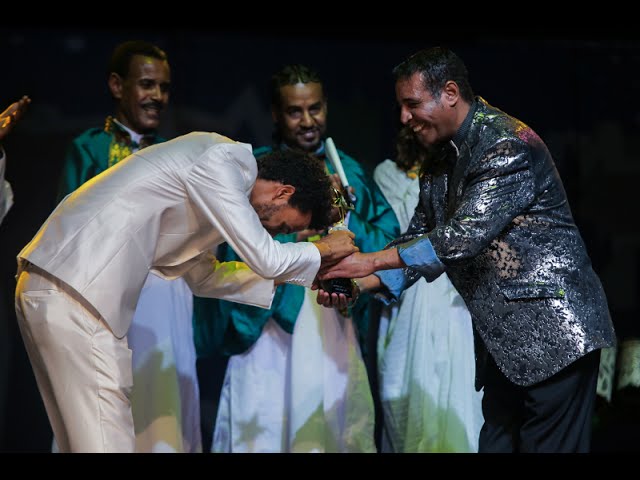
The locally run Balageru Idol has had notable impact in promoting the careers of emerging musical talent. While winners walk away with prize money and recording deals, for the rest of the participants how they position themselves during the contest can make or break their future careers.
Esayas Tamrat, one of Ethiopia’s emerging singers, plays at Suba Lounge every Friday night. The singer, who integrates sounds from renowned Ethiopian musicians such as Tilahun Gessesse, Minilik Wosenatchew and Muluken Melesse, was relatively unknown a year ago. But due to his participation in Balageru Idol, Esayas quickly attained celebrity status in Ethiopia. The 29-year-old Addis native won the hearts of TV viewers with his performance of old Amharic classics. Immediately after the competition he was able to join one of Addis Ababa’s top music venues.
Even though Esayas lost to Dawit Tsige in the final, Esayas is still enjoying a successful start to his career. Besides the monetary prize money of 300 000 Birr (about $13900), the winner (Dawit Tsige) also bagged a deal with a recording label. Esayas on the other hand was awarded 150 000 Birr (about $6900), media appearances as well as the regular gig at Suba Lounge. "My life has completely changed,” says Esayas. "Before Balageru, it was an uphill task for me to get a gig at any live music venue, even at no fee. But after the talent competition I am now getting invites and my shows are getting sizeable audiences." He adds that his participation has also led to many people recognising him in public.
While Esayas’ new fortunes may not be the case for all other contestants, competitions such as Balageru are a great start for anyone who is serious about a music career. Aspiring artists need to look out for such avenues to develop their talent.
Balageru is the brainchild of Abraham Wolde, a 40-year old music producer and entrepreneur. In 2015 the show held its third edition, which aired on Ethiopian Broadcasting Corporation (EBC) until September, when the winners were crowned. Wolde says musicians are finding it increasingly difficult to make a name and living for themselves in the city’s few venues. As a result, some great musical talents wallow in obscurity due to the lack of publicity. Before creating the talent show, Abraham was responsible for producing Balageru I, II & III, a series of compositions glorifying rural life. The songs were written and produced by Abraham, and sung by three different singers. Abraham and his team are now working with the top ten Balageru winners to record tracks for each of them, along with a full-length album for the main winner at Balageru Studio in Addis Ababa. The next season of Balageru Idol show is also in the offing.
Other Ethiopian talent shows are Merewa, which was launched in 2015 and is broadcast on the US-based network Ethiopian Broadcast Service (EBS), and the long-running Ethio Talent Show on EBC3, both of which cater to musicians.
Projects and institutions
With financial assistance from the European Union (EU), the Ethiopian Ministry of Culture and Tourism runs a project known as Promoting Heritage and Culture for Ethiopia’s Development (PROHEDEV). Among other things, this project is revamping and setting up training institutions in the music sector, as well as providing grants for cultural industries. The project kicked off in 2013 and is expected to run for five years. Currently, six state universities in the country are among the beneficiaries. These institutions are involved in training the country's future music talents, as well as other key people in music-related fields. The ministry says it wishes to build a stronger local music industry that encourages artists to create music reflecting the country’s culture.
Among the country’s best-known music institutions is the Yared School of Music, Addis Ababa University's Music Department, which was founded in 1954. Specializing for several decades in classical music, in 2012 Yared added its own Jazz Department.
The JazzAmba Music School, previously known as the African Jazz School, was established on September 2008 and is located northern Addis Ababa. The school has opened up all sorts of creative avenues for students. In addition to its courses in jazz (with majors in trumpet, piano, drum and saxophone), it offers scholarships, a recording studio and a production company, . The students, most of whom are 20 to 35 years old, form their own music groups and perform occasionally at different locations in town.
Music Leads The Way[i] is a project that since 2014 has provided skills-based training for artists and other operators in the music sector. Initially known as Addis Urban Project, the project was run by Selam Ethiopia in conjunction with the Ethiopian Musicians Association (EMA) [ii] with the support of the Swedish International Development Cooperation Agency. It was able to train about 30 artists. After two years the initial project came to an end, paving the way for Music Leads the Way, which is now run by Selam as part of its Cultural Enablers programme focusing on creating an enabling environment for cultural producers in Ethiopia.
“The project helps young, un-established musicians by providing skills development, social media strategy and copyright management,” says Nahom Dawit, the project officer. A jazz pianist himself, Nahom says it is his passion for music and his background in business management that inspired him to work with emerging young musicians, to help them overcome the various challenges in the music industry. Nahom says most of tomorrow's would-be stars face insurmountable challenges, as production and distribution remain weak in the country. Music Leads the Way wants to address some of these challenges by promoting online marketing and creating a platform for young musicians. Through different sessions, invited teachers talk young musicians about songwriting, vocal technique and dance, for example. The weekly capacity-building workshop are aimed at helping aspiring artists develop enough confidence to record and promote their music.
In the future, besides nurturing young talent, Nahom says the project wants to involve traditional musicians (including Masinko and Washint players) and DJs to further their compositional development.
One of the singers who is profiting from the project is Binyam Woldu, 24, who currently performs performs every evening at Checheho, a traditional restaurant in Addis. He has also worked with the well-known Fidel and Bole bands on various occasions. He says the project has enabled him to master the use of social media (including Facebook, Twitter, WordPress, SoundCloud, iCloud and Instagram) to promote his music. Binyam recognises that social media can be a catalyst for conversation and word-of-mouth marketing. Binyam has yet to produce his album, but a music video for one of his tracks, 'Mela Bilesh', will soon be released online.
This, coupled with a thoughtful approach, good networking and knowledge of the industry, should enable Binyam - as well as the many other talented young Ethiopian artists making use of the available opportunities - to go far in their music careers.


Most popular

Call for applications: ACCES 2026 Emerging Artist Spotlight Competition
01 Oct 2026

Top amapiano songs of 2026
16 Feb 2026

Top Naija songs of 2026
31 Mar 2026

Top Afrobeats songs of 2026
19 Mar 2026
Open call: 2026 Gender@Work music industry training in Johannesburg
03 Oct 2026

AFRIMA 2026: All the winners
12 Jan 2026
Disclaimer: Music In Africa provides a platform for musicians and contributors to embed music and videos solely for promotional purposes. If any track or video embedded on this platform violates any copyrights please inform us immediately and we will take it down. Please read our Terms of Use for more.

Subscribe to our monthly Newsletter
Follow us on social media


Please log in to post a comment.