
















































Opportunities for musicians in Zambia
17 Aug 2016 - 10:37


By Ben Phiri
Zambia’s rich musical tradition, evolving around the country’s 72 ethnic tribes, gives the local entertainment industry a variety of music genres which have developed over several decades, from Kalindula, Zam-Rock and Manchancha to today’s local version of hip-hop. This text provides an overview of the various opportunities available to Zambian musicians to improve their musical and professional skills in order to make a living out of music.
Background
Historically, certain Zambian bands have been given the opportunity of sponsorship by large companies. Looking back, bands of the 1970s and 80s, such as the Big Gold Six, had good opportunities to gain exposure. They were hired to play at various high-profile functions and toured the USA. The Big Gold Six (then called Lusaka Radio Band) was first sponsored by the Zambia Broadcasting Services (ZBS), forerunner to the Zambia National Broadcasting Corporation (ZNBC), and later taken over by a cigarette manufacturing firm to promote its Big Gold Six cigarette brand throughout the country.
Zambia Music Parlour Limited (ZMPL) employed bands like Five Revolutions and Black Foot, from where musicians developed their talent as well as derive their livelihood. There were other bands like the Masiye Brothers Bands One, Two Three and Four, which benefitted greatly from a local business executive who employed them to entertain revelers at his nightspots dotted around Lusaka, Zambia’s capital city.
However, after the demise of ZMPL and other stakeholders such as Teal Record Company and the former Zambia Consolidated Copper Mines (ZCCM)-owned Malachite recording studios, situated more than 400km north of Lusaka on the Zambian Copperbelt, the entire music industry collapsed. These were the ‘dark’ days for Zambian musicians who were also affected by high piracy levels, lack of reliable equipment, as well as standard recording studios.
Today, thankfully, the situation has improved and there are one again a variety of opportunities out there for Zambia’s musicians. Reflecting recently on the opportunities of the current Zambian musicians in comparison with those of yesteryear, former ZMPL executive producer Billy David Nyati said: “This is a great time for the current young musicians because we have a number of corporate entities coming on board, such as the Zambia Telecommunication Company (Zamtel), Zambian Breweries (ZB) and the mobile phone service provider Airtel among them, which have done a lot for the local music industry during the last decade.”
Nyati added that participation of these entities has provided many opportunities and helped to revive the local music industry which not long ago, was considered dead.
Sponsorship opportunities
The awakening of the industry towards the end of the 1990s opened up a lot of opportunities for the upcoming musicians, who set the tempo for its commercial growth. This has attracted various interested parties, such as the Zambia National Broadcasting Corporation (ZNBC), Zambian Breweries (via its flagship brand Mosi Lager), Airtel, Zambeef, the Alliance Francaise, as well as the embassies of France, Sweden and Japan, who have come on board to help create opportunities and develop local Zambia’s musical talent, primarily through sponsoring awards and competitions.
Depending on their stature, some Zambian musicians have landed lucrative contracts with these companies to do advert jingles to promote various products and services. For example, drinking water company Aquavita signed a deal with artist Dandy Krazy to promotes their product on TV and radio.
Sponsorship opportunities have helped give artists exposure and enough financial resources to enable them to open up recording studios or nightcubs, where upcoming local musicians are exposing their talent. Among such examples of musicians who have opened their own studios or clubs are Macky 2, Danny Siulapwa and Chimzie Kelly.
Awards
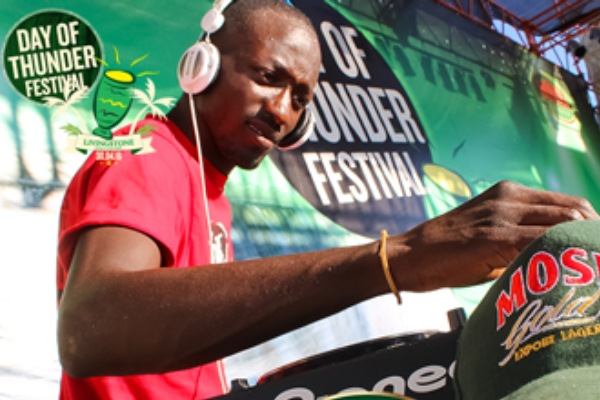
The Zambian Music Awards (ZMA), sponsored by Zambian Breweries, is the nation’s main music awards. In 2016 it was followed by the Mosi Day of Thunder, a live concert in Livingstone, the country’s tourist capital, featuring many of the winners.
The Born n Bred Music Video Awards are supported by ZNBC and honour the efforts of artists and video producers. These awards are becoming increasingly popular, ushering in much hope for the local music industry.
Other award ceremonies such as the Ngoma Awards and the Mukuba Awards, which are held annually in Lusaka and the Copperbelt respectively, were introduced to act as a launch pad for local talent development.
Talent competitions
Among the biggest talent searches in Zambia is the Airtel Trace Music Star competition, which has attracted hundreds of entries throughout the country and won the hearts of local music fans. Zambian upcoming local female musician Tiwamenji (aka Tiwa) has been among the top contenders for this prestigious competition.
Local business houses and individuals ploughed funds in a weekend talent scouting live music programme called Sounds Good, which helped to expose the cream of Zambian bands and musicians and inspired the current crop of youngsters, including Distro Kuomboka, Glorious Band, Rap Prophets, Burning Youth, Dandy Krazy, Daddy Zemus, Tsuma Brothers, Nasty D, Lindiwe Alamu, Joe Chibangu, JK, Lily T and Mainza Chipenzi.
Other similar competitions in Zambia include Dreams Zambia, Zambia's Got Talent and the You Got Served dance competition. Some of these and other ‘roadshows’, previously supported by corporates like Unilever Zambia and MTN for example, have not been held frequently, perhaps due to budget restrictions in the face of the economic challenges. Others have folded due to poor planning and organisation.
Workshops & organisations
Workshops are another important opportunity available to musicians in Zambia. Entities such as the Zambia Association of Musicians (ZAM) aim is to ensure that local music is well promoted and has been going around the country holding workshops for various musicians. It is also encouraging that the National Arts Council (NAC) has been supporting efforts to enhance ties between district, provincial and national levels.
Apart from the local Alliance Francaise and Swedish Embassy, there has been relatively little activity from music industry stakeholders in terms of workshops. Nevertheless, organisations and music academies that do provide occasional training opportunities include Lusaka Hub, the British Council, Butterfly Tree[i], Vision of Hope[ii], the Livingstone Performing Arts Foundation (LiPAF)[iii] and the Ngoma Dolce Academy.
Royalty collection
Another avenue for Zambian artists to earn money is via royalties. The aim of the Zambia Music Copyright Protection Society (ZAMCOPS) is to safeguard the interests and intellectual property of local artists. Artists and industry professionals are required to register with the organisation at a fee ranging between K350 and K1000. After completing a membership application form, the artist submits a copy of his album and a record of the radio or TV stations playing his music. The station playing his music is then expected to pay royalties.
ZAMCOPS also offers support in the fight against piracy, ie. the unauthorised use of his or her music. For example, local hip-hop star Dandy Crazy almost made a big loss when his music found its way to street vendors before it was officially released. With the help of ZAMCOPS officials, he was able to trace the source of the leak and deal with it according to the law.
Confusion over royalty payouts persists, however. Despite Zambian music enjoying substantial airplay both on radio and television, there have seldom been official announcements by stations on the issue, with the exception of the Zambia National Broadcasting Corporation (ZNBC) and one or two private radio stations. Although royalty payments have been inconsistent and largely unsubstantial, they have helped to sustain those artists whose music enjoys airplay on these stations.
There is still some concern from local musicians about the seemingly weak structures in the country’s music industry; as well as the problem of piracy. Despite the introduction of hologram stickers (for legal copies of albums), incidents of piracy are still glaring. Clearly, not enough is being done to close the loopholes. This is the reason why many Zambian musicians – even those whose music has appeared to thrive by selling thousands of copies and enjoying airplay - are still poor. Either the law is not clear on the issue or musicians are simply ignorant about it. Many musicians for a long time enjoyed listening to their own music on radio or TV, without thinking about the royalties due to them.
“If the Zambia Union of Musicians comes out strongly on that issue, radio stations could learn to pay royalties and make local musicians more sustainable,” says Alfred Yabe, a former guitarist for Blackfoot during the 1970s. "The Zambian music industry could thrive with such incentives for the local musicians."
With more corporates coming on board, there is bound to be a growing number of opportunities to help develop Zambian talent. If the trend continues, there will hopefully be more investments by corporates and wealthy artists in setting up modern recording studios (for example), which will spur the development of local talent and the music industry as a whole. This will help to strengthen the foundations of the Zambian music industry, which can only thrive on the availability of opportunities for local musicians.


Most popular
Call for applications: ACCES 2026 Emerging Artist Spotlight Competition
01 Oct 2026

Top amapiano songs of 2026
16 Feb 2026

Top Naija songs of 2026
31 Mar 2026

Top Afrobeats songs of 2026
19 Mar 2026
Open call: 2026 Gender@Work music industry training in Johannesburg
03 Oct 2026
AFRIMA 2026: All the winners
12 Jan 2026
Disclaimer: Music In Africa provides a platform for musicians and contributors to embed music and videos solely for promotional purposes. If any track or video embedded on this platform violates any copyrights please inform us immediately and we will take it down. Please read our Terms of Use for more.

Subscribe to our monthly Newsletter
Follow us on social media


Please log in to post a comment.