








































NEFCISA
NEFCISA

The Music In Africa Foundation (MIAF) is proud of its partnership with the Industrial Development Corporation (IDC) as a Strategic Implementing Partner (SIP) for its Social Employment Fund (SEF). Through this collaboration, MIAF is running a national programme that is creating jobs, addressing skills gaps, and strengthening South Africa's creative industries — in line with the SEF's overarching goal to generate work for the common good and build community value through employment, social contribution, and inclusive economic participation. Operating under the banner NEFCISA (National Employment Facility for Creative Industries in South Africa), the initiative is recruiting and training participants, matching them with host organisations, and has already placed 1 500 workers across the country — surpassing its original target of 1 000. NEFCISA is delivered through a network of 20 host organisations spanning five provinces, who are actively hosting participants and contributing to work for the common good across South Africa's creative and cultural industries. Key Objectives: Support employment and entrepreneurship in the creative industries. Offer skills development and training programmes. Foster partnerships between public and private creative sectors. Promote South African creativity at both provincial and national levels Foster community development through social contribution.

ACCES
ACCES

ACCES Conference and Showcase Festival is Africa's leading music industry gathering, bringing together the people shaping the future of the continent's music business. Artists, entrepreneurs, executives, investors, policymakers and cultural leaders from across Africa and around the world come to ACCES to build partnerships, exchange ideas, discover talent and create new business opportunities. Since its launch in 2017, ACCES has become the continent's premier platform for professional exchange and music market development. Combining a high-level conference with a curated showcase festival, networking, exhibitions and industry programmes, ACCES offers a unique space where creativity meets business and where African music connects with the global industry.

Gender@Work
Gender@Work

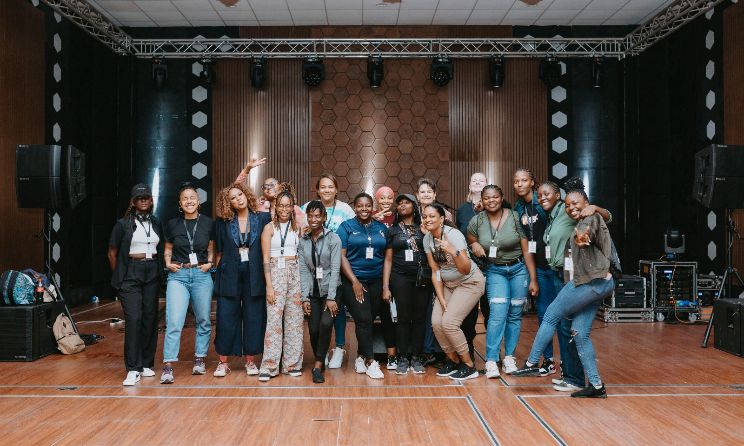
Music In Africa Gender @ Work is a three-year training programme aimed at upskilling and increasing the participation of female professionals in the African music sector. Launched by the Music In Africa Foundation (MIAF) in April 2019, the programme is connected to the MIAF’s ACCES music conference – a pan-African event held in a different African country every year. This connection enables the programme to reach new participants in a different African country every year. The programme marks the beginning of a more concerted effort by the Foundation to support the participation and inclusion of women in all facets of its programmes and the music sector in Africa as a whole. Over the three years, the programme will aim to address gender imbalances in the sector through training, lobbying, facilitating knowledge exchange and dialogues that foster the interest of women. The broader objectives of the programme are to: Provide industry training for women on critical music industry skills, focusing on: Stage management Electronic music production and recording Music business management Technical knowledge Provide an opportunity for both professional and aspiring women to benefit from the Music In Africa network and its broad range of activities in 2019, 2020 and 2021. Provide a solution-based platform in the form of a round table at ACCES with a view to identify challenges, discuss opportunities and lobby for the interests of female practitioners. Offer participants the opportunity to benefit from programmes offered by MIAF’s partners. Increase access to educational materials. Integrate participants in the broader ACCES programme to maximise experience and exposure to the industry. Record and present training materials on the www.musicinafrica.net, including but not limited to tutorials, templates and other best-practice materials. Communicate women-based themes that support the initiatives and messages of the programme. MAIN TRAINING ACTIVITIES Training in first country (Ghana): In the first year, participants will be trained on all aspects of stage management by a team of experienced stage managers from 10 to 17 November 2019. The programme will offer robust classroom training as well as practical, hands-on training in which participants will also be given the opportunity to manage various aspects of the ACCES performance programme. Training in second country: The second training iteration will take place at ACCES 2020 when the programme will diversify its course to include music production lessons and training on other music business topics. A round-table platform will also be introduced to coincide with the ACCES programme. Training in third country: The third training iteration will take place at ACCES 2021 in a different country, offering an advanced course. HOW DO YOU GET INVOLVED?  As a participant, facilitator or trainer: The programme enrolls up to 12 trainees every year. All opportunities are advertised publicly on this website, and will be added to this page. Please keep checking this page for new calls (below under UPDATES & CURRENT OPPORTUNITIES). As a partner Please contact Claire Metais at [email protected]. APPLY The call for applications for 2020 will be announced soon. The Music In Africa Gender @ Work programme is made possible with the support of the Prince Claus Fund, Siemens Stiftung and Goethe-Institut.

Sound Connects Fund
Sound Connects Fund

For cultural and creative practitioners and organisations operating in southern Africa, access to funding remains a major challenge. The COVID-19 pandemic has also had a massive impact on government policy, spending and the economy in general, and has seen spending on culture being moved further down the list of priorities. Further, the cultural and creative industries repeatedly cite four main areas where investment is needed for growth, which are increased visibility, mobility including access to new markets, finance and support structures.

Instrument Building And Repair Project

Experience the Vibrations African Instruments Exhibition online in 3D

Features

A pilgrimage to the oldest existing musical instrument in Nigeria

29 May 2015 - 12:06

cc-img flag-img

Igbo-Ukwu is more popularly known by Art Historians, Historians and Archaeologists, as the site of Archaeological excavations carried out by the great Cambrdge Professor, Thurstan Shaw, between 1959 and 1964. 

Typical design of an ancient Igbo Ubo-Aka (not the Igbo-Ukwu version).

Shaw had discovered artefacts in sites in the small town, which had revealed an ancient civilisation dating back to 950 AD, in short over a 1000 years old, this having been established by the strict scientfic process of carbon-dating. Some of the discoveries had included the remains of an ancient King, whose regalia included precious stones, which could only have come from India or Egypt, complex, intricate art works in Bronze and Clay, swords, crowns, sceptres and Elephant Tusks amongst others. However this list left out one incredibly significant item (at least for us and our readers here at Music In Africa), an ancient Thumb Piano.

The five key Instrument, known in Igbo-land (where Igbo-Ukwu is located) by the indigenous name, 'Uba-Aka' or 'Ubo-Akwara', was crafted in bronze, which probably accounted for its having survived 1000 years of underground degradation. A medium-sized circular design, with the characteristic intricate patterns of the finds of Igbo-Ukwu, it was still in remarkably good condition, for its age and the conditions, it had endured. One other distinctive fact about this remarkable instrument being that it was by definition, the oldest existing musical instrument in Nigeria, there being no evidence of any older specimens anywhere else in the country.The thumb piano by the way, known more widely in Southern Africa as ‘Mbira’, is one of Africa’s oldest melodic instruments, with a verifiable history going back over 3000 years. It occupies a space that straddles, entertainment, sacred worship and indeed decorative art.

Professor Shaw had famously refused all overtures and pressure to render the Igbo-Ukwu finds to the British Museum, insisting that they either be retained by the town of Igbo-Ukwu as a sacred trust for its citizens, or some of the artefacts be handed over to the Nigerian National Commission for Museums and Monuments, as required by law. A substantial number of the artefacts were then warehoused at the National Museum Lagos, however a smaller number were retained at Igbo-Ukwu and eventually put on display at a Museum established by the Anambra State Government (with administrative responsibility for the town of Igbo-Ukwu), in the town itself. The ancient thumb piano, was one of such artefacts.

I visited the Museum in 2013, on a broad quest of understanding the story of Igbo-Ukwu and was priviledged to witness the ancient instrument in its fully glory. The word glory here being relative, since the surroundings of the Igbo-Ukwu Museum were less than befitting for such an august occupant as the venerable Ubo-Aka. Collapsed roofing, broken windows and a generally deficient structural environment were the sad back-drop to its display. These circumstances are however not a commentary on the Museum's staff, who were, and I understand still are, incredibly committed and hard-working. However all their passion and high work ethic cannot be a substitute for the lack of government funding required to restore the Museum and safeguard its fast-dwindling inventory of artefacts.

All this notwithstanding, the significance of the very existence of the Igbo-Ukwu thumb piano is such that it has survived far greater tests than its present predicament, and to all intents and purposes it shall outlast its keepers and all of us bystanders, who stand in awe of its pre-eminence in the present. The Igbo-Ukwu thumb piano, wiith its ancestral ties to several other similar instruments across, East, Central and Southern Africa, is a living, enduring piece of cultural and historical memorabilia, indicative of a great Pan-African musical heritage, which the writer personally feels needs celebration in as many formats as is possible. This article is a challenge. Its sheer longevity is another challenge to the present generation of the African music stakeholder group. Its stubborn survival is equally a silent, implied reminder of the need to further investigate what is clearly a common African musical heritage, going back over millenia even. In Igbo-land in particular, a long line of great practitioners of this instrument have enjoyed huge popularity over the last century, with names like the legends Ezigbo Obiligbo, Ozoemena Nsugbe, Promoter Eze, Jimmy Conter and the transvestite Area Scatter, coming to mind. As the saying goes, 'you can't stop the music.' This historical piece of Africa's musical heritage provides no better evidence of the truth in the saying.

Please log in to post a comment.

Most popular

Disclaimer: Music In Africa provides a platform for musicians and contributors to embed music and videos solely for promotional purposes. If any track or video embedded on this platform violates any copyrights please inform us immediately and we will take it down. Please read our Terms of Use for more.

newsletter banner

Subscribe to our monthly Newsletter

Follow us on social media