


























































By Dr. Godwin Kwafo Adjei
This text provides a historical overview of Ghana’s recording industry and an outline of the main labels, studios and producers to date.
Background
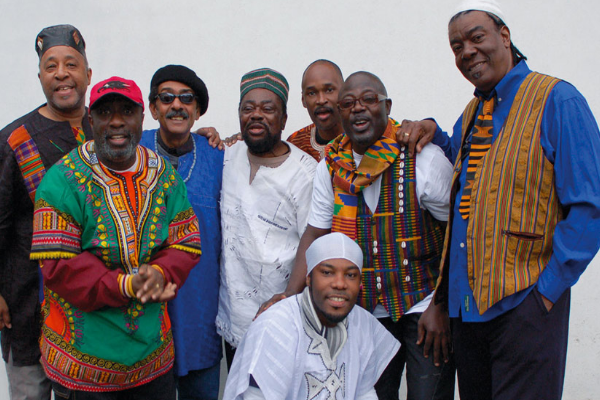
Ghana, as one of the leading countries in West Africa, was by the 1920s benefitting from record companies like Zonophone and HMV that had been set up by some British businessmen. These companies were in effect proudly planting Ghanaian highlife records on the West African market (Collins, 2002:8). Similarly, Ghana was recognized as the first country with its own permanent recording studio, Decca, set up in 1948 (ibid). With time, these recording companies and studios continued to grow in their numbers and by the mid-70s, the country could boast of four recording studios and two record pressing plants that were able to produce over 500, 000 records a year. In consequence of the phenomenal growth of the recording companies in Ghana, Ghanaian highlife extended to many countries leading to the creation of a variant known as Afro-rock a by London-based Ghanaian group Osibisa. This new variant made the group Osibisa highly popular in Europe. Consequently, they enjoyed a string of hits in Europe long before the world ‘music’ explosion (Collins, 2002: 8). Everything at this point seemed set for the Ghanaian music business to boom as numerous nightclubs and dance venues sprang up in Accra.
The perception that the industry was a goldmine to the country became a nightmare because of the numerous challenges bedevilling the industry in the 1980s when international interest in world music began. Most young musicians were unable to establish their own nightclubs and recording studios. The few successful ones who have managed to establish their own nightclubs and recording studios are Osibisa, Amakye Dede, Kwadwo Antwi and Daddy Lumba. It is worth noting that these few musicians succeeded by going abroad (Collins, 2002).
Between 1982 and 1984 there were two-and-a-half years of night curfew that drastically affected the work of commercial nightclubs and local pop, highlife and concert bands. Not long after the lifting of the curfew in 1984 however, the open-air nightclubs were taken over by dozens of mobile discos or ‘spinners’ who until then were operating in small discotheques. With their low entrance charges they soon took over dance venues from live bands in the cities and later the villages. They had cheaply purchased ‘spinning’ equipment, which was also easy to handle than those of the more complex highlife and concert bands. Although the local video market started to boom at this same time, creating revenue for some concert party actors, it killed off the live party performances of groups that had been touring the remote villages. (Collins, 2002).
A major challenge of the music industry was the vinyl recording industry’s collapse in the late 1970s. Consequently, the country moved towards cassette production in the 1980s, mainly carried out by an estimated 5000 pirates operating from small kiosks. Though these pirates attempted to legalise their operations and take over the music industry completely, they failed because their products were shoddy and sub-standard.
Another hitch to the growth of the music industry is rampant piracy. Piracy here refers to the unauthorized duplication of copyrighted content that is then sold at substantially lower prices in the open market. Before the introduction in 1992 of the anti-piracy ‘banderole’ stamp for cassettes and CDs by the government’s copyright administration, piracy was estimated to be 90% of the market. (Collins, 2002).
Music studios
In Ghana, only a few recording companies and studios exist today. Most of these are located in the regional capitals such as Accra, Tema and Kumasi. Unfortunately, not all of the names producers and engineers attached to these studios could be found. Some are, however, presented below.
The University of Ghana1 recording studio, located at the Department of Music, (SPA) has Amakye as chief engineer and Ernest Opoku as studio engineer.
Koded Studio2, a music recording studio located in Takoradi has Kofi Dua Anto as studio engineer.
MIDO Productions3 recording studio at Asylum Down, Accra has Jerry K. Boansi as studio engineer.
LAT Studio4 is located at New Town, Accra, Ghana.
Q. Lex Entertainment5 record company is a recording studio in Accra North has Jeff Tennyson Quaye as its record producer and sound engineer.
Studio Sunset at Tema has Chris Coady as studio recording producer/engineer6.
Record labels
A record label is a trademark associated with the marketing of music recordings and music videos. It is recognized as a publishing company that manages such brands and trademarks, and coordinates the production, manufacture, distribution, marketing, promotion, and enforcement of copyright for sound recordings and music video. Furthermore, it conducts talent scouting and development of new artists.
Lynkx Entertainment is one of the country's popular record labels. It has signed Irene Logan, Zigi, OJ Blaq, Eazzy and a few others.
There is Skillions Records, although unpopular the label has a good team.
Bullhaus Entertainment entered the scene of the music industry with artists like Iwan, Nii Soul, and many others and stormed Ghana with a highly competent team. The label’s new signee Natural FaCe may be the next big artist.
There is other famous music label headed by Hammer is Last 2. This label is responsible for great artists such as, Obrafour, Tinny, Edem, Okra, Kwaw Kese and many other great musicians.
The newest label to bounce onto the music scene is BBnZ Live. So far they have signed only El to their label.
Empire Entertainment is responsible for the duo Ruff and Smooth about three years ago with their single hit, ‘Swagger’. They have since signed on many artists including ‘Guru’ and a few others.
Native Park Records already has three artistes, Nana Sei, Edyth and Pastor Samuel Atto and is headed by Zapp Mallet.
Arizoner Music Group (AMG) has nurtured artistes Sylvia, El Hardy and J. Nino into fame.
Among the numerous record labels in Ghana, Media Excel Productions is classified as the best Christian record label. It has shot into fame gospel winning artists such as ASP Kofi Sarpong and the sensational Joyce Blessing who won the Gospel album of the year at the VGMA. The company has the turned church singers into national and global icons within a short period. It is run by Kwasi Ennin.
Although Ghana pioneered afro-pop and had an established local music industry, by the mid-seventies the country’s record business met with many challenges due to the general economic decline of the country. Record production went down to one quarter of its former total. Several musicians and bands went abroad to record and never returned. As a result of these departures, the music industry has for the past thirty years remained dormant as it continues to be plagued by leadership crises and corruption.
Further reading


Most popular

Top Naija songs of 2026
31 Mar 2026

Top amapiano songs of 2026
16 Feb 2026

Top Afrobeats songs of 2026
19 Mar 2026

Call for applications: ACCES 2026 Emerging Artist Spotlight Competition
01 Oct 2026

AFRIMA 2026: All the winners
12 Jan 2026

CAPASSO backs global principles for fair generative AI music licensing
06 Oct 2026
Disclaimer: Music In Africa provides a platform for musicians and contributors to embed music and videos solely for promotional purposes. If any track or video embedded on this platform violates any copyrights please inform us immediately and we will take it down. Please read our Terms of Use for more.

Subscribe to our monthly Newsletter
Follow us on social media


Please log in to post a comment.