





























































By Volker May
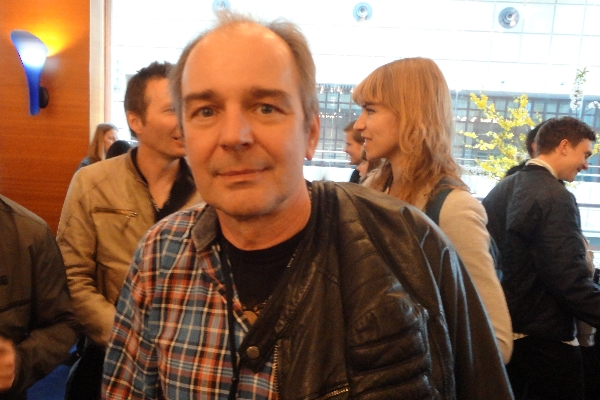
First let me introduce myself. My name is Volker May and I founded my first company in 1982. I started with an independent label, then founded a booking division, followed by a publishing company and finally a management division. For the past 10 years I have been involved in the International Music Managers Forum (IMMF), for several years as its Vice Chairman. In the past 30 years, I have worked with musicians who became overnight pop stars, as well as with musicians who never succeeded. I experienced times when an artist earned a lot of money with just one hit, but also times when 100 000 plays on a streaming service provider barely covers the expenses of a dinner with friends.
Let us have a look at the times where it all started. One of the first artist entrepreneurs was Count Ferdinand Ernst Gabriel von Waldstein, a German nobleman and patron of the arts and an early patron and supporter of Beethoven. Without his financial support and his “management skills” - or rather his passion to support creativity - Beethoven may never have had the chance to do what he loved to do, and to devote his life to it full time.
Roughly 150 years later, the age of Rock ‘n’ Roll was defined by another nobleman, ‘The King’ himself, Elvis Presley. His manager was ‘Colonel’ Thomas Andrew ‘Tom’ Parker. Parker's management of Presley defined the role of manager as a mastermind behind the talent. This involved every facet of the artists life and was seen as central to the astonishing success of Presley's career. However, questions remain about the cost to Elvis of working in partnership with his manager.
Some of the next iconic managers were Brian Epstein in the 1960s, managing the Beatles, and Andrew Loog Oldham, manager of the Rolling Stones, as well as the legendary Malcom McLaren, who according to some (well, according to him) created ‘the great rock ´n´ roll swindle’ by ‘inventing’ the Sex Pistols. Of gilt-edged reputation is Irving Azoff, the manager of acts like The Eagles, Van Halen and Christina Aguilera. Azoff is famous for his quote, "I never met an asshole in the record business I didn't like." Azoff aside, where are those icons nowadays?
Artist management today
The image of an artist manager has changed radically in the past 60 years. It started with the image of an old guy, wearing a bowler hat, smoking a cigar. As drugs came in, the managers’ outfit changed too and we saw younger guys, wearing long hair and trying for the first time to fight for the interest of those guys they represent, the artist. Peter Grant famously went to war for his clients, Led Zeppelin. Musicians and their managers were united by their common interest to fight against the establishment, connect to audiences and ensure the creator got the cash. Artist managers fought for better trading conditions for their clients.
What came next was the suit-wearing artist managers, the ‘tough guy’ (more or less) focused on business. Today artists are managed by lawyers, by pimps, by accountants, by themselves, or often by people who have a passion for it, and who work hard for less short-term money and better deals. There is neither a clearly-defined job description nor a training certificate which legitimizes people to be called officially an artist manager.
But what is the definition of a manager? The requirements to professional qualification of a music manager can be summarized simply: He or she is a service provider on behalf of the artist.
Today a music manager has to deal with problems that even a few years ago nobody had on the agenda. How people consume and enjoy music has changed dramatically as well. Technology has always driven the music and still has a significant impact on the behavior of the consumers, as well as artists. The evolution from the music sheets of Beethoven’s time to how we manage the digital content of a wireless hi-fi system at home today reflects the development of this business.
In former times, the manager just negotiated the royalties with the record company, signed the artist to a publishing deal and negotiated merchandise and live fees. Today a music manager has to deal with various possible income streams, and of course he should know what is a reasonable fee in each income stream for an artist. Today the manager is in charge of negotiating, controlling and administering far more, for example: copyright income streams of TV, radio and streaming services; digital sales; physical sales; compilations; telco deals; sync rights; neighbouring rights; live shows; merchandise; testimonial deals; advertising; product placement; sponsorships; to administer income from various collection societies; publishing rights; access to finance; fanbase management; online presence; social media; promotion; marketing; etc.
It is obvious that nobody can do it alone. To manage a successful artist therefore requires a team of experts. The different headlines also describe the different income sources which enables today the artist and manager to earn their daily bread.
Within that context it is extremely important to have access to an international platform which shares knowledge and experience.
The International Music Managers Forum (IMMF)
The IMMF is a global umbrella non-governmental organization (NGO) that has as its members national federations of music managers in 21 countries. These federations are individual national country organizations often called MMFs, which are comprised of individual managers, management companies and self-managed artists. Currently we have organizations in Australia, Belgium, Luxembourg, Canada, Denmark, Finland, France, Germany, Ireland, Netherlands, New Zealand, Norway, Portugal, Sweden, United Kingdom, USA, Italy, Spain and Estonia. In Africa we are represented in South Africa as well as West Africa, covering Nigeria, Gambia, Senegal and Burkina Faso. The IMMF has more than 1 100 members worldwide.
The IMMF’s core mission is to ensure the safeguarding, respect and protection of the moral and professional interests of the artists that its members represent. The IMMF provides a networking platform to its members and offers several committees, such as the Copyright Committee and the European Committee, to get involved in the national and international economic challenges and opportunities we are all facing today.
The IMMF helps artists and managers in different nations or regions to exchange information and knowledge in order to enhance and reinforce the professionalism and expertise of the community of music managers.
For our national member organizations we promote several tailor-made training and education sessions. These include sessions on ‘Understanding Todays Music Business’; ‘Owner Management/Self-Employment’; ‘Artist, Producer & Music Management’; ‘Artist & Music Administration’; ‘Audience and Fan Base Development’; ‘Independent Recordings’; ‘Live Performance & Touring’; ‘Music Publishing’; ‘Music in Audio-Visual Media’; and ‘Export Ready’.
Artists as brands
We all know the music industry is a part of the creative industry and still suffers from declining incomes, but we also know more people are listening to more music than ever before. What makes it difficult to survive is the loss of respect for the artist’s intellectual property and the willingness to pay a fair share for it. The worldwide turnover of music sales shows a dramatic loss over the years. Within only 13 years between 1999 and 2012, the turnover went down from 40 billion USD to 15 billion USD, meaning the market lost roughly 38%. This also forced the involved players to renew their business models and to focus on alternative income streams.
Nowadays you do not only need a good song to earn money, you also need an image of the artist that is of interest to brands. Recognising artists as brands is of growing importance.
Research specialists PQ Media define Product Placement as a marketing tactic used by advertisers as a part of a multimedia strategy in which the objective is to integrate brand names, logos or products into non-ad content of media (such as TV, film, internet, mobile, videogames and music). Global Product Placement spending rose 10% to $7.4 billion in 2011. In the USA in 2012, brands spent an estimated €70million on product placement in music videos and lyrics - and this is just the beginning!
A lot of money is being invested in the cultural and creative sectors. The USA has been investing in them for decades, both as strategic economic sectors and a tool to affirm their presence globally. Others nations, such as China, South Korea and India, are also making massive investments to boost their economic potential and 'soft power'. To do so, they enter into a global competition for creative talents. For example, in China, public investment in culture has grown by 23% annually since 2007, and plans are to raise the sectors' share of GDP from 2.5% to 5-6% by 2015.
The music industry will only have a chance of surviving in the long run if artists and their representatives join forces in the face of corporate and political agendas. The industry needs to prioritise the artist and the music consumer, protect cultural diversity and promote innovative ideas.


Most popular

Top Naija songs of 2026
31 Mar 2026

Ghana: Mr Eazi and MOLIY’s ‘Comfort’ earns Urban Music Awards nomination
21 Oct 2026

Top Afrobeats songs of 2026
19 Mar 2026

Top amapiano songs of 2026
16 Feb 2026

Open call: CANEX Music Business Lab and Songwriting Camp
15 Oct 2026

Nigeria: CANEX WKND unveils 2026 programme
21 Oct 2026
Disclaimer: Music In Africa provides a platform for musicians and contributors to embed music and videos solely for promotional purposes. If any track or video embedded on this platform violates any copyrights please inform us immediately and we will take it down. Please read our Terms of Use for more.

Subscribe to our monthly Newsletter
Follow us on social media


Please log in to post a comment.