

































NEFCISA
NEFCISA

The Music In Africa Foundation (MIAF) is proud of its partnership with the Industrial Development Corporation (IDC) as a Strategic Implementing Partner (SIP) for its Social Employment Fund (SEF). Through this collaboration, MIAF is running a national programme that is creating jobs, addressing skills gaps, and strengthening South Africa's creative industries — in line with the SEF's overarching goal to generate work for the common good and build community value through employment, social contribution, and inclusive economic participation. Operating under the banner NEFCISA (National Employment Facility for Creative Industries in South Africa), the initiative is recruiting and training participants, matching them with host organisations, and has already placed 1 500 workers across the country — surpassing its original target of 1 000. NEFCISA is delivered through a network of 20 host organisations spanning five provinces, who are actively hosting participants and contributing to work for the common good across South Africa's creative and cultural industries. Key Objectives: Support employment and entrepreneurship in the creative industries. Offer skills development and training programmes. Foster partnerships between public and private creative sectors. Promote South African creativity at both provincial and national levels Foster community development through social contribution.

ACCES
ACCES

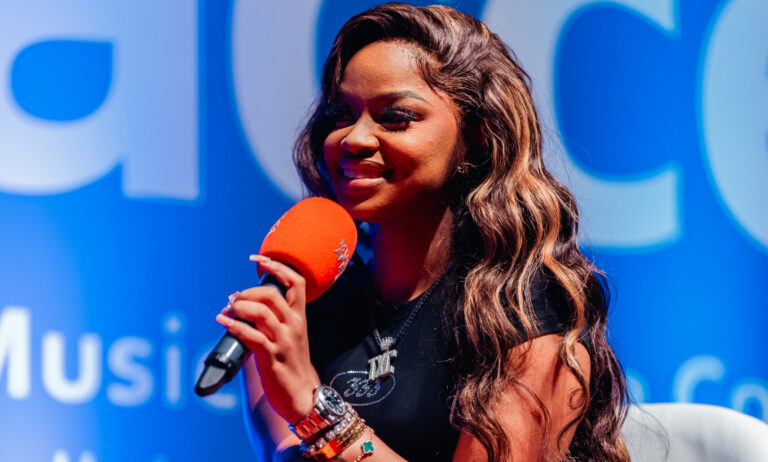
ACCES Conference and Showcase Festival is Africa's leading music industry gathering, bringing together the people shaping the future of the continent's music business. Artists, entrepreneurs, executives, investors, policymakers and cultural leaders from across Africa and around the world come to ACCES to build partnerships, exchange ideas, discover talent and create new business opportunities. Since its launch in 2017, ACCES has become the continent's premier platform for professional exchange and music market development. Combining a high-level conference with a curated showcase festival, networking, exhibitions and industry programmes, ACCES offers a unique space where creativity meets business and where African music connects with the global industry.

Gender@Work
Gender@Work

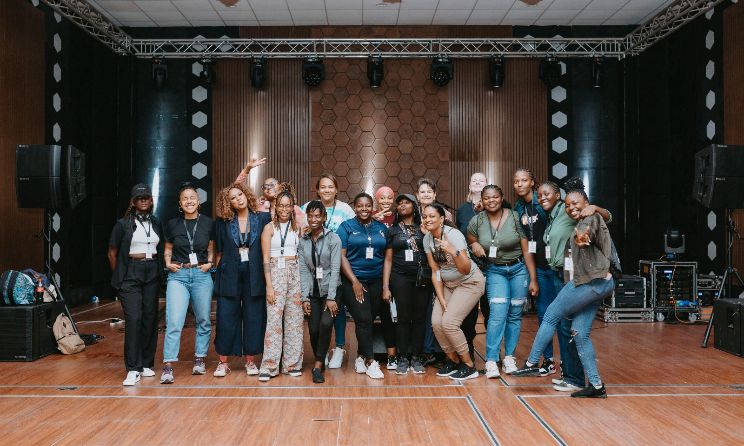
Music In Africa Gender @ Work is a three-year training programme aimed at upskilling and increasing the participation of female professionals in the African music sector. Launched by the Music In Africa Foundation (MIAF) in April 2019, the programme is connected to the MIAF’s ACCES music conference – a pan-African event held in a different African country every year. This connection enables the programme to reach new participants in a different African country every year. The programme marks the beginning of a more concerted effort by the Foundation to support the participation and inclusion of women in all facets of its programmes and the music sector in Africa as a whole. Over the three years, the programme will aim to address gender imbalances in the sector through training, lobbying, facilitating knowledge exchange and dialogues that foster the interest of women. The broader objectives of the programme are to: Provide industry training for women on critical music industry skills, focusing on: Stage management Electronic music production and recording Music business management Technical knowledge Provide an opportunity for both professional and aspiring women to benefit from the Music In Africa network and its broad range of activities in 2019, 2020 and 2021. Provide a solution-based platform in the form of a round table at ACCES with a view to identify challenges, discuss opportunities and lobby for the interests of female practitioners. Offer participants the opportunity to benefit from programmes offered by MIAF’s partners. Increase access to educational materials. Integrate participants in the broader ACCES programme to maximise experience and exposure to the industry. Record and present training materials on the www.musicinafrica.net, including but not limited to tutorials, templates and other best-practice materials. Communicate women-based themes that support the initiatives and messages of the programme. MAIN TRAINING ACTIVITIES Training in first country (Ghana): In the first year, participants will be trained on all aspects of stage management by a team of experienced stage managers from 10 to 17 November 2019. The programme will offer robust classroom training as well as practical, hands-on training in which participants will also be given the opportunity to manage various aspects of the ACCES performance programme. Training in second country: The second training iteration will take place at ACCES 2020 when the programme will diversify its course to include music production lessons and training on other music business topics. A round-table platform will also be introduced to coincide with the ACCES programme. Training in third country: The third training iteration will take place at ACCES 2021 in a different country, offering an advanced course. HOW DO YOU GET INVOLVED?  As a participant, facilitator or trainer: The programme enrolls up to 12 trainees every year. All opportunities are advertised publicly on this website, and will be added to this page. Please keep checking this page for new calls (below under UPDATES & CURRENT OPPORTUNITIES). As a partner Please contact Claire Metais at [email protected]. APPLY The call for applications for 2020 will be announced soon. The Music In Africa Gender @ Work programme is made possible with the support of the Prince Claus Fund, Siemens Stiftung and Goethe-Institut.

Sound Connects Fund
Sound Connects Fund

For cultural and creative practitioners and organisations operating in southern Africa, access to funding remains a major challenge. The COVID-19 pandemic has also had a massive impact on government policy, spending and the economy in general, and has seen spending on culture being moved further down the list of priorities. Further, the cultural and creative industries repeatedly cite four main areas where investment is needed for growth, which are increased visibility, mobility including access to new markets, finance and support structures.

Instrument Building And Repair Project

Experience the Vibrations African Instruments Exhibition online in 3D

Features

Salvador Sango: The man behind the musical myth

24 Nov 2014 - 10:54

cc-img flag-img

A brief biography of the Greco-Nigerian music innovator, composer and band-leader- Salvador Sango aka Sotirios Papadopoulos.
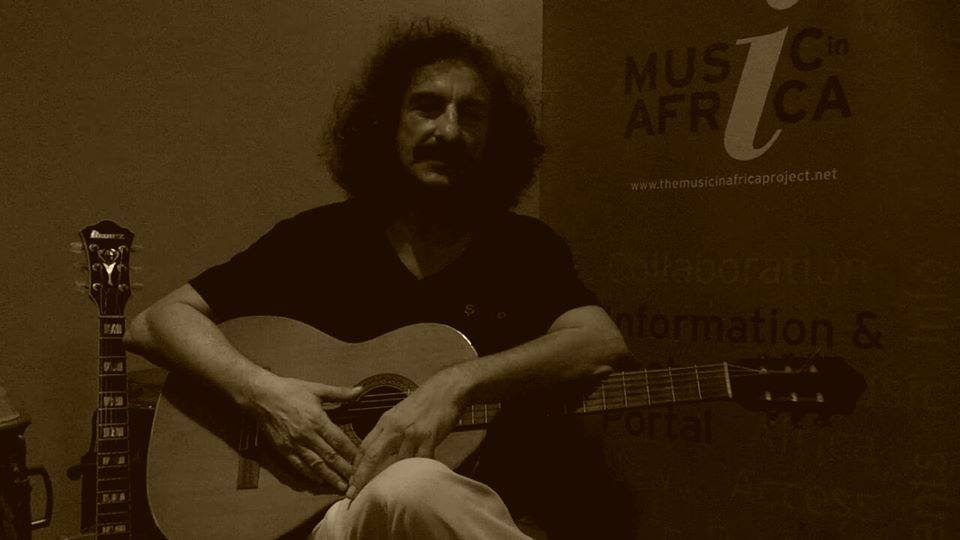
Salvador Sango

Beneath the melee of the Nigerian Hip-hop revolution lies an oasis of refuge for Nigeria’s silent, but substantial cult army of Rock and Latin-Fusion fans. A band which for over 25 years has been in evolution, all the way to attaining its present dominant form, as the country’s premier Latin-Fusion, this is the phenomenon of Salvador Sango. This band is headed by its equally enigmatic founder and leader, the Greek “Nigerian”- Sotirios Papadopoulos, who in his 27 years in Nigeria has been part of several musical revolutions and broken down several cultural barriers. This is his story

Born in Volos, Greece, Papadopoulos attended school in Greece, before studying Physics at the University of Cologne, He eventually graduated with a PhD in Atomic Physics from Oxford University and later worked with the Nobel Prize-winning team at the Max Planck Institute, Berlin,

In the midst of all this, there was music. He had played in Rock bands in his country of birth, Greece, before moving to the UK where he famously played with Reggae legends Steel Pulse in Birmingham. He had been a session man in the lead-up to their seminal 'Handsworth Revolution' album, upon which a strong filial bond, based on shared ideals of social justice, was formed with its members. He then moved to the US, where he shared a stage with jazz legend Art Blakey - amongst others, whilst conducting post-Doctoral research in Liquid State Metallurgy!

He first visited Nigeria in 1980 and performed live on-stage with Fela Anikulapo-Kuti (whilst dossing out in a slum tenement house in the Ajegunle ghetto, with his friend Feladey), later to emerge as a Nigerian Guitar legend. He returned in 1987, to take up position as Head of the Department of Physics, at the University of Port Harcourt. At Port Harcourt, he played with the Port Harcourt Jazz ensemble and shared a bill with the great Dizzy Gillespie, when he performed at the Port Harcourt Jazz Festival in 1988.

He later moved to Lagos, where he formed his band Spice and continued his collaborations, once more united with his friend- Fela Anikulapo-Kuti, in what are best described as revolutionary but sadly private Bebop Jazz sessions at Frances and Tunde Kuboye's legendary Jazz 38 club. Sango states that the rarely witnessed, deep musical genius and technical ability of Fela was fully on display, even beyond his already phenomenal Afrobeat compositions. The sessions were tragically never recorded. Also noteworthy were his superlative Jazz sessions at Muyiwa Majekodunmi's iconic Jazzville in Lagos- with virtuoso's Femi Elias on Bass, Dele Sosimi on Keyboards and Eric Mann on Drums.

Salvador Sango was formed band in 2005, as the evolution of his musical journey, which had traversed Rock, Traditional Jazz and now berthed in Rock and Latin Fusion. Salvador Sango took the Nigerian music scene by storm with its sheer uniqueness and professionalism. The band's trademarks became Papadopoulos Guitar pyrotechnics and Yoruba and Spanish vocal delivery, backed by his tight group of backing musicians, all highly competent and accomplished young musicians themselves. Slowly building a massive fan-base, starved of the oxygen of this unique musical genre. Salvador Sango went on to release two critically acclaimed albums and performed at practically all major concerts in Nigeria, such as the Lagos Jazz Series, Felabration, Jazz Hole, The Calabar Jazz Festival, Muson and too many more to mention. They were also to blaze a trail internationally, performing in concerts in Europe and building a huge and loyal fan-base.

The band's ethos quite simply being a celebration of the shared heritage and soul of Yoruba and Latin Music. For Papadopoulos, the study of Yoruba traditions and culture was not a gimmick or a joke. He cited the collateral parity between the Greek and Yoruba pantheon of gods. He also cited the high complexity of Yoruba and other African traditional religious and cultural institutions, bemoaning the disconnect with those institutions, in the present time.

Salvador Sango faces the culmination of its first decade on the crest of a wave, will this be the last stop in its musical evolution, or is there more to come? Who knows, but they have never failed to deliver with their high quality, innovative offerings, we eagerly wait and see.

Please log in to post a comment.

Most popular

Disclaimer: Music In Africa provides a platform for musicians and contributors to embed music and videos solely for promotional purposes. If any track or video embedded on this platform violates any copyrights please inform us immediately and we will take it down. Please read our Terms of Use for more.

newsletter banner

Subscribe to our monthly Newsletter

Follow us on social media