
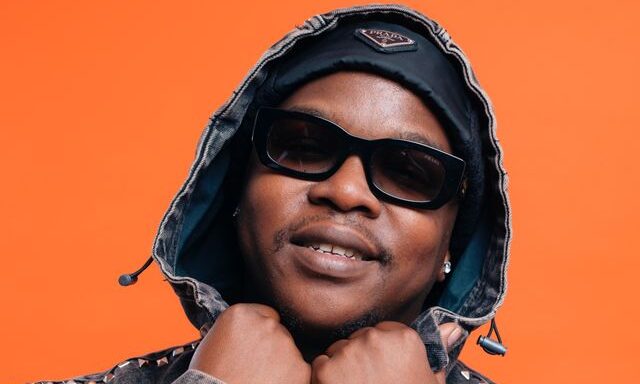

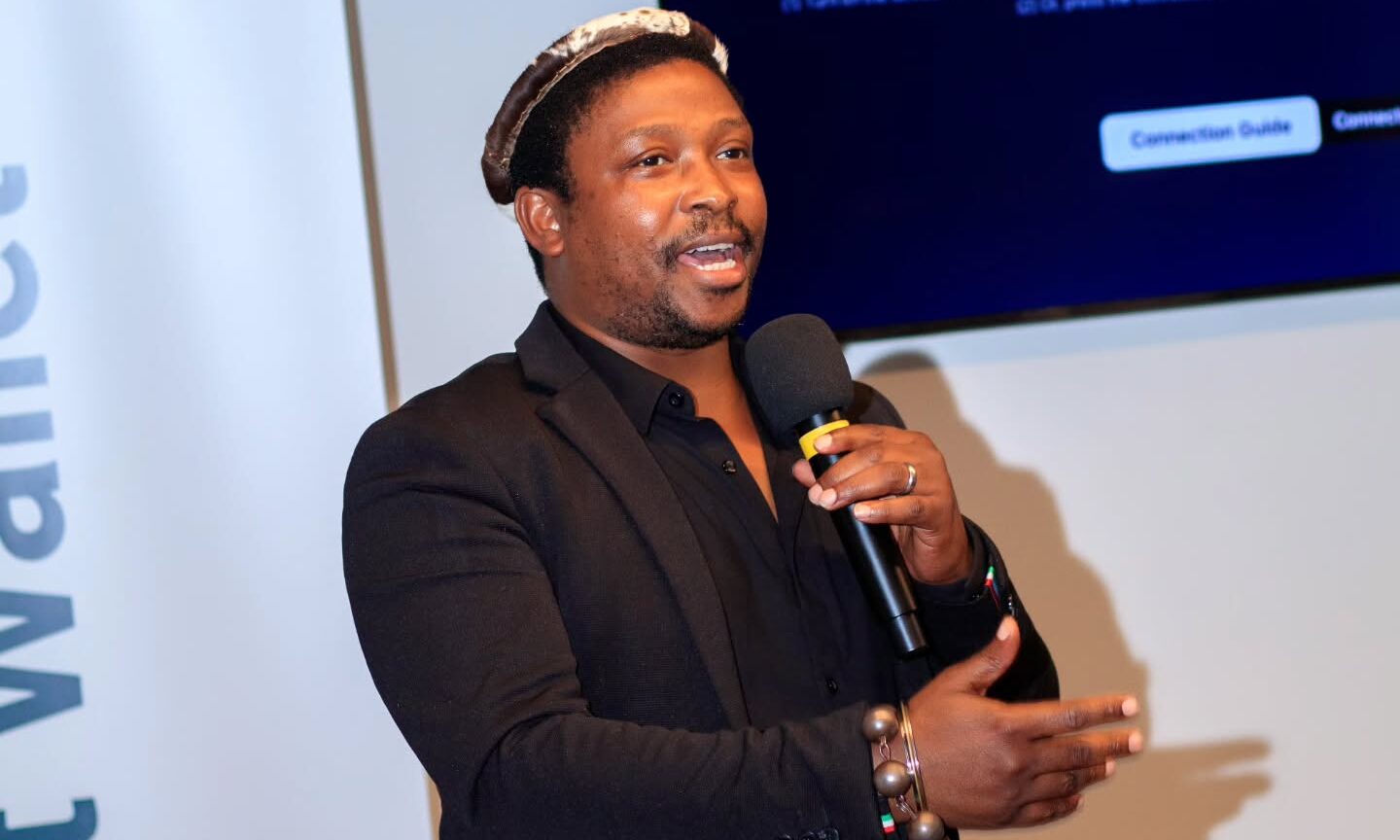

















































It’s midday on the blistering streets of Stone Town in Zanzibar and five breakdancers move to the beats of South African artist Zakes Bantwini’s ‘Ghetto’, which is blaring from nearby speakers at Forodhani Park.
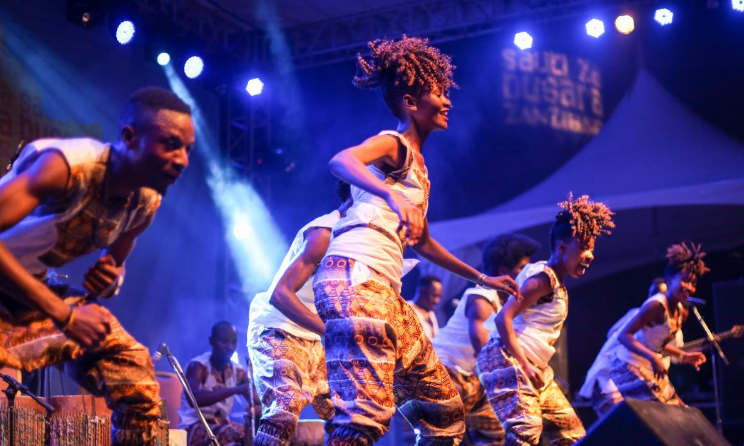
Little do they know that Bantwini is in Stone Town as the headliner of Sauti za Busara, East Africa’s most anticipated music festival. It’s a unique moment: aspiring local dancers share the same spaces as popular musicians from around the world, all convening for four days to celebrate a world united in music.
Sauti za Busara 2018 kicked off its 15th edition on 8 February featuring an eclectic array of sounds from the African continent, all performed live at the enchanting Old Fort in Zanzibar’s historic capital. This year’s festival programme showcased the best of Zanzibari and mainland Tanzania sounds, and expanded the definition of ‘African’ music by celebrating the continent’s diversity. It also featured powerful women at the helm of multiple musical genres.
The festival launched with the Carnival Parade where dizzying troupes of dancers, drummers, acrobats, stilt walkers and clowns greeting the enthusiastic festivalgoers after snaking triumphantly through Zanzibar town. Mwanandege, a traditional dance usually performed by women swirling colorful umbrellas in the air, stole hearts with a youthful all-girl crew.
With more than 40 groups from 20 countries to choose from on three different stages, there was no shortage of musical delights. Thursday’s highlights included the mesmerising, undulating charms of Maulidi ya Homu ya Mtendeni on the Amphitheater Stage. The ensemble presented a hypnotising, collective praise dance inspired by Sufi prayers. As one of only three groups in the world to perform this choreography, witnessing this spectacular soul wave moved crowds with their spell-binding moves.
Maia and the Big Sky from Kenya rocked the Main Stage on the other side of the fort and was followed by a resoundingly upbeat sound-hug from the cool, old-school beats of Mlimani Park Orchestra from Dar es Salaam.
Friday heated up with Simangavole, the powerful all-women drumming group from Reunion, who offered the crowd spiritually charged soul sounds of maloya, a traditional style of music created by African slaves on the Indian Ocean island. Their fierce performance dazzled audiences who danced in a trance to their interlocking beats.
While the allure of Kenya’s Makadem kept crowds waiting until his final act, it was El Dey from Algeria who stole the show, fusing diwane music with popular chaabi styles that whipped the crowd into a frenzy. The lead singer opened the set with a powerful message of African solidarity, insisting that Algeria is part of Africa and that El Dey’s music celebrates the fusion of Arab and African roots.
“We come from two cultures and we hope to connect with both,” El Dey drummer Hassan Khoualef said “Algeria is of course a part of Africa and we’re proud of the fact that we hosted the first Pan-African Festival in Algiers in 1969. I actually played at the second one held in 2009, hosted by the African Union. This was very important to the unification of northern and southern Africa.
“All over Africa, all over the world, actually, there’s the same shuffle, the same rhythms and beats. Yes there are small differences, but we are all connected in rhythm. Rhythm is the DNA of Africa.”
Indeed, Saturday night’s rhythms crescendoed with stunning performances by Inganzo Ngari (Rwanda), Segere Original (Tanzania), Ribab Fusion (Morocco) and the electric jolt of kora love brought by Noumoucounda Cissoko and his newly formed Simbin Project (Senegal/Switzerland). Just when the crowd thought the rhythms couldn’t get any faster, Cissoko and his crew turned it up a notch, with crowds jumping up and down to catch up.
Saturday night’s show was dominated, however, by two powerful women in music: Amina Omar, lead singer of Siti and the Band (Zanzibar), who captivated audiences at the Amphitheater with her soulful voice featuring Taarab fusion rhythms, and the one and only Saida Karoli (Tanzania) who performed on the Main Stage. Karoli is a powerhouse performer with relentless energy who sang, drummed, danced and owned the stage. She wore a wild costume of her own design: a burlap top with hot-pink splattered dye, a grass skirt and a headdress made of feathers and shells. She led her entourage of finely costumed male and female dancers who defied logic with their life-force moves.
Sunday did not show any signs of slowing down with the sweet sounds of Grace Matata (Tanzania) at Forodhani Park in the early evening. She was surrounded by a warm circle of Busara festivalgoers as well as curious Stone Town residents. Between Msafiri Zawose (Tanzania) on the Main Stage and Mapanya Band (Zanzibar) at the Amphitheater, crowds had to choose between two incredible performances.
Fans went wild for Mapanya Band, which was formed while its members studied at the Dhow Countries Music Academy in Stone Town. The audience was also enthralled by the Zawose Family’s polyrhythmic sounds, which are so deeply traditional that they sound futuristic. With Msafiri himself at the forefront, the group hypnotised listeners into a trance with the zeze, a stringed instrument, and the vibrant malimba (thumb piano).
Sunday’s double-stage conundrum continued when jazz artist Somi (Uganda/US) took to the Main Stage at the same time as Fatma Zidan (Egypt/Denmark) at the Amphitheater. While Somi rocked with highly controlled jazz vocals punctuated by wild yelps and powerful messages of justice, Zidan charmed audiences with softer classic Arab laments in the tradition of Oum Kalthoum. Zidan led fans with several call-and-response moments and beckoned the swooners up to the dance floor to flick their wrists with languid passion to the tabla beats.
But no one communicated more with their audience than the generous and joyful Kasai Allstars (DRC). This robust musical collective based in Kinshasa astounded and delighted the crowd with their rock-meets-deep base polyrhythms, infused by electric guitars layered with the likembe (thumb piano) and wooden balafon (xylophone) as well as a variety of hand drums. The lead singer, wearing the traditional garb of a healer with a crisscrossed double-beaded necklace and an animal skin tied around his waist, healed the crowd’s souls with his playful antics, administering joy injections and taking everyone for a zoom-zoom soul ride.
In contrast to the Kasai Allstars’ electrifyingly, 100% live performance, South African artist Zakes Bantwini, who closed the festival on Sunday night, used several electronic tracks, revealing that Bantwini is perhaps better known as a recording artist. Still, he got people boogying away to his hit songs; as a frontman with a background in dance, his physicality was compelling and entertaining. Even with the small technical glitch that turned the lights out momentarily during his show, Bantwini bounced all back with a “Bang, Bang, Bang” and waved the banner of Busara love.


Most popular

Top amapiano songs of 2026
16 Feb 2026
Call for applications: ACCES 2026 Emerging Artist Spotlight Competition
01 Oct 2026

Top Naija songs of 2026
31 Mar 2026
Open call: 2026 Gender@Work music industry training in Johannesburg
03 Oct 2026

Top Afrobeats songs of 2026
19 Mar 2026
AFRIMA 2026: All the winners
12 Jan 2026
Disclaimer: Music In Africa provides a platform for musicians and contributors to embed music and videos solely for promotional purposes. If any track or video embedded on this platform violates any copyrights please inform us immediately and we will take it down. Please read our Terms of Use for more.

Subscribe to our monthly Newsletter
Follow us on social media


Please log in to post a comment.