















































NEFCISA
NEFCISA

The Music In Africa Foundation (MIAF) is proud of its partnership with the Industrial Development Corporation (IDC) as a Strategic Implementing Partner (SIP) for its Social Employment Fund (SEF). Through this collaboration, MIAF is running a national programme that is creating jobs, addressing skills gaps, and strengthening South Africa's creative industries — in line with the SEF's overarching goal to generate work for the common good and build community value through employment, social contribution, and inclusive economic participation. Operating under the banner NEFCISA (National Employment Facility for Creative Industries in South Africa), the initiative is recruiting and training participants, matching them with host organisations, and has already placed 1 500 workers across the country — surpassing its original target of 1 000. NEFCISA is delivered through a network of 20 host organisations spanning five provinces, who are actively hosting participants and contributing to work for the common good across South Africa's creative and cultural industries. Key Objectives: Support employment and entrepreneurship in the creative industries. Offer skills development and training programmes. Foster partnerships between public and private creative sectors. Promote South African creativity at both provincial and national levels Foster community development through social contribution.

ACCES
ACCES

ACCES Conference and Showcase Festival is Africa's leading music industry gathering, bringing together the people shaping the future of the continent's music business. Artists, entrepreneurs, executives, investors, policymakers and cultural leaders from across Africa and around the world come to ACCES to build partnerships, exchange ideas, discover talent and create new business opportunities. Since its launch in 2017, ACCES has become the continent's premier platform for professional exchange and music market development. Combining a high-level conference with a curated showcase festival, networking, exhibitions and industry programmes, ACCES offers a unique space where creativity meets business and where African music connects with the global industry.

Gender@Work
Gender@Work

Music In Africa Gender @ Work is a three-year training programme aimed at upskilling and increasing the participation of female professionals in the African music sector. Launched by the Music In Africa Foundation (MIAF) in April 2019, the programme is connected to the MIAF’s ACCES music conference – a pan-African event held in a different African country every year. This connection enables the programme to reach new participants in a different African country every year. The programme marks the beginning of a more concerted effort by the Foundation to support the participation and inclusion of women in all facets of its programmes and the music sector in Africa as a whole. Over the three years, the programme will aim to address gender imbalances in the sector through training, lobbying, facilitating knowledge exchange and dialogues that foster the interest of women. The broader objectives of the programme are to: Provide industry training for women on critical music industry skills, focusing on: Stage management Electronic music production and recording Music business management Technical knowledge Provide an opportunity for both professional and aspiring women to benefit from the Music In Africa network and its broad range of activities in 2019, 2020 and 2021. Provide a solution-based platform in the form of a round table at ACCES with a view to identify challenges, discuss opportunities and lobby for the interests of female practitioners. Offer participants the opportunity to benefit from programmes offered by MIAF’s partners. Increase access to educational materials. Integrate participants in the broader ACCES programme to maximise experience and exposure to the industry. Record and present training materials on the www.musicinafrica.net, including but not limited to tutorials, templates and other best-practice materials. Communicate women-based themes that support the initiatives and messages of the programme. MAIN TRAINING ACTIVITIES Training in first country (Ghana): In the first year, participants will be trained on all aspects of stage management by a team of experienced stage managers from 10 to 17 November 2019. The programme will offer robust classroom training as well as practical, hands-on training in which participants will also be given the opportunity to manage various aspects of the ACCES performance programme. Training in second country: The second training iteration will take place at ACCES 2020 when the programme will diversify its course to include music production lessons and training on other music business topics. A round-table platform will also be introduced to coincide with the ACCES programme. Training in third country: The third training iteration will take place at ACCES 2021 in a different country, offering an advanced course. HOW DO YOU GET INVOLVED?  As a participant, facilitator or trainer: The programme enrolls up to 12 trainees every year. All opportunities are advertised publicly on this website, and will be added to this page. Please keep checking this page for new calls (below under UPDATES & CURRENT OPPORTUNITIES). As a partner Please contact Claire Metais at [email protected]. APPLY The call for applications for 2020 will be announced soon. The Music In Africa Gender @ Work programme is made possible with the support of the Prince Claus Fund, Siemens Stiftung and Goethe-Institut.

Sound Connects Fund
Sound Connects Fund

For cultural and creative practitioners and organisations operating in southern Africa, access to funding remains a major challenge. The COVID-19 pandemic has also had a massive impact on government policy, spending and the economy in general, and has seen spending on culture being moved further down the list of priorities. Further, the cultural and creative industries repeatedly cite four main areas where investment is needed for growth, which are increased visibility, mobility including access to new markets, finance and support structures.

Instrument Building And Repair Project

Experience the Vibrations African Instruments Exhibition online in 3D

Features

The sound of ownership and the business behind every track
17 Jun 2025 - 04:16

cc-img flag-img

Today, your contract and not your talent decides if you get paid and how much. Too many creatives learn that too late. Behind every hit song lies a web of rights, contracts, and royalty streams that artists cannot afford to ignore. Whether you are an independent artist, producer, or a label, understanding how sound recordings are owned, licensed, and monetised is essential.
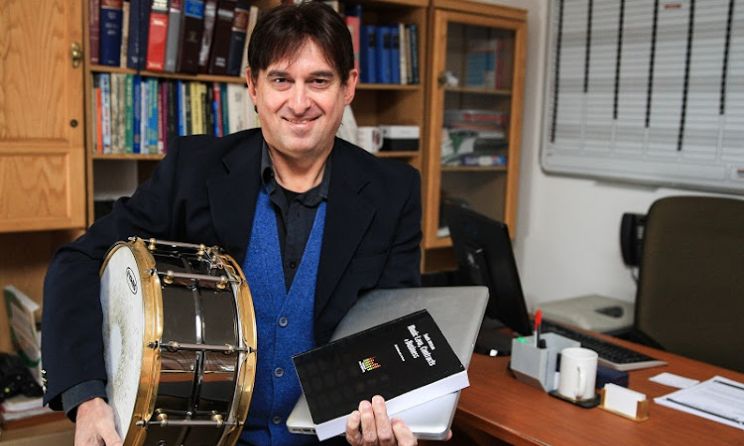
Academy of Sound Engineering co-founder and head of music law Nick Matzukis.

Once a piece of music is composed and fixed in a tangible form, its compositional copyright (also known as ‘the publishing’) is automatically established. The moment the song is recorded, a second copyright comes into existence, namely the sound recording copyright. (also known as the Master). This unlocks a separate set of revenue streams artists, producers, and labels rely on.

When a track is recorded, the copyright in the sound recording usually belongs to the record label that made arrangements for the sound recording, unless the artist releases independently and owns the masters by virtue of having made the arrangements himself. This is a distinct copyright from the composition copyright, even if both were created by the same person.

This triggers a separate set of royalties when the sound recording is streamed, downloaded, broadcast, sold or used commercially. These include:

Artist royalties

These are contractual. The label earns from the sound recording and shares a portion with the artist, if the contract allows it. If the contract is fair, the artist earns. If not, they might earn nothing or very little.

With growing calls globally for fairer streaming payouts, artists who understand their rights have the upper hand.

Needle time

This is a legal right. When the sound recording is publicly performed, say - on radio - there is a royalty owed not only to the composer (via SAMRO) but also to the owner of the sound recording and the performers that appeared on it. In South Africa, this royalty is administered by SAMPRA and is a multi-million rand royalty stream. Performers such as backing vocalists, session musicians, and producers can all claim a share. Producers are recognised for needle time under South African law.

Producer royalties

A producer is not automatically entitled to other royalties unless they have negotiated a contract saying so. Many opt for an up-front payment instead of a cut in future profits, but the top producers can negotiate for both. Whatever the arrangement, this is contractual. However, producers are entitled to a portion of needle time if their performance qualifies, which it usually does.

Sync licensing for sound recordings

If a film, ad, or TV show wants to use an existing sound recording, not just the composition, they must license the master from the rights holder (usually the label). This is separate from the sync fee paid to the composer or publisher. Typically, a film producer pays 50% to the composer/publisher and 50% to the record label, though this is not cast in stone.

A famous example is Baby Driver, a movie praised for syncing music to its action scenes. Every track had to be cleared twice: once with the publisher for the underlying composition and once with the label for the sound recording. Without both, the music could not be used legally.

Music video revenue

When a recording becomes a music video, a third copyright comes into play: the cinematograph film. This creates another layer of income, including:

  • VPL royalties when the video is played on TV (collected by organisations like RAV)
  • Online revenue from platforms like YouTube, TikTok, and Instagram
  • However, there is no automatic needle time-type right for the performers on a video. If you appear in a video, you will not earn unless your contract covers it - another reason to know your rights.

Beyond copyright: other revenue streams

Not every music income stream comes from copyright. There are non-copyright-based sources that also matter:

  • Touring and live performances.
  • Merchandise sales.
  • Sponsorships and endorsements.
  • Fan platforms like Patreon.

Taylor Swift’s concert contracts reportedly let her take the lion’s share while promoters earn from concessions. That is the power of knowing your worth and putting it in writing.

The bottom line is that whether it is a copyright-based royalty or a commercial deal, you only earn what your contract allows. If you are a performer, producer, or label owner, you must know what rights you are entitled to and where to claim them.

Know what you own. Know what you are owed. And make sure it is in writing. Because in this industry, contract and copyright are everything. To understand this landscape fully, music professionals are encouraged to study music business and music law or explore industry-focused training to stay informed, such as the Music Business Masterclass short courses available at The Academy of Sound Engineering.

Nick Matzukis is the co-founder and head of music law at the Academy of Sound Engineering in South Africa. Matzukis writes in his personal capacity. The opinions and views expressed herein are solely his own and do not reflect the position or stance of the publication.

Please log in to post a comment.

Most popular

Disclaimer: Music In Africa provides a platform for musicians and contributors to embed music and videos solely for promotional purposes. If any track or video embedded on this platform violates any copyrights please inform us immediately and we will take it down. Please read our Terms of Use for more.

newsletter banner

Subscribe to our monthly Newsletter

Follow us on social media



