














































South Sudanese artist collective Anataban on a mission to bring lasting peace

11 Jan 2019 - 11:37


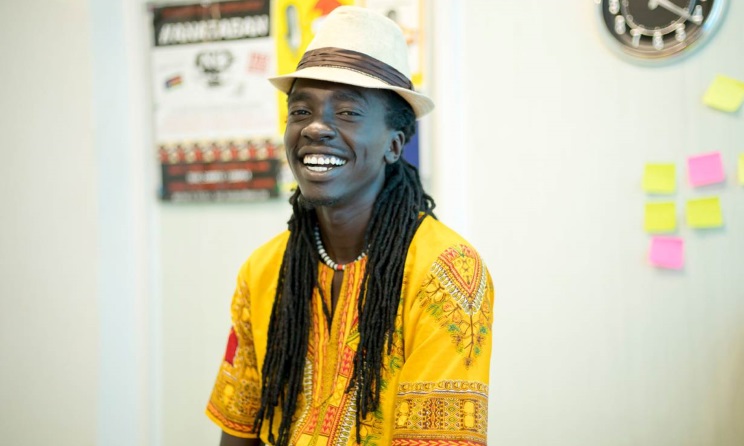
In a country that hasn't known peace long before becoming the world's newest country in 2011, musician and peace activist Manasseh Mathiang, together with a network of artists, poets, fashion designers and visual artists, formed the Anataban (We Are Tired) artist collective. Members of Anataban use their voice and influence to help bring about lasting peace in South Sudan. The group engages with the general public on the importance of peace through street theatre performances, roadshows, concerts and art exhibitions, with a special focus on refugee camps and regions most affected by the conflict. It also conducts workshops and trains volunteers on how to use various art forms in spreading messages of peace and hope.
Various humanitarian agencies have reported that since the South Sudanese conflict began in 2013, tens of thousands of people have been killed and about 2.5 million forced to seek refuge in Uganda, Kenya, Sudan, Ethiopia, the DRC and Central African Republic.
In September, President Slava Kiir and his former deputy Riek Machar, the leaders of the two warring factions, signed a peace deal meant to end the five-year civil war. Its enactment has faced delays while fighting continues in parts of the country. Although there's a call for refugees to return home, many of them cite the many previously failed peace agreements ni their country.
Music In Africa contributor Boniface Nyaga spoke to Mathiang to find out about the state and future of South Sudan and its music industry.
BONIFACE NYAGA: How did you mobilise artists at a time of war?
MANASSEH MATHIANG: Kenyan activist Boniface Mwangi of PAWA 254 inspired the idea. His story and the work he does really made us see that anything is possible. We actually held our initial workshop at his office and more than two years later we are going strong. At the time, emotions were high because one of our artists had just returned from burying their band member killed in the conflict. However, we decided to do something that has never been tried in South Sudan: talk.
What kind of impact has Anataban made in South Sudan?
We have seen the power of art, young people have been inspired to be agents of change, and it has shifted the political narrative. During the Addis Ababa edition of HLRF [High-level Revitalization Forum] in February 2018, we joined other civil society groups in #SouthSudanIsWatching campaign. The message reached the representatives of the warring factions and made an impact on the negotiations. Previous talks fell apart because citizens were not involved, so we mobilised citizens online and on the ground so politicians would know that people were watching.
The hashtag was tweeted by African Union (AU) Commission chairperson Moussa Faki, Ethiopia’s Ministry of Foreign Affairs, Hollywood star Forest Whitaker, Kenyan MP Ababu Namwamba and many other dignitaries.
What are you currently working on?
For the next three years we are pushing the Gumna (We Have Woken Up) campaign, which has various activities such as the Hagana (Ours) programme. This includes the Hagana School Clubs, where we work with secondary schools in Juba to mentor young artists to play their role.
We also have Hagana Festival, an annual event that in 2018 attracted more than 13 000 people. Our aim is to encourage the youth of South Sudan to take ownership of the peace process. The future is in their hands if only they take action.
How is the music scene in Juba?
There is a lot of great music with many talented artists that the world really needs to hear, but it is tough. As a young nation we lack the infrastructure to really grow our talents. There are less than 10 audio producers. Video production is a major issue and we don’t have many promoters.
How do artists make their money in Juba?
It is hard to make anything from music sales but at least there is a concert almost every weekend in Juba. Since the war broke out, night events have become problematic because people do not feel safe enough. Additionally, the conflict has really affected the economy so many entertainment spots have shut down, especially in the city centre.
Most events now happen in the neighbourhoods where it’s safer and cheaper. There is also a resurgence of online marketing. A lot of South Sudanese artists are using social media to promote their work not just to locals but also the diaspora market. Radio stations are also on the rise, and the great thing about them is that they predominantly play local music, which is really boosting the sector.
What kind of performance fees can artists earn in Juba?
Performance fees have really declined over the years so it’s hard to quantify. Hyperinflation has devalued our South Sudanese pound so artists continue to find it hard to make ends meet. Regardless of what one is paid, you can never be sure of the value of what you have earned..
How can young people from around world contribute to bring change in their countries?
The youth are the silent majority, they have the power to change things. I am really happy about what is happening in Uganda with Bobi Wine, Francis Zaake and the rest. They are really seeing the power of people.
My dream for all of East Africa is to see citizens being the main driver in eradicating corruption, tribalism, littering and all the woes that they face in their countries.
What is the role of music and the arts in bringing lasting peace to South Sudan?
Be it fashion, cartoons, music, poetry or paintings, art in whatever form has the power to have a lasting impression. In South Sudan we have done street murals that have become points of transformative conversations. There is a mural we did in Juba about cutting down our own roots. It has become a spot for people to stop by and share their stories, shed tears and build bridges
Our weekly poetry open mic sessions have also been very powerful. According to South Sudanese traditions, the old prophets spread their invocations through music and poetry, so it is a wildly respected channel of communication to date.
What’s next for you and Anataban?
There are many South Sudanese across the world who want to be part of the change. We are reaching out to them, even as we work with those who are based in the homeland. Already we have about six centres in South Sudan and Kakuma Refugee Camp in Kenya and we are expanding operations to refugee camps in Kampala, Uganda.
In Kenya, we organise workshops for South Sudanese artists who are based in Nairobi, to educate them about Anataban and the contribution they can make to the movement. As for the peace talks in 2018, we actually managed to send two of our members to represent the youth and the creative community.
This article is part of the Music In Africa Connects project, a multifaceted development initiative aiming to support the music sectors of African countries affected by conflict. To find out more about Music In Africa Connects, click here.


Most popular

Top Naija songs of 2026
31 Mar 2026
Ghana: Mr Eazi and MOLIY’s ‘Comfort’ earns Urban Music Awards nomination
21 Oct 2026

Top Afrobeats songs of 2026
19 Mar 2026

Top amapiano songs of 2026
16 Feb 2026
Open call: CANEX Music Business Lab and Songwriting Camp
15 Oct 2026
Nigeria: CANEX WKND unveils 2026 programme
21 Oct 2026
Disclaimer: Music In Africa provides a platform for musicians and contributors to embed music and videos solely for promotional purposes. If any track or video embedded on this platform violates any copyrights please inform us immediately and we will take it down. Please read our Terms of Use for more.

Subscribe to our monthly Newsletter
Follow us on social media


Please log in to post a comment.