




















































Spirit of Ntu: South African piano maestro Nduduzo Makhathini on his 10th album
16 Jun 2022 - 13:51


By Phuti Sepuru
Nduduzo Makhathini is a prolific South African pianist, improviser, healer, educator, scholar and storyteller. He possesses a gift that enables him to articulate a distinct and rich identity and genealogy. His sound signifies a deep rootedness in his ethnic identity in the Zulu culture, and an internationalism embodying it. In the Spirit of Ntu is his tenth offering, and his second release under premier US jazz label Blue Note Records and the newly founded Blue Note Africa.
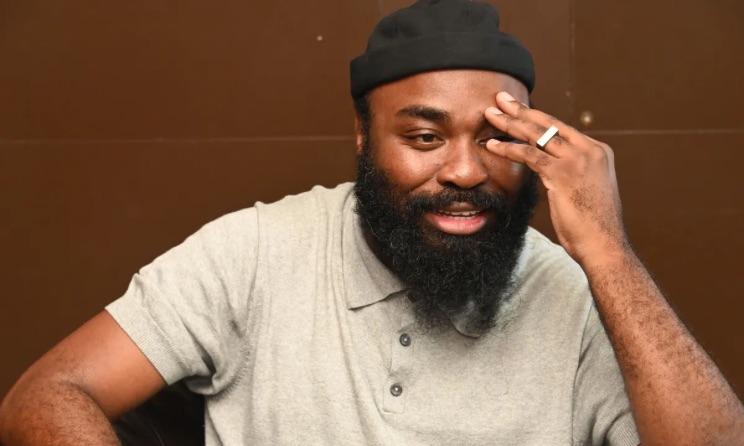
The philosophy of Ntu (stemming from the philosophy of ubuntu) speaks to the merging of the physical and spiritual and so, in conversation with Makhathini, I have sought to understand how he continues to bridge the artistic, the cultural and the spiritual through song and narrative. My point of departure for our conversation was something he had said in a previous interview:
“I want to try to get the piano to speak the language of my people – and by the language of my people, I mean isiZulu – the melodic structures of the language that filter into how my people sing – drawing parallels between the piano and some of the traditional music that we grew up listening to.”
PHUTI SEPURU: How does In the Spirit of Ntu speak the language of your people?
NDUDUZO MAKHATHINI: I’ve been struggling with this whole idea of what really counts as indigenous when everything has been diluted? Also, what counts as indigenous when so much has been taken away? Like the many years of erasure and the various moments of the slave trade, settler coloniality and apartheid. Do we still really have something that is indigenous to a particular group of people? A sound that is not contaminated; a thought that is not contaminated?
So, that is how I arrived at Ntu. I borrow a particular sensibility from jazz music, but there are other histories that are pre the arrival of jazz that are useful for me to think about what counts as the sound of my people. Then I started thinking about separating between jazz and jazziness. When I speak about jazz, it’s of course the transatlantic stories, but when I speak about the jazziness I’m speaking about syncopation, swing, and improvisation. These are things that have always been there; they did not come with the arrival of jazz in South Africa in the 1930s.
I’m particularly attracted to (Rwandan poet and philosopher Alexis) Kagame’s thinking about it. He speaks about the four categories: umuntu, which contains the spirit aspect – divinities, the ancestors; kintu; hantu is about time and space; and kuntu is about aesthetics and beauty. Given these categories, I realised that for these sounds to make sense, we need to start creating homes for them. For me, cosmology is a pursuit – where are these sounds enunciating from? What are these homes? What do they look like? The sound of my people is also about conflict. It’s also about disparity – not being able to touch in concrete ways, the things that are important to us. It’s also about collective memory, the diasporas. In South Africa, particularly, the exile and inxile discourse and how jazz has always been emerging out of this moment of displacement.
In what way did the 2021 Durban unrest and riots serve as the ‘canvas’ for this work?
I was meant to record in the US, and of course, I couldn’t get that organised. Then I asked Jaleel (Shaw), Nasheet Waits, and all these guys who were meant to be on the record if they were keen on coming to South Africa. Jaleel was like, ‘Bro, given these riots and burning, I don’t think so.’ So, these are the underpinning themes and events that were taking place and I started thinking that we always think about ‘76 (the Soweto uprising) to the ‘80s (apartheid violence), about (South African pianist Abdullah Ibrahim’s track) Mannenberg and how it locates that moment, but we always think of it as a backdrop – a soundtrack.
This album is emerging out of these burning fires. We’re burning because the system has always been a minute away from collapsing. And now, with the (COVID-19) pandemic, even the suggestions of social distancing – how do people exercise social distancing if you’ve pushed them to extreme dysfunctionality in the townships? You started to see that all the regulations are for a particular people that live in a particular category – a class – but it’s not speaking to the majority. I’m one of those people that is in the unrepresented majority. The system failed artists dismally. Then I said, ‘I am with the people that are tired. I am part of those people that are tired. I’m going to play these sounds from these burning fires.’ That’s how this album came about.
This is what I am doing with this album – I’m going to burn inside until my ancestors show up because this needs to change. I think about fire in a symbolic way.
When listening to ‘Amathongo’ on the new album, I was struck by the dissonant melody, reminiscent of amahubo (Zulu indigenous music), coupled with a sporadic, conversational approach in the piano. This is rooted in a trance-like combination of the bass groove, falling on distinct moments, against a fixed drum pulse. There are also evocative vocal chants that speak to traditional healing rituals. Please share more on this composition.
I come from that culture and my grandmother used to sing a lot of amahubo. That memory is with me always. In this album, I sing more than I’ve ever done in any album and that’s what people are loving as well.
Many years ago, I discovered (the book) Indaba, My Children, and ubaba (Credo) Mutwa speaks about the word ‘ithongo’ (dreamscape). He says something interesting because, within the word ‘ithongo’, there is the word ‘ubuthongo’, which means deep sleep. But for us, it’s being ‘one with the star gods’. I love that. And it speaks about ‘iphupho’ – a dream. He says ‘uk’phupha’ is to float. So, there’s a sense in which all these things, for me, make sense of a cosmology that always sees the ancestral paradigm as really a paradigm that we’re inside of – in and out. And of course, using ritual as a connector to exist between the two. That’s really what the song is doing. The resistance of the bass line, versus all these crazy dissonant sounds… it’s living in the two worlds.
Track six is called ‘Re-Amathambo’ and features Swiss singer-songwriter Anna Widauer. This track connects to the original, ‘Amathambo’ (bones), found on your 2017 album, Ikhambi. How did you approach the song?
‘Re-Amathambo’ is ‘re’ – a reply, but also ‘re’ (we) in Sesotho. I’ve been interested in the Basotho cosmology.
When we were touring, I started telling Anna about this idea about my view of the piano as ritual technology or a space for divination. I was telling her about how I recorded that song ‘Amathambo’ as a way of trying to divine the future and the things that will be happening. On the one hand, there’s the idea of amathambo being in the physical realm while exploring something that’s intangible in another realm. That speaks about how as people in the universe we are constantly hearing and thinking about similar things, but from different contexts.
Anna seemed to have so much connection to this idea of revealing these things: what are these codes that help us enter a mode of revelation or a prophetic mode? It was a chant before: ‘Weh mathambo, oooh mathambo, hlanganani.’ The story was: there was a man that went to a healer and every time the healer threw the bones, they would go different ways, suggesting that his life was falling apart. The coming together of the bones that the healer was chanting would mean the coming together of his life. So, we brought in that story, and I wrote lyrics, and came out with what I think is a beautiful version of this song.
Phuti Sepuru is a jazz lecturer at the University of Pretoria. This article first appeared on The Conversation.


Most popular

Top Naija songs of 2026
31 Mar 2026

Ghana: Mr Eazi and MOLIY’s ‘Comfort’ earns Urban Music Awards nomination
21 Oct 2026

Top Afrobeats songs of 2026
19 Mar 2026

Top amapiano songs of 2026
16 Feb 2026
Open call: CANEX Music Business Lab and Songwriting Camp
15 Oct 2026

Nigeria: CANEX WKND unveils 2026 programme
21 Oct 2026
Disclaimer: Music In Africa provides a platform for musicians and contributors to embed music and videos solely for promotional purposes. If any track or video embedded on this platform violates any copyrights please inform us immediately and we will take it down. Please read our Terms of Use for more.

Subscribe to our monthly Newsletter
Follow us on social media


Please log in to post a comment.