
















































NEFCISA
NEFCISA

The Music In Africa Foundation (MIAF) is proud of its partnership with the Industrial Development Corporation (IDC) as a Strategic Implementing Partner (SIP) for its Social Employment Fund (SEF). Through this collaboration, MIAF is running a national programme that is creating jobs, addressing skills gaps, and strengthening South Africa's creative industries — in line with the SEF's overarching goal to generate work for the common good and build community value through employment, social contribution, and inclusive economic participation. Operating under the banner NEFCISA (National Employment Facility for Creative Industries in South Africa), the initiative is recruiting and training participants, matching them with host organisations, and has already placed 1 500 workers across the country — surpassing its original target of 1 000. NEFCISA is delivered through a network of 20 host organisations spanning five provinces, who are actively hosting participants and contributing to work for the common good across South Africa's creative and cultural industries. Key Objectives: Support employment and entrepreneurship in the creative industries. Offer skills development and training programmes. Foster partnerships between public and private creative sectors. Promote South African creativity at both provincial and national levels Foster community development through social contribution.

ACCES
ACCES

ACCES Conference and Showcase Festival is Africa's leading music industry gathering, bringing together the people shaping the future of the continent's music business. Artists, entrepreneurs, executives, investors, policymakers and cultural leaders from across Africa and around the world come to ACCES to build partnerships, exchange ideas, discover talent and create new business opportunities. Since its launch in 2017, ACCES has become the continent's premier platform for professional exchange and music market development. Combining a high-level conference with a curated showcase festival, networking, exhibitions and industry programmes, ACCES offers a unique space where creativity meets business and where African music connects with the global industry.

Gender@Work
Gender@Work

Music In Africa Gender @ Work is a three-year training programme aimed at upskilling and increasing the participation of female professionals in the African music sector. Launched by the Music In Africa Foundation (MIAF) in April 2019, the programme is connected to the MIAF’s ACCES music conference – a pan-African event held in a different African country every year. This connection enables the programme to reach new participants in a different African country every year. The programme marks the beginning of a more concerted effort by the Foundation to support the participation and inclusion of women in all facets of its programmes and the music sector in Africa as a whole. Over the three years, the programme will aim to address gender imbalances in the sector through training, lobbying, facilitating knowledge exchange and dialogues that foster the interest of women. The broader objectives of the programme are to: Provide industry training for women on critical music industry skills, focusing on: Stage management Electronic music production and recording Music business management Technical knowledge Provide an opportunity for both professional and aspiring women to benefit from the Music In Africa network and its broad range of activities in 2019, 2020 and 2021. Provide a solution-based platform in the form of a round table at ACCES with a view to identify challenges, discuss opportunities and lobby for the interests of female practitioners. Offer participants the opportunity to benefit from programmes offered by MIAF’s partners. Increase access to educational materials. Integrate participants in the broader ACCES programme to maximise experience and exposure to the industry. Record and present training materials on the www.musicinafrica.net, including but not limited to tutorials, templates and other best-practice materials. Communicate women-based themes that support the initiatives and messages of the programme. MAIN TRAINING ACTIVITIES Training in first country (Ghana): In the first year, participants will be trained on all aspects of stage management by a team of experienced stage managers from 10 to 17 November 2019. The programme will offer robust classroom training as well as practical, hands-on training in which participants will also be given the opportunity to manage various aspects of the ACCES performance programme. Training in second country: The second training iteration will take place at ACCES 2020 when the programme will diversify its course to include music production lessons and training on other music business topics. A round-table platform will also be introduced to coincide with the ACCES programme. Training in third country: The third training iteration will take place at ACCES 2021 in a different country, offering an advanced course. HOW DO YOU GET INVOLVED?  As a participant, facilitator or trainer: The programme enrolls up to 12 trainees every year. All opportunities are advertised publicly on this website, and will be added to this page. Please keep checking this page for new calls (below under UPDATES & CURRENT OPPORTUNITIES). As a partner Please contact Claire Metais at [email protected]. APPLY The call for applications for 2020 will be announced soon. The Music In Africa Gender @ Work programme is made possible with the support of the Prince Claus Fund, Siemens Stiftung and Goethe-Institut.

Sound Connects Fund
Sound Connects Fund

For cultural and creative practitioners and organisations operating in southern Africa, access to funding remains a major challenge. The COVID-19 pandemic has also had a massive impact on government policy, spending and the economy in general, and has seen spending on culture being moved further down the list of priorities. Further, the cultural and creative industries repeatedly cite four main areas where investment is needed for growth, which are increased visibility, mobility including access to new markets, finance and support structures.

Instrument Building And Repair Project

Experience the Vibrations African Instruments Exhibition online in 3D

Features

Top African songs of 2022

28 Dec 2022 - 19:27

cc-img

Even though the negative effects of the COVID-19 pandemic can still be felt across the board, the African music industry had an encouraging 2022 with more concerts and festivals making a return on the events calendar. The year saw many strong releases from the Africa’s biggest names, particularly those plying their trade in Afrobeats, Afro-fusion and amapiano. We also saw many strong collaborations between musicians on the continent and between Africa musicians and their international counterparts.
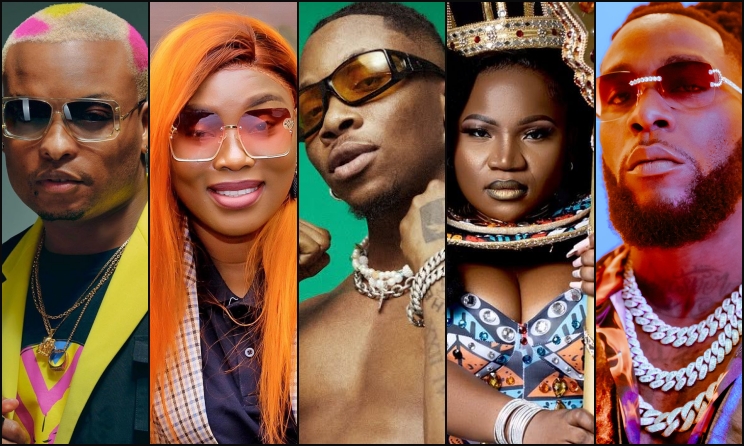
K.O, Roseline Layo, Oxlade, Makhadzi and Burna Boy.

Towards the end of every year, Music In Africa’s editorial team – comprising editors and contributors from across the continent – compiles a playlist with a selection of some of the biggest tracks of the past 12 months. The below playlist is divided into six regions, with each region bearing five tracks that made an impression on the local music scene and the journalists who selected them.

Anglophone West Africa

Anglophone West Africa continues to lead the continent’s strides globally, with Nigeria leading the charge and Ghana in tow. A number of music industry organisations have reported that Nigerian music fans are listening to more music than any other country. Their sound of choice? Afrobeats, which draws first from indigenous sounds, and expands to embrace influences from all corners of the world. The architects of 2022’s biggest hits comprise a healthy assortment of pop veterans and new voices.

‘Ku Lo Sa’ by Oxlade (Nigeria)

‘Buga’ by Kizz Daniel & Tekno (Nigeria)

‘Calm Down’ by Rema (Nigeria)

‘Kwaku the Traveller’ by Black Sherif (Ghana)

'Last Last' by Burna Boy (Nigeria)

Francophone West Africa

This year has been particularly vibrant for the Francophone West Africa music scene. Many French-speaking countries, such as Senegal, Côte d'Ivoire and Guinea, have drawn from their native rhythms to create enjoyable and popular Afropop songs. In addition to winning accolades and nominations at different awards platforms, all of the songs listed below are well-known online.

‘C’est Dieu’ (remix) by KS Bloom ft. Chidinma (Senegal)

‘Reuguine Tass’ by Wally Seck ft. Viviane Chidid (Senegal)

‘C’est Dosé’ by Serge Beynaud (Côte d'Ivoire)

‘C’est La même Phase’ by Roseline Layo (Côte d'Ivoire)

‘Yeuk Yeuk’ by Viviane Chidid (Senegal)

Southern Africa

South Africa continues to produce some of the continent’s most notable releases, with amapiano still dominating the local music scene. Artists such as Kabza De Small, DJ Maphorisa, Young Stunna and Mellow & Sleazy are leading the amapaino movement, while music makers like Master KG, K.O, Makhadzi and 9umba continue to shape the future South African sound.

‘Khusela’ by Kabza De Small ft. Msaki (South Africa)

‘SETE’ by K.O ft. Young Stunna & Blxckie (South Africa)

‘Kulakwe’ by Makhadzi ft. Master KG (South Africa)

‘uMlando’ by 9umba, TOSS & Mdoovar ft. Sir Trill, Sino Msolo, Lady Du, Young Stunna and Slade (South Africa)

‘Dali Nguwe’ by Wanitwa Mos & Master KG ft. Nkosazana Daughter, Basetsana & Obeey Amor (South Africa)

East Africa

This was the year the East African music industry breathed a collective sigh of relief after COVID-19 restrictions were eased across the region. Action returned to both the alternative and popular music scenes, giving fans a chance to engage with their favourite artists in a live setting again. Many mainstream acts in the region continued to rack up streams and earned performance opportunities within and outside their countries.

‘Mtasubiri’ by Diamond Platnumz ft. Zuchu (Tanzania)

‘Kuna Kuna’ by Vic West ft. Fathermoh, Savara, Brandy Maina & Thee Exit Band (Kenya)

‘Action ‘n’ Energy’ by John Frog (South Sudan)

‘Bega Bega’ by Pallaso (Uganda)

‘Funga Macho’ by Bruce Melodie (Rwanda)

Central Africa

There is a wide variety of artists and music genres in Central Africa, making it one of the most vibrant African music scenes. There have been several releases from both new and established artists. Fally Ipupa, Innos'B, Locko and Ko-C are among the artists from Central Africa who stood out among the top five.

‘Muselu’ by Innos'B ft. Djizzo (DRC)

‘Quand J’aurais L’argent’ by Ko-C ft. Innos'B (Cameroon)

‘Toffole’ by Ariel Sheney ft. Koffi Olomidé (Côte d'Ivoire/DRC)

‘Bokoko’ by Roga Roga (Congo-Brazzaville)

‘Bloqué’ by Fally Ipupa (DRC)

North Africa

The new generation of North African artists has brought previously marginalised genres in the region – like hip hop, pop and electro – to the forefront. Despite the challenges of the past few years, many North African musicians made strides in 2022. They include DJ Snake (Algeria), Soolking (Algeria), Balti (Tunisia), ElGrandeToto and Mohamed Ramadan (Egypt).

‘Disco Maghreb’ by DJ Snake (Algeria/France)

‘Suavemente’ by Soolking (Algeria)

‘Gueule Tapée’ by ElGrandeToto (Morocco)

‘Tanteet’ by Mohamed Ramadan (Egypt)

‘Allo’ by Balti (Tunisia)

Please log in to post a comment.

Most popular

Disclaimer: Music In Africa provides a platform for musicians and contributors to embed music and videos solely for promotional purposes. If any track or video embedded on this platform violates any copyrights please inform us immediately and we will take it down. Please read our Terms of Use for more.

newsletter banner

Subscribe to our monthly Newsletter

Follow us on social media



