




























































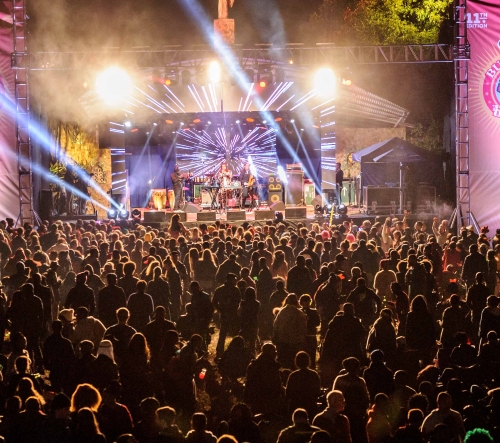


Like many other African countries, Sudan boasts a wide range of traditional instruments. With 18 different states, more than 500 tribes and some 115 languages and dialects, it would be close to impossible to cover all the instruments associated with the plethora of Sudanese culture.
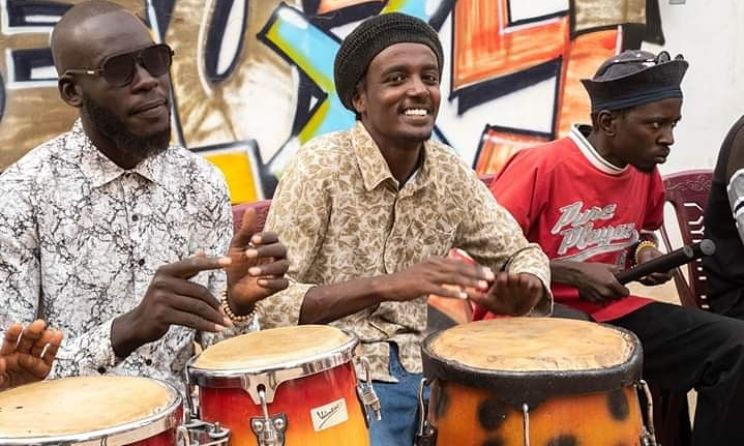
This article presents 10 instruments used in traditional Sudanese music – many of which can be found across the African continent in similar forms but with different names.
Tambour/rababa
The Sudanese tambour/tambur/tanbur or rababa is a bowl lyre known in Northern Sudan as kissar from the Nubian word ko:s (bowl), also used to refer to the cavity of a skull [1].
In other areas, it is known by different names: Basinco (East Sudan), abangaran (Angessana), kanjan/kassindi (Nuba Mountains), um bari bari (North Kordofan), kissir (Nubia) and tom (South Sudan). It is usually played in accompaniment with a larger instrument for bass and a smaller one as lead [2].
The guitar is said to be a descendant of the rababa. It is a five-stringed instrument that resembles the face of an animal. It consists of a hollow shell-like body (usually made from an old tin or carved-out wood that is flat on one side and round on the other) with a wooden or metal head for the top part. The five strings, made from nylon or metal, are tightened along the neck. Two holes that represent eyes are made in the resonator box/body.
Traditionally, craftsmen would use the face of an antelope to create the instrument and a tortoise shell for the body. Other sources say that the instrument resembles a horned cow with the two openings in the body representing the eyes. Tambur is also used in healing and Zar rites for women [3].
To play the tambour, the left hand is used to alter the notes while the right-hand fingers do the plucking.
The strings are named as follows:
- The loner (first string).
- The second.
- Middle.
- The tender (fourth, from top down).
- The responder/answerer (fifth).
Musicians who play the tambour include Abu Obaida Hassan, a prolific master of the instrument who added a sixth string and an amplifier to the instrument. He was believed to have died in the 2000s after disappearing, only to be tracked down by New York-based label Ostinato Records as detailed in an interview with OkayAfrica [4]. Mohamed al-Nasri is another well-known tambour player who has captured millions with his heartfelt playing and tender lyrics.
More recently, Sudanese musician Noori received worldwide attention for his hybrid electric instrument called the ‘tambo-guitar’ or ‘krar’. Noori and His Dorpa Band released their album Beja Power! Electric Soul & Brass from Sudan’s Red Sea Coast in 2022 to critical acclaim on Ostinato Records.
Adongo
This harp/boat shaped instrument has an attached bow with strings made from sheepskin. It is held on the lap with the neck pointing away, and has about two scales worth of strings. Like the tambour, the left-hand fingers are placed on the strings to change the notes while the right hand moves around to play the rhythm.
Umkiki
The umkiki, a one-stringed violin, has a resonator made from a gourd and a goatskin tightened around it. The string is tied around a support rod/bar and played using a bow.
Waza
The waza is a Sudanese horn often played in an ensemble of up to 13 players. It is used to usher in the harvest season and played during celebrations. Made from gourds, the instrument’s length may vary and can reach up to 2 metres [5].
Waza playing goes along with a special kind of singing. Here is an africanews video showing how a waza is made and played [6].
Banimbo
The banimbo is a Sudanese marimba type of instrument from the Blue Nile state. It comprises a series of wooden bars made of teak wood placed on a frame in increasing lengths and played using sticks or mallets.
Below is a video by Drum Circle Sudan [7] showing how to make a banimbo:
Nuggara
The nuggara drums are regarded as Sudan’s oldest instrument, dating back thousands of years. The drums are present in many cultural and tribal celebrations and initiations, and are used to mark the change of seasons. The nuggara can be found in all of Sudan’s 18 states and also in South Sudan.
The drum set comprises two to three drums with skins tightened around the body. The skins are secured on the body of each drum when wet. Thick sticks are used by one or multiple drummers who send messages while playing.
Below is a video of three drummers playing the nuggara:
Daluka
The daluka is a small goblet-shaped drum made from mud with the skin tightened over its wider part. It is placed sideways on the lap and played mostly by women at weddings, gatherings and celebrations.
The daluka is tuned with heat from a fire source, which tightens the skin. The genre known and aghani banat, or ‘women’s songs’, heavily relies on the daluka as the main instrument, often accompanied by other drums like the frame drum (tar), shatam or dinger.
Dinger
The dinger is made of a calabash or gourds that are cut in half, dried out and placed in a metal container with water. They are traditionally played by women using long, thin sticks.
Noba
The noba drum – with its distinctive markings, usually green, red and yellow – is used in protest by justice movements and Sufism. The noba is round and carried with a strap around the upper body – similar to bass drums in marching bands.
Shatam
The shatam is a circular drum with strips of leather pulling the skin around the rim. It is played with a small stick usually made of leather. The shatam accompanies the daluka or the noba in some Sufi ceremonies.
Resources and citations
[1] https://womensliteracysudan.blog/2021/07/07/the-sudanese-tambour
[2] https://www.sudanjournal.com/%D8%A7%D9%84%D8%B1%D8%A8%D8%A7%D8%A8%D8%A9-%D9%88-%D8%A7%D9%84%D8%B7%D9%85%D8%A8%D9%88%D8%B1/
[3] https://womensliteracysudan.blog/2021/07/07/the-sudanese-tambour
[4] https://www.okayafrica.com/sudan-music-tambour-abu-obaida-hassan
[5] https://www.capitalfm.co.ke/news/2022/09/sudan-traditional-wind-instrument-trumpets-harvest-time
[6] https://www.africanews.com/2022/09/28/sudans-wazza-instrument-ushers-in-the-harvest-season
[7] https://www.facebook.com/drumcirclesudan
Disclaimer: Music In Africa's Overviews provide broad information about the music scenes in African countries. Music In Africa acknowledges that the information in some of these texts could become outdated with time. If you would like to provide updated information or corrections to any of our Overview texts, please contact us at [email protected].
Editing by Peter Choge and Kalin Pashaliev


Most popular

Top Naija songs of 2026
31 Mar 2026

Top Afrobeats songs of 2026
19 Mar 2026

Ghana: Mr Eazi and MOLIY’s ‘Comfort’ earns Urban Music Awards nomination
21 Oct 2026

Top amapiano songs of 2026
16 Feb 2026

Open call: CANEX Music Business Lab and Songwriting Camp
15 Oct 2026
Nigeria: CANEX WKND unveils 2026 programme
21 Oct 2026
Disclaimer: Music In Africa provides a platform for musicians and contributors to embed music and videos solely for promotional purposes. If any track or video embedded on this platform violates any copyrights please inform us immediately and we will take it down. Please read our Terms of Use for more.

Subscribe to our monthly Newsletter
Follow us on social media


Please log in to post a comment.