




























































A tribute to legendary Somali musician Axmed Naaji
21 Sep 2023 - 07:38


By Mohamed Haji Ingiriis
Somalis are natural-born critics, yet for over six decades Axmed Naaji Sacad (Ahmed Naji Sa'ad) was almost unanimously revered. A household name in urban Somalia, the popular singer and poet passed away at the age of 84 in London earlier this month.
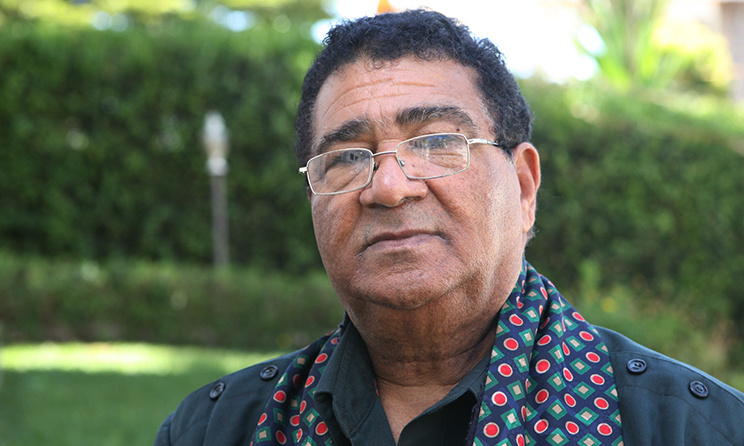
Venerated as an elder of the country’s cultural life, Axmed Naaji Sacad Cali Naasir was not merely a singer, composer and musician who played guitar, lute, mandolin, piano and violin. He was also a radio host, a playwright and a poet.
First known for his love songs like ‘Garan Waaye’ (I Couldn’t Know), he would later become famous for patriotic songs such as ‘Dalkeygow’ (Oh My Country). Poems are commonly set to music in Somalia. Naaji mostly performed a Banaadiri genre of Somali poetry – of the Benadiri people – although he also worked in other genres.
As an interdisciplinary scholar of Somali anthropology, history and politics, I have followed Axmed Naaji Sacad’s career since my childhood. He leaves behind a body of work that wove together the Somali people’s political struggles and socio-economic realities, entrenching himself in public consciousness.
Early years
Born in 1939 in Belaajo Carab (the Arab village) in the Shibis neighbourhood of Mogadishu, Naaji was Somali-Yemeni in origin but never identified himself other than as a Somali. His family had lived for generations in southern Somalia, where his father owned a farm and worked as a trader. From precolonial times, Somali-Yemeni traders were the suppliers of food and clothes to rural areas in south-central Somalia.
Naaji was born into an era of Italian colonialism in Somalia and, later, the wider Horn of Africa. In the early 1950s, when the country began on the road to independence, he was registered with a government school to study Arabic and Italian. It was there that he honed his singing talent. His teachers taught him Arabic and Somali songs praising the newly fashioned Somali flag, officially hoisted for the first time in 1954.
The Somali Youth League was the leading nationalist movement during the era of decolonisation. Naaji would go with his fellow students to their weekly meetings to entertain the attendees with song.
Young man
As a student, he liked to listen to the songs of luminaries like Sufi Ali and Qaasim Hilowle Liibaan, whose music was characterised by the combination of Arabic and Indian styles of poetry. His dream was to reach their level of popularity. Axmed Naaji also listened to Radio Mogadishu, one of the few places people could hear newly released songs. He drew further inspiration from the local Banaadiri music bands that staged performances at venues used by Benadiri political parties.
Driven by a desire to transform Somali songs, he joined a popular local band called Luna Somala (Somali Moon). They would release songs on Radio Mogadishu every Sunday, the official day of rest under an Italian regime tasked by the United Nations to prepare Somalis for independence.
The new Somali self-government in 1956 would encourage the evolution of modern popular culture, with artists like Axmed Naaji poised to make their names.
Radio Mogadishu
In 1961 Naaji was among the singers chosen, after an exam, to work for Radio Mogadishu. His time as a radio show host changed his life. People came to know him both on the airwaves and on the streets of Mogadishu: he worked on radio in the mornings and with local music bands in the evenings. He co-established his own band, Shareero, to entertain people in local bars and at community weddings.
When the Somali Republic was born from a merger of northern and southern regions in 1960, Naaji welcomed the team of singers from Radio Hargeysa in the north to Radio Mogadishu in the south. He was unparalleled in building a bridge between the south and the north, separately colonised by Italy and Britain, respectively. He benefited from the collaboration, which helped him make richer Somali music. He also performed Sudanese and western music while inspiring young broadcasters on their road to greatness.
At the same time, Naaji was staging plays at a small local theatre until the national theatre was built in 1967.
Coup
A bemused Axmed Naaji would recount where he was in the early hours of the morning of 21 October 1969 when the military regime came to power. The junta who staged the coup targeted Radio Mogadishu, sending soldiers to his home to get the keys for the studio. Seeing soldiers, his mother wept, believing that her son had done something wrong. He followed the soldiers’ instructions.
After nine years of failed democracy characterised by election fraud, a socialist-style revolution had been born in impoverished Somalia. The public largely welcomed the coup, rising up against the former civilian leaders. On the morning of the coup, Naaji and famed poet Cali Sugulle were tasked with preparing a song for broadcast on the radio. Sugulle composed it and Naaji voiced it: “Xooggii baa dadaalayoo, xukunkii dalka haystee, anna waan ku raacnaye, hambalyo diiran hooya (The army has strived, taking over the rule of the country, and we concur with them, we offer them warm congratulations)”
It was the first time Naaji heard the word kacaan (revolution). During the golden era of the military regime in the early 1970s, he found a unique opportunity to display his talent. Buoyed by his growing popularity, he travelled far and wide to perform for Somali, African and international audiences.
Somali music reached a new peak in 1974 and Naaji was at the forefront of it. He believed that Somali musicians were as important as any others in the world. The new popular music was performed in the Somali language and he was a leading star of the new school, famous for his love songs.
Civil war
By the 1980s, Somalia found itself on the brink again. An armed rebellion against President Mohamed Siad Barre would lead to civil war. When, in December 1990, the war finally reached Mogadishu, Naaji stepped back, composing nothing in support of either side.
He fled to Lafoole village outside Mogadishu, where his university professor brother lived and taught, and left for Yemen in May 1991. There he helped refugee Somali artists and began releasing songs calling for an end to the war and the restoration of a unified nation state.
Before the civil war, Naaji was largely known for love songs. After the collapse of the state, he turned his focus to nationalistic, patriotic songs encouraging Somalis to create a new, better Somalia from the ashes.
He toured the world, visiting Somalia once in 2011 but living in exile in the UK. But through his patriotic poems like ‘Soomaalaay Dalkaagii Mee?’ (Oh Somalis, Where Has Your Country Gone?), he contributed significantly to relentless efforts to create peace and reconciliation in Somalia. Sadly, he died without seeing that happen.
Thousands attended his funeral in the UK. In a more just world he would have been buried in his beloved Somalia, where he is regarded as an icon and a hero of the Somali people wherever they are in the world.
Mohamed Haji Ingiriis is a fellow at King’s College London. This article first appeared on The Conversation.


Most popular

Top Naija songs of 2026
31 Mar 2026

Ghana: Mr Eazi and MOLIY’s ‘Comfort’ earns Urban Music Awards nomination
21 Oct 2026

Top Afrobeats songs of 2026
19 Mar 2026

Top amapiano songs of 2026
16 Feb 2026

Open call: CANEX Music Business Lab and Songwriting Camp
15 Oct 2026

Nigeria: CANEX WKND unveils 2026 programme
21 Oct 2026
Disclaimer: Music In Africa provides a platform for musicians and contributors to embed music and videos solely for promotional purposes. If any track or video embedded on this platform violates any copyrights please inform us immediately and we will take it down. Please read our Terms of Use for more.

Subscribe to our monthly Newsletter
Follow us on social media


Please log in to post a comment.