















































What would a music AI future sound like?
20 Dec 2022 - 12:07


I am a sci-fi fan. Anybody who knows me will often catch me dreaming of exploring space or eagerly awaiting the release of the next alien invasion movie. My interest in computers and technology is a part of this imagination, and my wife admires how I always find the latest tech gadgets or (over-) spend on music gear. As such, I am not usually risk-averse of new ways of doing things or how things may change because of technological advancements. So, it may come as no surprise that recent fearmongering about artificial-intelligence (AI) in the music industry is of deep interest to me.
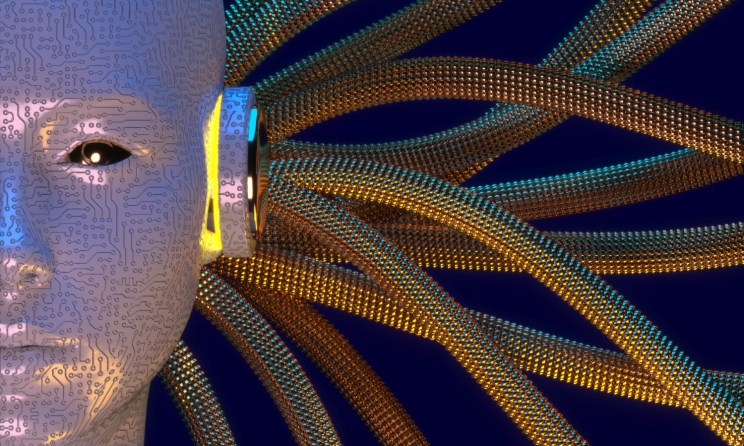
If humans can figure out how to write music mechanically, then the same process can be instructed as commands in a computer. Essentially, the development of the digital audio workstation (DAW) and modern synthesiser are a result of this. We may call it cheating when someone brings up a sampled orchestra and drags in a prearranged arpeggio sequence, or, heaven forbid, a pre-made MIDI chord pack to instantly provide harmonic possibilities. There has also been hushed mutterings around cloud-based sampling tools, such as Splice, which allow you to search for sounds and then import them into your DAW. All these options are often royalty-free on once-off or subscription options.
The argument is that if you could hire a session musician or composer and pay them for their time (as many professional producers do), is this workflow not the same in principle? Are we not then just shifting the goalposts from one type of creation to another? My philosophy as a music producer has been exactly along these lines – for the artists and bands I work with. My clients are given the creative freedom of vision with the assistance they need to fulfil it. This takes projects that may have been considered demos in the past to a product that is well-polished and epic-sounding.
My first exposure to the revelation of AI was when a machine finished Beethoven’s last symphony. AI software Playform was trained in the classical and romantic-period composer’s style and given the notes and ideas he had made for the piece. Playform then wrote the rest of Symphony No 10. Using an iterative approach, similar to Grammarly’s writing assistant, the software anticipates what you may write next until the piece is complete. Human experts then trained the AI to recognise thematic musical content and form, which the AI could use to develop complete passages of music. The blanks were filled in by using musical influences like Bach, Hayden and Mozart to teach music theory to the young ‘Beethoven AI’. The final score was then performed by a real orchestra, the Beethoven Orchestra of Bonn. I took a listen, and it sounded like old Beet’ to me!
AIVA is an emotional music generator for filmmakers, videogame designers or even composers. Once you’re on the web portal, you can select a preset style, upload a reference, or even search for something if you’re not quite sure what you’re looking for. The auto function will randomise everything, or you can set your musical parameters. Presto! You have music that you can use in your other media. You then download the audio file and/or MIDI. SOUNDRAW is a similar AI, where you can customise the parts of the composition, mood, length and other details, and similarly hit ‘create music’ to get your ready-made soundtrack.
Boomy is a pop music AI in which you input your desired style and sounds, plus your hook vocal, and it’ll put together a track in 10 seconds, which the platform can even release for you. If you are really adventurous, try the ‘custom mode’ or even the ‘custom vocal’ feature. No music talent or knowledge required. The mind-blowing part is that Boomy says that 9.4 million songs have been created on its platform already, making up 9.46% of the world’s recorded music. That sounds nuts to me! It’s just a matter of time before there’s an AI-generated top-10 hit, if there isn’t one already. The older generation in the room will say that there is no soul in it, but the younger generation will just call it ‘user-generated content’, which is fun to do, and that’s just the point. I wish I’d known this before wasting 20 years on acquiring musical skills...
AI is not limited to creating music either. It could easily take over the entire value chain – from album artwork to music videos. Google AI was used, for a second time, to generate a screenplay script episode for the popular sci-fi series Stargate SG-1, where every episode of the show is scanned and then compiled with natural language models to create an ‘original’ and exciting story. The AI software Midjourney, meanwhile, was used to create an amazing artwork for user Jason M. Allen. Allen then entered the work and won the best emerging digital artist award at the Colorado State Fair in the US. While Allen’s ‘work’ was clearly entered as an AI work, the extended creative possibilities are staggering.
Video software Nova A.I. allows anyone to set visuals to music and dial up visual moods. Throw in your own visual, intuitive editing and bang! you’ve got a viral winner. Anyone with a vision will be able to call up a completed work in the presentation they wish. And it doesn’t stop there. In September 2022, MIT announced that AI-powered digital replicas of humans are now a thing. So, even artists may just be a product of AI someday.
AI influencer Miquela has been sponsored by major fashion brands and has amassed a following of almost 3 million. It is only a matter of time before we interact with digital personas as if they were our real friends (maybe they already are!).
New forms of creating aside, these types of works bring up an important legal question: if AI generates works, who will own the copyright of those works? If all the AI is doing is scanning historical works, identifying patterns and reordering them, is this not an example of a derivative rather than an original? Whoever owns the original would also own the adaptation. Perhaps the owner of the software may own its output, or would the user? The saying goes, “He who pays the piper calls the tune”. So, if you commission the work, you should own it. This is the case for users of software, where the software is typically licensed but the output and input datasets are owned by the user.
The AIVA software further illustrates this by allowing limited licensing or full copyright of the generated music depending on the plan, which is basically how much you are willing to pay. A similar argument could be made for humans who do exactly this as well: think of any music genre and the rules for the music needed for it to be in that style. If I study amapiano music and create a work based on a limited sample of that music, I am in essence creating a derivative of the style, but I would create a new sequence of tones to create a new song. But a computer can also randomly generate and then assign a logical sequence based on the same rules, like the Beethoven re-symphony. And so, AI does bring up some very tricky legal and ethical questions.
We may associate creativity with the grunt work of getting sore hands while practicing an instrument, but if the instrument becomes something more immersive, why couldn’t human creativity push the boundaries of traditional art? Sure, it calls up ethical issues when an AI can create something for humans without humans. This conjures up images of The Matrix movie-like control of body and mind. Yet this may be akin to something like watching a beautiful sunset or a miracle of nature, except its source is not nature but machine. One can imagine commanding a computer to churn out a specified type of music and then lying down to enjoy it, in your AI-generated virtual reality (VR) world. By now the AI has even analysed you and tailor-made your best experience. It’s pretty much what I have now with all the video-on-demand services and every viewing experience possible, only that I may just decide how Game of Thrones should have ended, and have it actually happen that way.
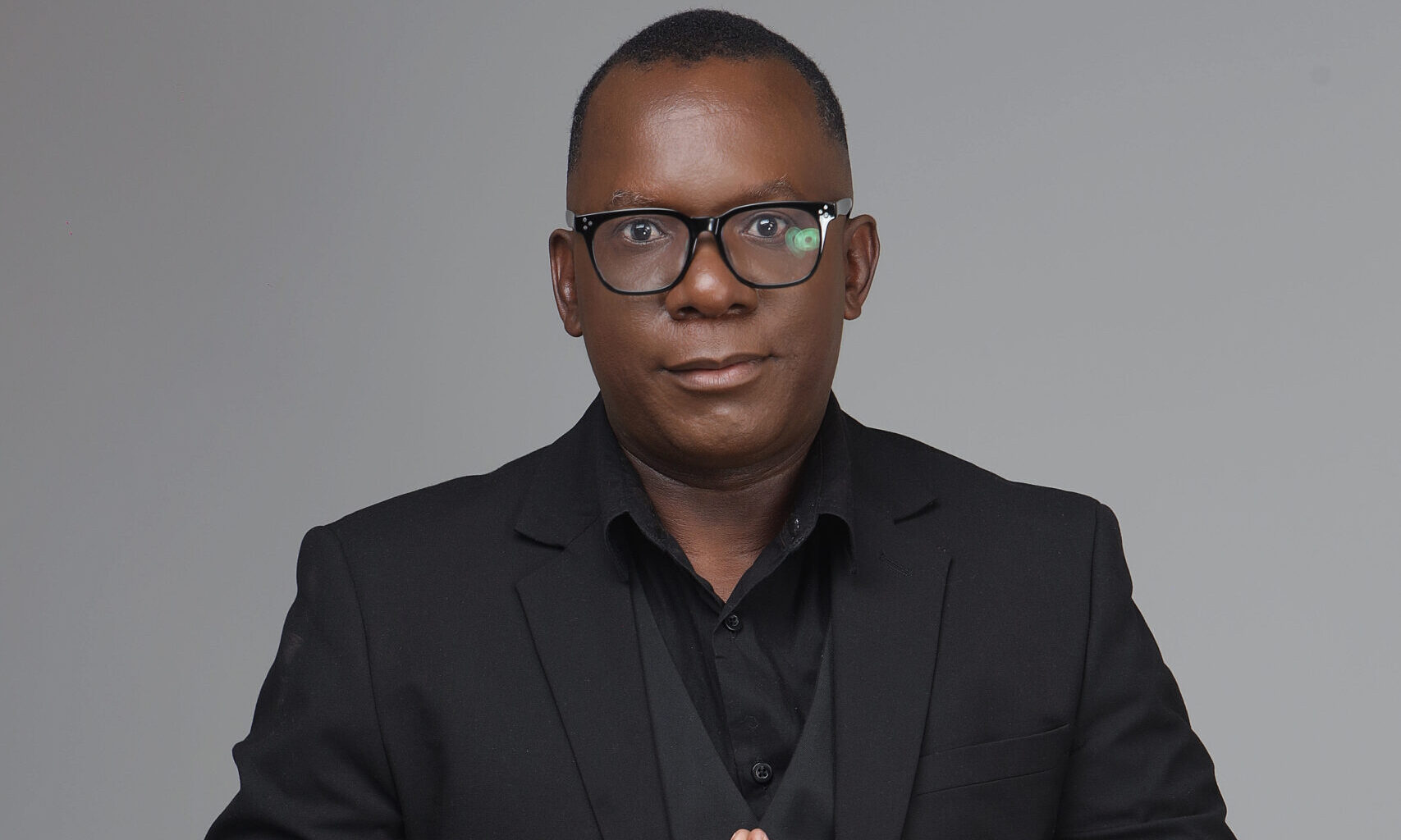
Jonathan G. Shaw is the lecturer of the Music Business Studies course at the Wits School of Arts in Johannesburg, South Africa, as well as a recognised music producer, audio engineer, policy expert and educational presenter. Shaw is the author of the book ‘The South African Music Business’, now in its third edition, and a PhD (Music) candidate at Wits University.
More reading on this subject:
- https://www.nytimes.com/2022/09/02/technology/ai-artificial-intelligence-artists.html
- https://wearenova.ai/
- https://www.pcmag.com/news/google-ai-wrote-a-really-good-stargate-episode-script
- https://boomy.com/
- https://www.aiva.ai/
- https://soundraw.io/
- https://www.technologyreview.com/2022/09/29/1060425/seeing-double-ai-births-digital-humans/
- https://www.sciencefocus.com/news/ai-beethovens-symphony/
- https://www.playform.io/
- https://splice.com/


Most popular
Call for applications: ACCES 2026 Emerging Artist Spotlight Competition
01 Oct 2026

Top amapiano songs of 2026
16 Feb 2026

Top Naija songs of 2026
31 Mar 2026

Top Afrobeats songs of 2026
19 Mar 2026
Open call: 2026 Gender@Work music industry training in Johannesburg
03 Oct 2026

AFRIMA 2026: All the winners
12 Jan 2026
Disclaimer: Music In Africa provides a platform for musicians and contributors to embed music and videos solely for promotional purposes. If any track or video embedded on this platform violates any copyrights please inform us immediately and we will take it down. Please read our Terms of Use for more.

Subscribe to our monthly Newsletter
Follow us on social media


Please log in to post a comment.