











































NEFCISA
NEFCISA

The Music In Africa Foundation (MIAF) is proud of its partnership with the Industrial Development Corporation (IDC) as a Strategic Implementing Partner (SIP) for its Social Employment Fund (SEF). Through this collaboration, MIAF is running a national programme that is creating jobs, addressing skills gaps, and strengthening South Africa's creative industries — in line with the SEF's overarching goal to generate work for the common good and build community value through employment, social contribution, and inclusive economic participation. Operating under the banner NEFCISA (National Employment Facility for Creative Industries in South Africa), the initiative is recruiting and training participants, matching them with host organisations, and has already placed 1 500 workers across the country — surpassing its original target of 1 000. NEFCISA is delivered through a network of 20 host organisations spanning five provinces, who are actively hosting participants and contributing to work for the common good across South Africa's creative and cultural industries. Key Objectives: Support employment and entrepreneurship in the creative industries. Offer skills development and training programmes. Foster partnerships between public and private creative sectors. Promote South African creativity at both provincial and national levels Foster community development through social contribution.

ACCES
ACCES

ACCES Conference and Showcase Festival is Africa's leading music industry gathering, bringing together the people shaping the future of the continent's music business. Artists, entrepreneurs, executives, investors, policymakers and cultural leaders from across Africa and around the world come to ACCES to build partnerships, exchange ideas, discover talent and create new business opportunities. Since its launch in 2017, ACCES has become the continent's premier platform for professional exchange and music market development. Combining a high-level conference with a curated showcase festival, networking, exhibitions and industry programmes, ACCES offers a unique space where creativity meets business and where African music connects with the global industry.

Gender@Work
Gender@Work

Music In Africa Gender @ Work is a three-year training programme aimed at upskilling and increasing the participation of female professionals in the African music sector. Launched by the Music In Africa Foundation (MIAF) in April 2019, the programme is connected to the MIAF’s ACCES music conference – a pan-African event held in a different African country every year. This connection enables the programme to reach new participants in a different African country every year. The programme marks the beginning of a more concerted effort by the Foundation to support the participation and inclusion of women in all facets of its programmes and the music sector in Africa as a whole. Over the three years, the programme will aim to address gender imbalances in the sector through training, lobbying, facilitating knowledge exchange and dialogues that foster the interest of women. The broader objectives of the programme are to: Provide industry training for women on critical music industry skills, focusing on: Stage management Electronic music production and recording Music business management Technical knowledge Provide an opportunity for both professional and aspiring women to benefit from the Music In Africa network and its broad range of activities in 2019, 2020 and 2021. Provide a solution-based platform in the form of a round table at ACCES with a view to identify challenges, discuss opportunities and lobby for the interests of female practitioners. Offer participants the opportunity to benefit from programmes offered by MIAF’s partners. Increase access to educational materials. Integrate participants in the broader ACCES programme to maximise experience and exposure to the industry. Record and present training materials on the www.musicinafrica.net, including but not limited to tutorials, templates and other best-practice materials. Communicate women-based themes that support the initiatives and messages of the programme. MAIN TRAINING ACTIVITIES Training in first country (Ghana): In the first year, participants will be trained on all aspects of stage management by a team of experienced stage managers from 10 to 17 November 2019. The programme will offer robust classroom training as well as practical, hands-on training in which participants will also be given the opportunity to manage various aspects of the ACCES performance programme. Training in second country: The second training iteration will take place at ACCES 2020 when the programme will diversify its course to include music production lessons and training on other music business topics. A round-table platform will also be introduced to coincide with the ACCES programme. Training in third country: The third training iteration will take place at ACCES 2021 in a different country, offering an advanced course. HOW DO YOU GET INVOLVED?  As a participant, facilitator or trainer: The programme enrolls up to 12 trainees every year. All opportunities are advertised publicly on this website, and will be added to this page. Please keep checking this page for new calls (below under UPDATES & CURRENT OPPORTUNITIES). As a partner Please contact Claire Metais at [email protected]. APPLY The call for applications for 2020 will be announced soon. The Music In Africa Gender @ Work programme is made possible with the support of the Prince Claus Fund, Siemens Stiftung and Goethe-Institut.

Sound Connects Fund
Sound Connects Fund

For cultural and creative practitioners and organisations operating in southern Africa, access to funding remains a major challenge. The COVID-19 pandemic has also had a massive impact on government policy, spending and the economy in general, and has seen spending on culture being moved further down the list of priorities. Further, the cultural and creative industries repeatedly cite four main areas where investment is needed for growth, which are increased visibility, mobility including access to new markets, finance and support structures.

Instrument Building And Repair Project

Experience the Vibrations African Instruments Exhibition online in 3D

Features

Why Joburg’s entertainment hub still gives you the biggest head start
15 Jan 2026 - 12:08

cc-img

By Mzi Kaka

South Africa’s media and entertainment sector is one of the country’s most exciting growth stories. PwC’s outlook shows that it is outperforming global benchmarks, driven by streaming, on-demand video, a resurgent film sector, and a live industry that has already surpassed its pre-pandemic revenue levels. Over the next few years, billions of rand in additional revenue are projected to flow into this space, taking the sector from roughly R289 billion (about $17.6b) to more than R320 billion by 2029.
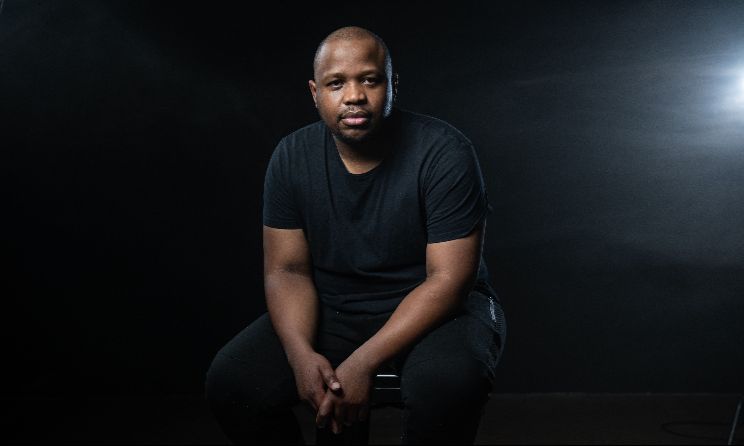
Mzi Kaka.

Approximately half of South Africa’s creative economy output is generated in Gauteng. Within that, Johannesburg carries the bulk of the load. By some estimates, more than 70% of the country’s film and television activity is based here, with some reports putting that figure as high as 85%.

Living in the production value chain

On the post-production side, Johannesburg has a mature ecosystem that can take raw footage and deliver a finished product of international quality. On the broadcast side, the major institutional players are headquartered in Johannesburg. The SABC, MultiChoice and its Showmax platform, Primedia, eMedia Investments, and others shape much of what the country sees and hears every day, and they do it from this city. We also have an international footprint through Canal+ (following its acquisition of MultiChoice) and CNBC Africa.

Music tells a similar story. The major labels (Universal, Sony, and Warner Music Africa) have their South African and often continental headquarters in Johannesburg.

More recently, you can see the industry’s health in unlikely places. A decade ago, commercial real estate in Sandton, the richest square mile in Africa, was dominated by law firms, consultancies, and financial institutions. Today, you increasingly find content production offices and studios occupying that same high-value space. That tells you something about the confidence and capital now associated with media and entertainment in Johannesburg.

So, where does the Academy of Sound Engineering (ASE) fit into all of this?

Physically, we sit inside and alongside the SABC in Auckland Park. The majority of our campus square meterage is in SABC buildings. Industrially, we see ourselves as the industry's training and development arm.

When broadcasters or production houses knock on our door, it is usually for one of three reasons. They are looking for critical skills they cannot easily source elsewhere, upskilling existing staff, or access to emerging creative and business talent.

Thanks to burgeoning long-term relationships with organisations like SABC, Primedia, eMedia (including YFM), MultiChoice, Universal Music Publishing, Downtown Music Publishing Africa, and Gearhouse, we have moved beyond the occasional internship. We are now providing them with talent pipelines.

Proximity, relationships, and timing

Ideally, as an industry, we would like to see opportunities distributed more equitably across the country. For now, the reality remains that Johannesburg is the engine room of the sector. If you are serious about working in media and entertainment, physical proximity to that engine is a strategic advantage. It brings you closer to the work, to the decision-makers, and to the informal networks that still play a significant role in who gets the call.

That does not mean there is nothing you can do from outside the hub. We live in a digital age. Short courses, online programmes, and self-driven learning through tutorials, journals, and open educational resources can all help to build your skills. At the same time, you prepare to move closer to the centre. At ASE, for example, our short courses are accessible from the age of 16, and we are expanding our online offerings to give students on the fringes a credible access point. We also work with accommodation providers around Auckland Park to make relocation as seamless as possible when the time comes.

Why the hub still matters

Of course, studying in South Africa’s entertainment hub does not guarantee success. But it does place you inside the geography and the relationships that are driving the sector’s current growth.

For many of our students, that daily proximity is what turns a career in media and entertainment from an abstract dream into a concrete, navigable path. With the right training, relationships, and personal initiative, the hub is not just where you study; it is where your career begins.

Mzi Kaka is a lecturer at The Academy of Sound Engineering. The opinions and views expressed herein are solely his own and do not reflect the position or stance of the publication.

Please log in to post a comment.

Most popular

Disclaimer: Music In Africa provides a platform for musicians and contributors to embed music and videos solely for promotional purposes. If any track or video embedded on this platform violates any copyrights please inform us immediately and we will take it down. Please read our Terms of Use for more.

newsletter banner

Subscribe to our monthly Newsletter

Follow us on social media