














































Why Malcom Mufunde’s Economy Is A Work Of Genius

24 Apr 2022 - 09:22


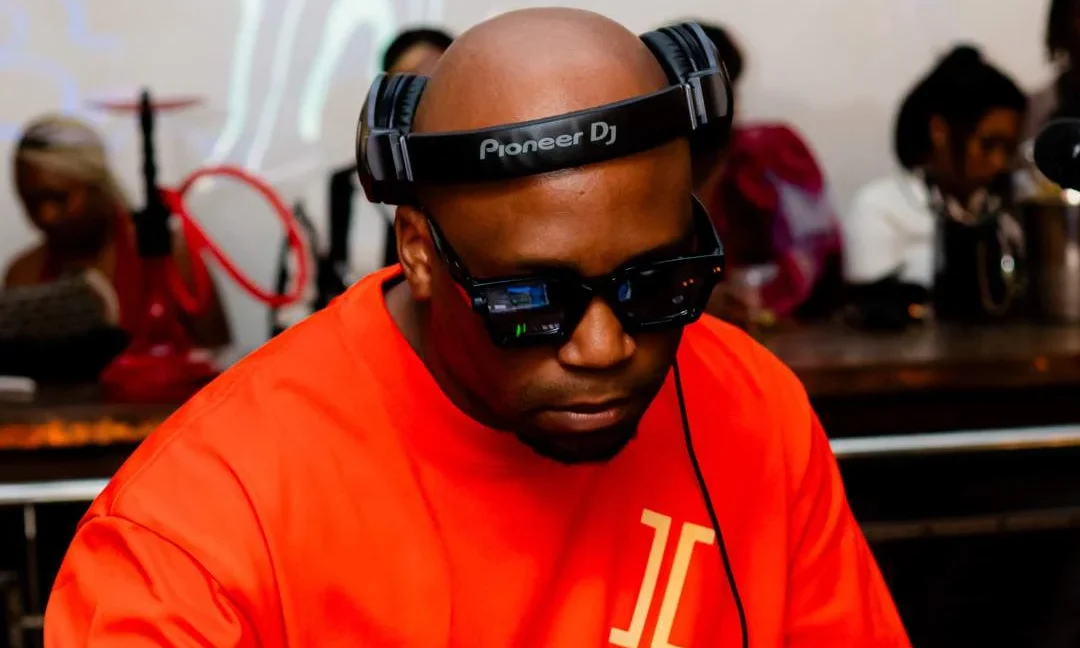
When it comes to delivering witty bars and punchlines on wax, Zimbabwean hip-hop artist Malcom Mufunde is one of the best to do it in that category. The four eyed cinephile, who has been perfecting his craft for over a decade finally got his big break in 2021 when he collaborated with another Zimbabwean hip-hop icon, Synik (The man who gave us Syn City) in 2012. Together they dropped a massive project titled Trash.
Malcom would go on to earn a trophy, rightfully as the Best Underground Rapper at the 2021 edition of the Zim Hip-hop Awards and drop yet another phenomenal body of work dubbed Emcee FM the next morning. It too was a solid project, facilitated and backed by YaadUniverse.
Moving on to 2022, he decided to switch up and take a more mainstream approach in the album Economy. The album has an image of an old NRZ train. NRZ in its years of operation had an Economy Class. This project is also in collaboration with YaadUniverse. It largely speaks of common struggles that young Zimbabweans face to get by. Every song has within it an interlude by a lady named Makanaka Kanjanda, who helps the icon tell his story with anecdotes of a childhood they spent together.
Some of them are touching, some of them are tongue in cheek. This further gives weight to the idea that they have a strong background together with inside jokes that us as the audience can only be curious of.
Throughout the project he maintains the techniques we love him for. Putting together metaphors, puns and punchlines in a meaningfully coherent way to the subject matter. Earlier Malcom used to be all punchlines and no apparent subject. However the Malcom in Economy is actually carousel of images that tell a story as the music spins.
Now before we discuss these songs, one of the most genius executions that was done on this project is that the ending of a previous song is very much connected to what will be discussed in the next song. If you are binge listening to the playlist you may not see when the transition occurred.
Despite the Shona Titles, the songs are rapped in English.
Mbiri
This is the first track of the project, introduced by the voice of Makanaka threatening to spill all the tea about Malcom Mufunde. The word Mbiri means fame in Shona, but it can also mean (second or two). Of course our wordsmith at some point in the track takes advantage of this to put across some interesting wordplay. However the song is about his journey, how he fell in love with the microphone and expected to get instant fame.
Of course he would learn the game the hard way and go through the process before any note-worthy recognition would be awarded to him. He speaks of meeting Mike early in the track and the immediate interpretation could be that he means a microphone but as the track progresses he would seem to be talking about Mickey-shots the producer from Yaad Universe who has contributed immensely to his projects. Again, this is because whenever Malcom is at an advantage to play ping pong with double entendres he won't miss the opportunity.
Way before MJ could heal the world with his music
From the start, I always wanted to be a champ
So like the other MJ, I did this from the jump
This timeless music will be here forever
Though I might never sell gold, I'm still a national treasure
So Mike and I made our mark on the street
He made the beat to this record, I made the record to beat
As you can see in the above he makes a reference to Michael Jackson, Michael Jordan then Mike his beat maker.
Makanaka prepares us for the next songone by giving us a little anecdote on how everyone in high-school thought Malcom was going to be rich one of their class, since he was smart. She jokingly says they cut a deal that they would split the money and he goes on on the bars.
Mari
Now before we get in on the bars, why I love this song in relation to the first part by Makanaka is that it tells the story of how many academically brilliant young Zimbabweans were always thought to be the future Warren Buffets of our generation.
Yet as you progress with his lyrics amidst metaphors, witty lines and double meanings it becomes clearer that it's the opposite that manifested because of the Economy.
With opening lines like "Money talks but it gave us the silent treatment", you can already tell which direction the album is going. The second track sets the general tone more than Mbiri does. Now Mbiri of course was introducing the artist, but Mari is introducing the main subject matter of the album. Ultimately this one ends with Malcom asking God to help him succeed financially which plays into Denga Nenyika (heaven and Earth) which is the next song.
Denga Nenyika
This is a political song, about how bad politics have spoiled the odds of young people getting their piece of the pie in the land of their fore-fathers. It is a well put together piece which courageously brings truth to the tyrants door-step.
With bars like:
Let me speak truth to power, that's the power of truth
And connect with the geriatric that govern the youth
They call us born free yet we pay a price for the freedom
But we just roll with the crap like a dung beetle
Coz I can claim that our lives are at stake in this land
Since we lose our lives once we stake our claim in this land
In our head, we believe we might have a shot at this
But you get shot in the head the minute you utter this
It is a brave piece of art. Verse by verse the poet goes at those that have selfishly and by corrupt means amassed more than they need at the expense of the hard working commoner. It goes at the politicians for lacking the Patriotism to stop it and indicates them as being a part of it.
Of course all of this results in scarcity for the people. That is why the next song is titled Nzara.
Nzara
Nzara is the word for hunger in Shona, in broader terms it relates to overall scarcity. The song addresses the effects on society that come with it. The crime and the actions people are pushed to do to get by. It is a documentary of a torn apart economy with well-meaning civillians starting to have to hustle and have have run ins with the police.
When they say I'm violent, it's coz I fought for my life
With the odds against me, I proved numbers can lie
Coz everything we demanded was never supplied
So now I rap for the hungry kids fed up with the lies
Zvakahwanda
Zvakahwanda means, "What is hidden" . The title itself is promising to bring revelations of what had once been hidden in plain sight for the artist before he sought alternative knowledge.
Early in the album, we already established from Makanaka that Malcom was academically smart. Thus the knowledge we are referring to in this case is not necessarily academic knowledge. In fact he takes a jab at the academic knowledge as irrelevant.
I'm in school but intellectually daft
Coz I got the cap of knowledge but the knowledge was a cap
Thus the knowledge in question, is what he learnt from observation of what actually happens in reality as opposed to what books propose should be happening on the planet. He has lessons that can only be learned in a failed state.
Manyepo
Manyepo means lies. This one takes a shot at the fourth-branch of the government. The media and its propaganda. As usual if you are good at connecting ideas you will realize that, Zvakahwanda (What is Hidden) is facilitated by Manyepo (deception and lies). So this still very much ties into the concept of the album because a failed state has to lie through the media that everything is well.
Grew up believing in TV
But if it comes through a screen, it's been screened to deceive me
Very powerful line especially coming from a cinephile like Malcom Mufunde. This man knows the inner workings of the film industry and is a script writer himself.
His lyrics do not necessarily only criticize local politics. He goes in on film, American Gangster-Rap, Televangelism and other entities globally that have used mass media as a tool to take advantage of civilians. The lyrics in this one would sit well with students of Noam Chomsky and Edward Bernay.
Mari NaMwari
As he continues to unpack the deception and it's primary beneficiaries. He goes in on how the Church is swindling billions of poverty stricken religious adherents of their hard earned money in "mari na Mwari". Which means to say , "God/The Church and Money".
His opening lines on this one are:
We're cut from the same cloth but the tailor's biased
Coz men of the cloth is just another term for liars
But while kids without clothes die without an attire
There's a million-dollar closet for a plush Messiah
But what's a savior if he wants my savings?One of my other favourite lines from this one is when he doubles down to say:
There's a fascinating correlation
Between your net worth and the size of your congregation
You got the knowledge to preach but you're not preaching knowledge
These are the end times, I can tell from the priest's Rolex
Pfungwa
Pfungwa means "The Mind", and those who knew Malcom before he would become a national sensation know that at some point his name was "The M.I.N.D". Of course as the album progresses he is building on different concepts such as deception, gullibility, propaganda, depression and so on all which have to do with the what?
Pfungwa!
This song however largely zeros in on his personal battle with depression. Makanaka starts off by saying
So after primary school, we went to high school - that was from 2010. I feel like that was the most complicated version of Malcom, that one. And for the-- from 2010 to 2015, I honestly didn't even get what was going on like, I didn't get... There were so many versions of you that I encountered during that time, like, so many. And most of the times, I'll-- dude would just be like what what what what? So...that was also the time that, you know, the...what can I call it? Alright, fine. That was like...this is...I had never encountered, like, somebody who was struggling-- mmm, was it, is it struggling? This is actually a sensitive topic. It's very difficult t-to put, like, the right words, you know? But, like, it was my first time encountering someone who was dealing- let me say dealing, yeah. Who was dealing with mental health issues. And f-for m-most of the time, I didn't even know how to relate with you. I didn't know how to, what to say, how to treat you. But at some point, I kinda figured you know what? Just--
The song tells his story in a way that you can follow. He continues as expected to throw his lyrical wordplay and yet is able to embed the meaning. The outro to this song is Makanaka saying she always wanted to tell him something.
I wonder if it has omething to do with the next song.
Newe
Finally a love song!
Is this Malcom finally speaking back in the album to Makanaka . We may never know but it's definitely about a woman who has captured his heart. One of the longest running jokes within the the Zimbabwean Comedy and Hip-hop community has been that Hupepe Chule and Malcom Mufunde are not the type to be involved in matters of love.
This makes this song an interesting one.
Also this is the first song of the entire album to paint a happy picture proving that regardless the struggles we face we are still human enough to nshare love.
Marara
The final song is a dedicated to the hard work and contribution by residents from Chitungwiza where he grew up, to the Economy. Whilst the capital City of Zimbabwe is Harare, Chitungwiza continues to shelter many different people in the workforce who have made Harare beautiful. Yet they have to commute back home to Chitungwiza.
The value created often is spent on developing Harare, forgetting the entertainers, sports people, construction workers and intellectuals that work hard to contribute to it.
Allegorically this applies to any other City globally that is a satellite to a major city. I can immediately think of Norton as another example.
So when I listen to this. I absorb it into my own reality and other cities i have been in that have felt the same way.
In Conclusion
You should give Malcom a Chance all the songs mentioned here are available via the links I have provided below.
Audiomack Link : Malcom Mufunde & YaadUniverse - Economy or Stream it Via Any of The Listed DSPs
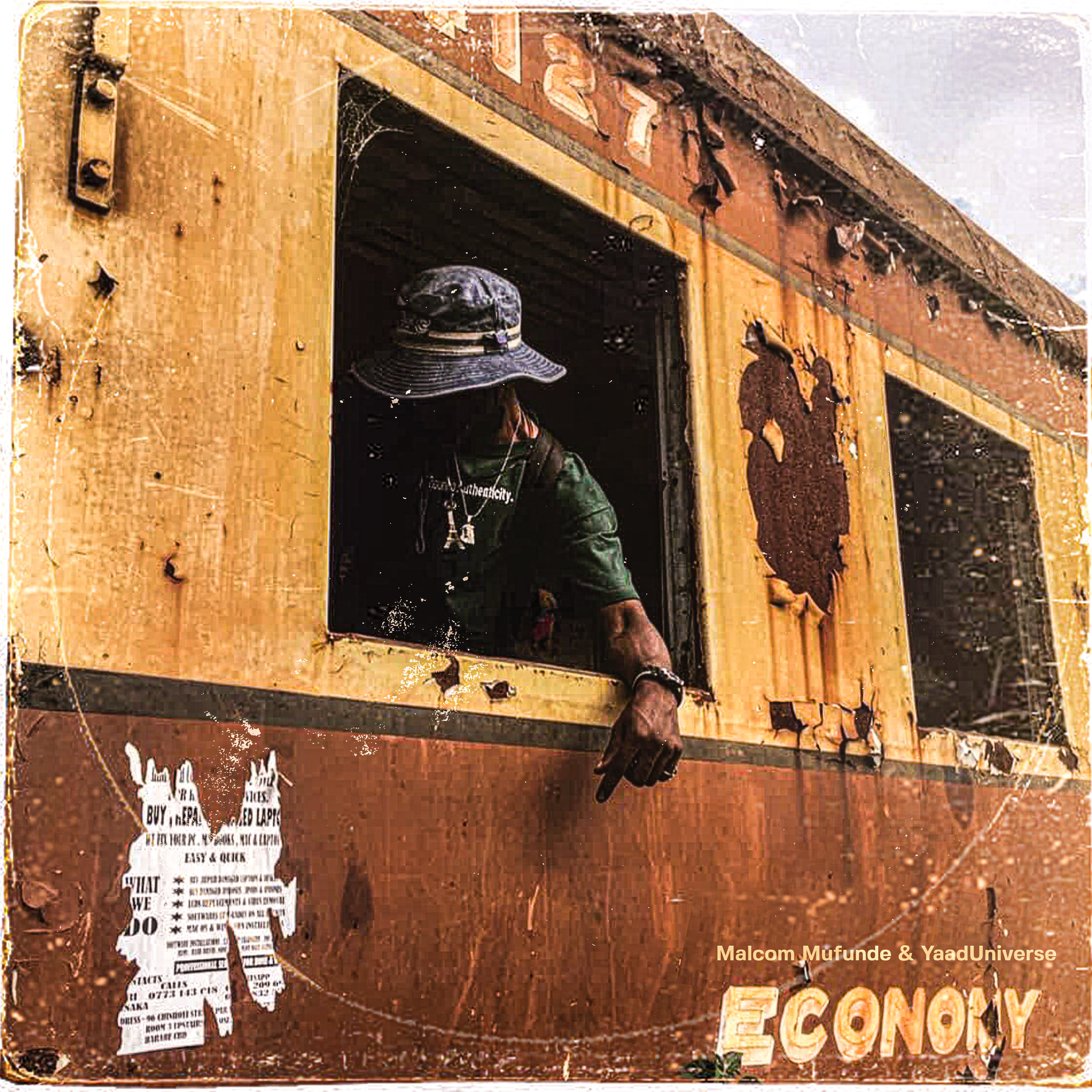
An overview of why you should take time to listen to Malcom Mufunde's album Economy and where to get it.


Most popular
Call for applications: ACCES 2026 Emerging Artist Spotlight Competition
01 Oct 2026

Top amapiano songs of 2026
16 Feb 2026

Top Naija songs of 2026
31 Mar 2026
Open call: 2026 Gender@Work music industry training in Johannesburg
03 Oct 2026

Top Afrobeats songs of 2026
19 Mar 2026
AFRIMA 2026: All the winners
12 Jan 2026
Disclaimer: Music In Africa provides a platform for musicians and contributors to embed music and videos solely for promotional purposes. If any track or video embedded on this platform violates any copyrights please inform us immediately and we will take it down. Please read our Terms of Use for more.

Subscribe to our monthly Newsletter
Follow us on social media


Please log in to post a comment.