
NEFCISA
NEFCISA

The Music In Africa Foundation (MIAF) is proud of its partnership with the Industrial Development Corporation (IDC) as a Strategic Implementing Partner (SIP) for its Social Employment Fund (SEF). Through this collaboration, MIAF is running a national programme that is creating jobs, addressing skills gaps, and strengthening South Africa's creative industries — in line with the SEF's overarching goal to generate work for the common good and build community value through employment, social contribution, and inclusive economic participation. Operating under the banner NEFCISA (National Employment Facility for Creative Industries in South Africa), the initiative is recruiting and training participants, matching them with host organisations, and has already placed 1 500 workers across the country — surpassing its original target of 1 000. NEFCISA is delivered through a network of 20 host organisations spanning five provinces, who are actively hosting participants and contributing to work for the common good across South Africa's creative and cultural industries. Key Objectives: Support employment and entrepreneurship in the creative industries. Offer skills development and training programmes. Foster partnerships between public and private creative sectors. Promote South African creativity at both provincial and national levels Foster community development through social contribution.

ACCES
ACCES

ACCES Conference and Showcase Festival is Africa's leading music industry gathering, bringing together the people shaping the future of the continent's music business. Artists, entrepreneurs, executives, investors, policymakers and cultural leaders from across Africa and around the world come to ACCES to build partnerships, exchange ideas, discover talent and create new business opportunities. Since its launch in 2017, ACCES has become the continent's premier platform for professional exchange and music market development. Combining a high-level conference with a curated showcase festival, networking, exhibitions and industry programmes, ACCES offers a unique space where creativity meets business and where African music connects with the global industry.

Gender@Work
Gender@Work

Music In Africa Gender @ Work is a three-year training programme aimed at upskilling and increasing the participation of female professionals in the African music sector. Launched by the Music In Africa Foundation (MIAF) in April 2019, the programme is connected to the MIAF’s ACCES music conference – a pan-African event held in a different African country every year. This connection enables the programme to reach new participants in a different African country every year. The programme marks the beginning of a more concerted effort by the Foundation to support the participation and inclusion of women in all facets of its programmes and the music sector in Africa as a whole. Over the three years, the programme will aim to address gender imbalances in the sector through training, lobbying, facilitating knowledge exchange and dialogues that foster the interest of women. The broader objectives of the programme are to: Provide industry training for women on critical music industry skills, focusing on: Stage management Electronic music production and recording Music business management Technical knowledge Provide an opportunity for both professional and aspiring women to benefit from the Music In Africa network and its broad range of activities in 2019, 2020 and 2021. Provide a solution-based platform in the form of a round table at ACCES with a view to identify challenges, discuss opportunities and lobby for the interests of female practitioners. Offer participants the opportunity to benefit from programmes offered by MIAF’s partners. Increase access to educational materials. Integrate participants in the broader ACCES programme to maximise experience and exposure to the industry. Record and present training materials on the www.musicinafrica.net, including but not limited to tutorials, templates and other best-practice materials. Communicate women-based themes that support the initiatives and messages of the programme. MAIN TRAINING ACTIVITIES Training in first country (Ghana): In the first year, participants will be trained on all aspects of stage management by a team of experienced stage managers from 10 to 17 November 2019. The programme will offer robust classroom training as well as practical, hands-on training in which participants will also be given the opportunity to manage various aspects of the ACCES performance programme. Training in second country: The second training iteration will take place at ACCES 2020 when the programme will diversify its course to include music production lessons and training on other music business topics. A round-table platform will also be introduced to coincide with the ACCES programme. Training in third country: The third training iteration will take place at ACCES 2021 in a different country, offering an advanced course. HOW DO YOU GET INVOLVED?  As a participant, facilitator or trainer: The programme enrolls up to 12 trainees every year. All opportunities are advertised publicly on this website, and will be added to this page. Please keep checking this page for new calls (below under UPDATES & CURRENT OPPORTUNITIES). As a partner Please contact Claire Metais at [email protected]. APPLY The call for applications for 2020 will be announced soon. The Music In Africa Gender @ Work programme is made possible with the support of the Prince Claus Fund, Siemens Stiftung and Goethe-Institut.

Sound Connects Fund
Sound Connects Fund

For cultural and creative practitioners and organisations operating in southern Africa, access to funding remains a major challenge. The COVID-19 pandemic has also had a massive impact on government policy, spending and the economy in general, and has seen spending on culture being moved further down the list of priorities. Further, the cultural and creative industries repeatedly cite four main areas where investment is needed for growth, which are increased visibility, mobility including access to new markets, finance and support structures.

Instrument Building And Repair Project

Experience the Vibrations African Instruments Exhibition online in 3D

Reviews

Wo!! is Olamide’s call to the streets

31 Aug 2017 - 11:46

cc-img flag-img

Olamide could phone it in the rest of his artistic career and he’ll still have passed the legendary test. Such is the measure of his influence on Nigerian hip hop, and to a larger extent Nigerian pop culture.
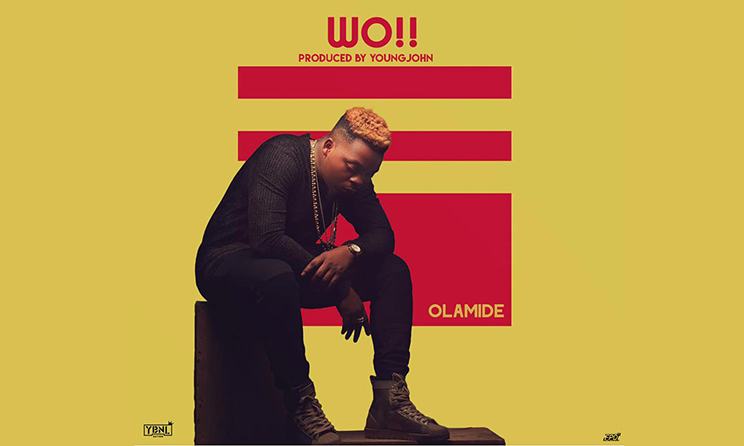
Art for 'Wo!!' by Olamide. Photo: YBNL

On ‘Summer Body’ the artist known for his manic release of hit singles and yearly albums seemed to be settling, finally, into the mediocrity that has plagued mid-career artists like Dbanj. It appeared he was trading his street savvy for international exposure. He was finally following a trend as opposed to defining it.

But in ‘Wo!!’, Olamide arrests what would have been a sorry development. Here, as in many of his hit songs, Young John (the wicked producer) is doing some heavy lifting. Olamide’s work in making the local rapper an accepted, even celebrated part of pop culture is recognised, but rarely, if ever, is Young John’s work as a local producer emphasised. On ‘Wo!!’, his beat is similar to that made by proto-fuji ajiwere groups that used to roam the streets and beat pots and pans on the streets of South west Nigeria. It is sparse, simple and extremely danceable.

Olamide opens the song with a hook that follows the pulsing sound of a countdown beep. “Wo” is Yoruba for see, but in Olamide’s mouth, as on the streets he swears allegiance to, it is an arrogant, aggressive calling of attention. He punctuates every line with the word. The hook is directed at the listener, demanding that she dances properly—like daddy, like mummy, like a rich man, not like a poor man.

“Won ni wo n wa wa n’gboro,” he says. “They say they’re looking for us in the streets”—a self-referential line that suggests he’s aware of the implication of the bourgeois and sterile ‘Summer Body’. ‘Bobo’ and ‘Who you Epp’ were the last quintessential Olamide songs—one creating the shakiti dance, the other popularising a slang—so he knows there should be a search party out for his reputation, even if no one is ready to doubt his abilities or discount his influence. Yet.

On Olamide’s debut single, ‘Eni duro’, he screamed “mo ti da gobe sile.” On ‘Wo’ he says, “A de si ma fa gobe.” He is back with a promise that there’s room for the commotion he caused upon his entry to the music scene.

When he mentions Sanyeri in the last line of the first verse, he’s telling the listener he’s not a comedian, for that is the name of Nigerian actor Olaniyi Afonja, who became popular starring in Yoruba comedy films alongside perpetual meme-generating actor Odunlade Adekola. Olamide’s lyrics are filled with obscure references like this, both a way of coding his music for his audience on the streets and also making a snapshot of the times he grew up in.

On the last verse, he doubles down, repeating sounds of consonant and vowel pairs—shakiti, faka fiki, a bi di, shaba gidi, waka-wiki, kaakakiki—creating what is close to ena, a form of alteration to defined patterns, which Yoruba speakers use when communicating with the intent of eliminating the uninitiated. It is a strange aspect of the Yoruba language, so why is Olamide doing this?

The final verse of ‘Wo!!’ gives a clue. He mentions Aunty Shakira, a line that can be taken, wrongly, as referencing Colombian singer Shakira, who is famous for her dancing. But Olamide’s Shakira is an elebolo, a more obscure word for prostitute than olosho.

“Aunty Shakira dance shakiti,” he says. She says she likes to “faka fiki”, a sound used by children in describing trains and an adult euphemism for sex. He claims she wants to blow his “kakaki,” a long metal trumpet in North Nigeria.

Olamide has been in PR trouble before for the sexual content of ‘Story for the gods’. So his deployment of coded language limits his audience’s understanding. He sings of a grateful fan who wants to show appreciation.

‘Wo!!’ became instantly popular partly because Olamide asked that dance videos be made and posted online for a prize. The dance videos went viral, and one of them was inserted into the song’s official video. But with popularity comes scrutiny, so perhaps the additional coding in that last verse is deserved.

“What makes the song is the beat,” wrote Adrian Chen in the New Yorker. On first listen, Chen’s aphorism seems true of Olamide’s ‘Wo!!’. But beneath beat and dance, Olamide’s words do more than he’s given credit for.

He is not rapping—at least not in the hardcore sense of the word—but by choosing Young John’s proto-fuji sound, and chanting on it in coded Yoruba, Olamide has sent a dog-whistle to his fans on the streets. He is back to being the local rapper they know.

Artist: Olamide

Song: Wo!!

Label, Year: YBNL, 2017

Please log in to post a comment.

Most popular

Disclaimer: Music In Africa provides a platform for musicians and contributors to embed music and videos solely for promotional purposes. If any track or video embedded on this platform violates any copyrights please inform us immediately and we will take it down. Please read our Terms of Use for more.

newsletter banner

Subscribe to our monthly Newsletter

Follow us on social media