
























































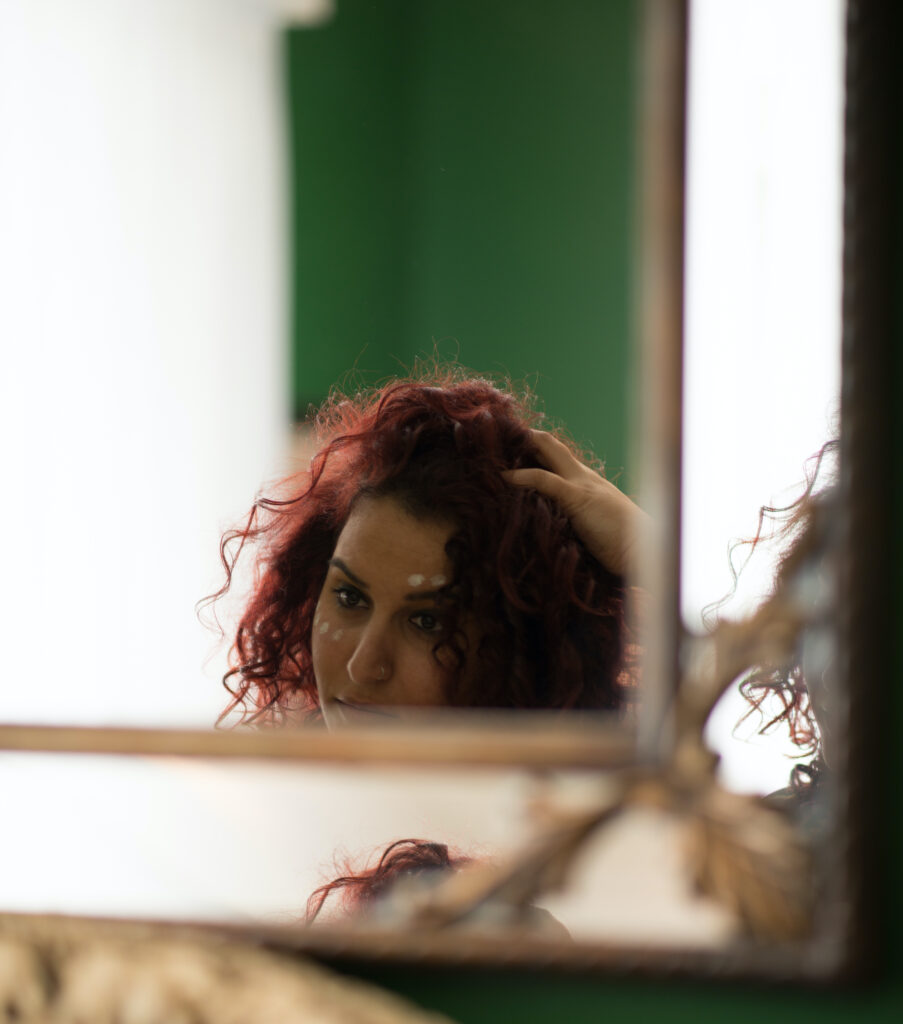


Music industries are often a mirror of the society they exist in, and just as Egyptian society is a patriarchal and male-dominated one, the Egyptian music scene is not much different. Cultural norms and traditions often pose challenges and impose restrictions on women who venture into the music sector, resulting in fewer visible Egyptian women in the music industry than men.
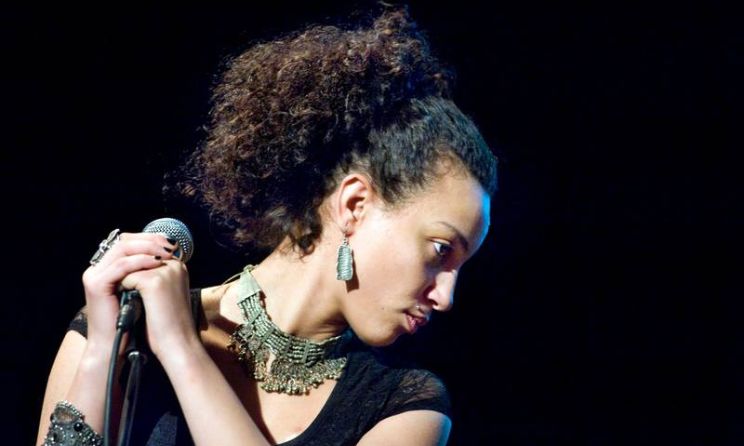
With the official religion of Egypt being Islam, Islamic thought and doctrine has a dominant influence on social hierarchies and on governing the place of women in those hierarchies. With some Islamic scholars arguing that a woman’s voice should not be heard, women are often discouraged from pursuing a career in music, as it is not considered respectable [1].
Women are mostly absent from the religious music scene and even banned from performing the call of prayer that can be heard echoing through Egyptian cities five times a day [2]. Censorship has a longstanding relationship with the music industry in Egypt, due to political and religious reasoning. All music officially released in Egypt must undergo a rigorous vetting process to ensure that lyrics do not offend neither the governing regime nor religion [3].
Works that do not receive approval are banned from being officially released at music stores or aired by government-owned radio and TV stations. However, with modern technology and the internet, more and more artists are forgoing physical music releases and focusing on digital releases, allowing them to bypass the process of obtaining government licences to release their works [4] [5]. All performers are also required to obtain licences and permits from the Musicians’ Syndicate for live performances in advance [6].
The process of receiving clearance from the censorship committee and obtaining licences to release music affects men and women alike. However, women face more censorship and policing when it comes to live performance. The Musicians’ Syndicate, which all professional musicians and performers are required to be members of, has a strict dress code regarding women’s attire, dictating how short dresses or skirts are allowed to be and how much cleavage may be shown [7] [8]. Female performers found violating this dress code risk being banned from performing live in Egypt, a consequence that singers such as Sherine Abdel Wahab [9] and Maryam Saleh have faced for other actions that sparked disapproval from the syndicate.
It has recently become common for women in the entertainment scene to find themselves charged with inciting debauchery or violating Egyptian family values and morals for their choice of outfits, dancing in music videos, or using indecent language in their songs – with some facing prison sentences, fines or bans on performing or working in the industry [5] [10].
Notable women in Egyptian music
The Golden Era
Umm Kulthum (1898/1904-1975) is a name synonymous with Egyptian music. She is nicknamed ‘The Star of the East’ and often referred to as simply ‘The Woman’. Despite having died in 1975, her music and legacy are engraved deeply in Egyptian society and her songs can often be heard in cafes, restaurants, taxis and homes across the country. Kulthoum’s story is one of perseverance and defiance. She grew up in a conservative family in a small village in the Nile Delta [11]. Her father and brother were performers of religious songs and chants at events. She learnt to recite the Quran and after discovering her voice, her father would dress her up as a boy and have her perform in disguise as part of his ensemble [12]. Eventually, she went on to become one of the biggest names to come out of Egypt and the Middle East, selling more than 80 million records.
Other iconic names in Egyptian music are Laila Mourad (1918-1995) and Fatma Ahmed Kamal Shaker (1931-2017), better known as Shadia. Both women made a name for themselves in the film industry as actresses and singers, with their films often featuring performances of their songs.
Mainstream Egyptian music today
Sherine Abdel Wahab (1980) launched onto the Egyptian music scene in 1998 [13] with a debut duet album alongside Egyptian singer Tamer Hosny, under the Free Music record label. Abdel Wahab has been featured in several films and was a judge on The Voice: Ahla Sawt. She is currently one of the top pop singers in Egypt and the Middle East.
Angham (1972), born in the coastal city of Alexandria into an artistic family, is well known for her love songs and romantic lyrics. She is one of the most prominent Egyptian female singers on the pop music scene today [14] with statistics showing her as the highest-selling female pop artist in 2003 and since 2000 [15]. She is a graduate of the Cairo Conservatoire and has been in the industry since the 1980s.
Alternative and independent female musicians in Egypt
Maryam Saleh (1986) was born into a musical household in Cairo. She started out singing covers of songs by Sheikh Imam – an artist whose music in the 1960s was banned across the country (he faced jail time for his work) [16] and is still flagged as controversial by the current regime for its strong political undertones and social commentary. Saleh has experimented with different genres and forms of expression and has three albums to her name: Ana Mish Baghanny, Halawella with Lebanese producer Zeid Hamdan and the award-winning Lekhfa with Tamer Abu Ghazaleh and Maurice Louca, as well as several singles. Saleh is also an actress with theatre and behind-the-camera experience in cinema and television [17]. Her music ranges from rock to trip hop to experimental, and is considered avant-garde. With more than 1 million followers on Facebook [18], she is arguably Egypt’s biggest alternative female musician.
Dina El Wedidi (1987), born and raised in Giza, is another icon of the alternative/independent Egyptian music scene. A participant in the 2013 edition of The Nile Project [19] – a musical collaboration between musicians hailing from Nile Basin countries – and listed as one of the Next Generation Leaders by TIME magazine [20], El Wedidi has built a solid name for herself in Egypt and beyond. Her music fuses Egyptian folk with jazz, rock and electronic sounds, and she has found success in the US, especially after touring “under the mentorship of Brazilian icon Gilberto Gil” [20].
Singing women
Out of the few women who are active members of the music industry, the majority of them are singers. This is not to say that female instrumentalists do not exist. However, they are a definite rarity. Visits to the few live music venues in Cairo will attest, albeit anecdotally, to this statement – where the stages are mainly occupied by male musicians. In April 2021, the Egyptian capital of Cairo came to a halt as 22 royal ancient Egyptian mummies were transported from the Egyptian Museum in downtown Cairo to the National Museum of Egyptian Civilisation [21] during the ‘Pharoah’s Golden Parade’. This spectacle put the spotlight on several female musicians who were part of the performing orchestra, including percussionist Radwa El Beheiry [22] and violinist Salma Sorour [23].
The Egyptian music industry, in general, can be described as a non-female-friendly one. With more male musicians dominating the scene and the charts and more male-fronted music being produced, as acknowledged by Spotify’s managing director for the Middle East and Africa, Claudius Boller [24], less opportunities and support are available to Egyptian women wishing to pave a career path in the sector. Social and market bias is clearly reflected in Spotify’s streaming charts, where Sherine Abdel Wahab was the only Egyptian singer to make the top 10 most-streamed female artists’ list in 2019. The most-streamed artists’ list in the same year consisted of an all-male line-up with the exception of Billie Eilish [24].
Resources and citations:
[1] https://www.globalfundforwomen.org/muslima-women-in-music/
[2] https://insidesaudi.com/is-a-muslim-woman-allowed-to-call-the-adhan-at-the-mosque/
[3] https://afteegypt.org/wp-content/uploads/2014/04/Censors-of-creativity-English.pdf
[4] https://www.arab-reform.net/publication/the-egyptian-authorities-grip-on-local-culture-the-example-of-mahraganat-music/
[5] https://www.madamasr.com/en/2018/01/02/feature/culture/a-battle-for-existence-how-the-combined-forces-of-censorship-and-security-shaped-egypts-music-scene-in-2017/
[6] https://egyptianstreets.com/2019/08/27/lawyers-call-for-musicians-syndicate-to-ban-mohamed-ramadan-from-performing/
[7] https://english.ahram.org.eg/NewsContent/5/159/139417/Arts--Culture/Entertainment/Imposing-dress-code-on-female-singers-in-Egypt-a-r.aspx
[8] https://english.ahram.org.eg/NewsContent/5/159/139518/Arts--Culture/Entertainment/Musicians-Syndicate-decision-to-impose-dress-code-.aspx
[9] https://www.bbc.com/news/world-middle-east-41995932
[10] https://www.bbc.co.uk/news/world-middle-east-46414052
[11] https://www.arabnews.com/node/1240911/art-culture
[12] https://thequietus.com/articles/17255-umm-kulthum-queen-of-the-nile
[13] https://gulfnews.com/world/mena/egyptian-pop-star-sherine-reverses-retirement-decision-1.1684144
[14] https://english.ahram.org.eg/NewsContent/5/33/405587/Arts--Culture/Music/Angham-pays-tribute-to-most-influential-late-Egypt.aspx
[15] https://www.egypttoday.com/Article/4/91217/Egypt%E2%80%99s-Angham-releases-promo-of-her-upcoming-song-%E2%80%98-Bahebak
[16] https://scenenoise.com/Features/maryam-saleh-a-musical-nebula
[17] https://www.thenationalnews.com/arts-culture/music/egyptian-indie-singer-and-actor-maryam-saleh-on-her-new-super-group-and-distinct-vocal-style-1.625102
[18] http://loungemagazineegypt.com/index.php/2020/07/22/maryam-saleh-breaking-the-norm-in-lekhfa/
[19] https://egyptindependent.com/egypts-dina-el-wadidi-among-times-next-generation-leaders/
[20] https://time.com/collection/next-generation-leaders/5584905/dina-el-wedidi-next-generation-leaders/
[21] https://en.vogue.me/culture/everything-to-know-pharaohs-golden-parade-egypt/
[22] https://egyptindependent.com/percussionist-radwa-al-behairy-praises-womens-representation-in-golden-parade/
[23] https://identity-mag.com/highlighting-the-highlight-of-the-golden-parade-egyptian-women/
[24] https://egyptianstreets.com/2019/12/09/why-egyptian-women-are-noticeably-absent-from-spotifys-2019-wrapped-lists/
Disclaimer: Music In Africa's Overviews provide broad information about the music scenes in African countries. Music In Africa acknowledges that the information in some of these texts could become outdated with time. If you would like to provide updated information or corrections to any of our Overview texts, please contact us at [email protected].
Editing by Kalin Pashaliev


Most popular

Top Naija songs of 2026
31 Mar 2026

Top Afrobeats songs of 2026
19 Mar 2026
Ghana: Mr Eazi and MOLIY’s ‘Comfort’ earns Urban Music Awards nomination
21 Oct 2026

Top amapiano songs of 2026
16 Feb 2026
Open call: CANEX Music Business Lab and Songwriting Camp
15 Oct 2026
Nigeria: CANEX WKND unveils 2026 programme
21 Oct 2026
Disclaimer: Music In Africa provides a platform for musicians and contributors to embed music and videos solely for promotional purposes. If any track or video embedded on this platform violates any copyrights please inform us immediately and we will take it down. Please read our Terms of Use for more.

Subscribe to our monthly Newsletter
Follow us on social media


Please log in to post a comment.