


















































By Chijioke Ngobili
Comparatively speaking, in the 21st century, pop music culture in Nigeria has witnessed unprecedented speed and turns in evolution and revolution.
While pop music tradition has been known to be in existence since the 15th century among nations that presently constitute the Nigerian State—with such pop genres as Ifo of the Igbo people, Ere-ege of Yoruba people, Rokonfada of Hausa people etc—no century seriously compelled it like the 21st to churn out radical changes and shifts in its performances, styles, concepts, philosophies and ideologies.
The 20th century Nigerian pop music is replete with its own characteristic turns and changes following such big factors as the return of freed slaves, world wars and political independence struggles, but it did not reflect the significant involvement and participation of female exponents as influential stakeholders in the industry.
One has to be reminded that the melting point of the Nigerian pop music activities is in the Southern Nigeria with Lagos as the cultural capital, and so, the context of this discourse emphatically revolves around the Southern part of Nigeria.
Ideally, pop music culture—in and beyond Nigeria—reflects the social state of a people at different periods of their existence, considering the trends and happenstances of the evolving times. And socio-culturally in Nigeria, a man is expected and required to go after a woman and never the other way.
Men solely initiate romance and romantic gestures towards women in the social matrix of Nigeria until recently when the smoke wisps of Euro-American matriarchy, feminism, role reversal, liberalism, etc began to waft into the Nigerian social space, thus radically influencing how some women view and approach these already established norms.
The Nigerian pop music culture, like the larger society, has equally helped in entrenching it that a man should squarely be the one to make advances to a woman and that it is abominable for a woman to take up such moves.
That entrenchment can be seen in the numerous albums and singles released by Nigerian male pop artistes between 2000 and 2010 (the first decade of Nigeria’s independence from heavy reliance on modern American pop culture to grow hers). With the rise of female pop artistes in the Nigerian pop music circles since the beginning of the second decade of the 21st century, certain notions have received demonstrated challenges and subtle protest even when many do not notice them and so, are rarely discussed or documented.
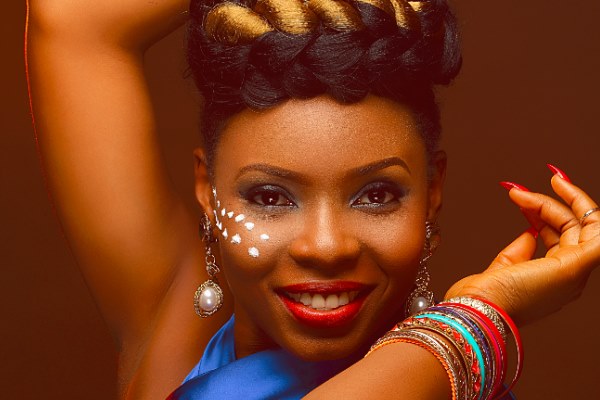
A quick check of Nigerian female pop artistes that have emerged into the spotlight since 2010 gives us such young and talented ladies as Chidinma Ekile, Tiwa Savage, Yemi Alade, Simi and Niniola. These are already established or newly established in their respective spaces of stardom. At the moment, they are some of the household names among female pop artists in Nigeria and of Nigerian origin. Specifically, I have, for quite some time, been examining the sociology, psychology and phenomenology of the lyrics (music scholars call it: “texts”) of many songs authored or ‘released’ by many these pop acts. Often, it seemingly appears—not really so—that there is a consensus among these lady musicians to stealthily slither into the Nigerian pop music turf with a revolution mission. How so?
Let us examine a few lines from the lyrics of some songs by three of the mentioned female artistes above. In her song, 'Kissing', Yemi Alade sang thus:
You are my sunshine baby mo
Let us be as one
Make I be your baby...
You go be my man…
Munagige bi
Largely, to the Nigerian romantic sensibility, it is strange to have a woman say all those to a man, especially such lines as “you are my sunshine”, where "sunshine” is one of the commonest romantic pet names men use for their women. “Mu na gi ga-ebi” (sic) is the Igbo expression for “You and I will live together”. In reality, men are the ones who talk about living or cohabiting with a woman because she is moving into the man’s abode. Consequently, it is strange to have a woman say so. And that rings a bell to our notice of a quiet perception shift in the society, no matter how trivial it may seem.
Another song to consider is 'Joromi' by Simi:
I dey give you signal (Joromi)
Why you no dey see me ah (Joromi)
I give you green light tire (JoromiJoro)
Omokilon bubble o (Joromi)
Make you no dey fumble o (Joromi)
I go shoot my shot e o Joro
In the lines above, a variation of a woman boldly initiating romance is reflected. “Make you no dey fumble o” and “I go shoot my shot” are pressure statements aimed at daring or tempting the masculine ego of the man to take the “first shot” of making a romantic advance, even if he had no such desire.
You find this same idea in Chidinma’s 'Oh Baby (You & I)'.
It is common for a Nigerian guy to approach a Nigerian lady and say “I’m loving your way” as the first stroke of his efforts at impressing her. But in Chidinma’s 'Oh Baby', for example, that role is reversed. And “Mu na gi ga-ebi” is echoed once more, signifying the appeal—by the woman—for an established union.
A reflection of the contemporary and prevalent in the social life of a people, pop music mirrors the society just as the society is influenced by it in turn. It is not just fun or a triviality to look into these nuances. No! It reveals to us how much our society has changed and is quietly changing in its psychology under the influence of pop music culture without announcing so.
As more female artists emerge and climb the Nigerian pop music stage, the antecedents of these senior ones will inspire a foundation that would become a culture by the third decade of the 21st century. No one with a keen eye would say certain gender paradigm shifts haven’t been obtainable lately.
Of course, some bold women in Nigerian cities are already initiating romance and asking out men they admire but such is not pronounced on a wide scale yet. Recently, some noise have attended two videos posted on social media showing young ladies with rings proposing marriage to young men. Although one has been said to be a prank, the existence of these videos is evidence of gender-role shifts in the Nigerian social psyche. Liberals won’t have problems with such social shifts but conservatives would.
It remains to also know if Nigerian men, in their patriarchal inclinations, would feel comfortable with having women initiating romance as normal. Psychologically, Nigerian female pop artistes who author songs with lyrics that suggest making advances to a man are heavily influencing the socio-cultural psyches of both their fellow women and the men as well.
Whether it is right or wrong is dependent on a lot of factors, ranging from the religious, to the cultural, to the ethnic to the personal.


Most popular

Top Naija songs of 2026
31 Mar 2026

Top Afrobeats songs of 2026
19 Mar 2026
Ghana: Mr Eazi and MOLIY’s ‘Comfort’ earns Urban Music Awards nomination
21 Oct 2026

Top amapiano songs of 2026
16 Feb 2026
Open call: CANEX Music Business Lab and Songwriting Camp
15 Oct 2026
Nigeria: CANEX WKND unveils 2026 programme
21 Oct 2026
Disclaimer: Music In Africa provides a platform for musicians and contributors to embed music and videos solely for promotional purposes. If any track or video embedded on this platform violates any copyrights please inform us immediately and we will take it down. Please read our Terms of Use for more.

Subscribe to our monthly Newsletter
Follow us on social media


Please log in to post a comment.