

















































NEFCISA
NEFCISA

The Music In Africa Foundation (MIAF) is proud of its partnership with the Industrial Development Corporation (IDC) as a Strategic Implementing Partner (SIP) for its Social Employment Fund (SEF). Through this collaboration, MIAF is running a national programme that is creating jobs, addressing skills gaps, and strengthening South Africa's creative industries — in line with the SEF's overarching goal to generate work for the common good and build community value through employment, social contribution, and inclusive economic participation. Operating under the banner NEFCISA (National Employment Facility for Creative Industries in South Africa), the initiative is recruiting and training participants, matching them with host organisations, and has already placed 1 500 workers across the country — surpassing its original target of 1 000. NEFCISA is delivered through a network of 20 host organisations spanning five provinces, who are actively hosting participants and contributing to work for the common good across South Africa's creative and cultural industries. Key Objectives: Support employment and entrepreneurship in the creative industries. Offer skills development and training programmes. Foster partnerships between public and private creative sectors. Promote South African creativity at both provincial and national levels Foster community development through social contribution.

ACCES
ACCES

ACCES Conference and Showcase Festival is Africa's leading music industry gathering, bringing together the people shaping the future of the continent's music business. Artists, entrepreneurs, executives, investors, policymakers and cultural leaders from across Africa and around the world come to ACCES to build partnerships, exchange ideas, discover talent and create new business opportunities. Since its launch in 2017, ACCES has become the continent's premier platform for professional exchange and music market development. Combining a high-level conference with a curated showcase festival, networking, exhibitions and industry programmes, ACCES offers a unique space where creativity meets business and where African music connects with the global industry.

Gender@Work
Gender@Work

Music In Africa Gender @ Work is a three-year training programme aimed at upskilling and increasing the participation of female professionals in the African music sector. Launched by the Music In Africa Foundation (MIAF) in April 2019, the programme is connected to the MIAF’s ACCES music conference – a pan-African event held in a different African country every year. This connection enables the programme to reach new participants in a different African country every year. The programme marks the beginning of a more concerted effort by the Foundation to support the participation and inclusion of women in all facets of its programmes and the music sector in Africa as a whole. Over the three years, the programme will aim to address gender imbalances in the sector through training, lobbying, facilitating knowledge exchange and dialogues that foster the interest of women. The broader objectives of the programme are to: Provide industry training for women on critical music industry skills, focusing on: Stage management Electronic music production and recording Music business management Technical knowledge Provide an opportunity for both professional and aspiring women to benefit from the Music In Africa network and its broad range of activities in 2019, 2020 and 2021. Provide a solution-based platform in the form of a round table at ACCES with a view to identify challenges, discuss opportunities and lobby for the interests of female practitioners. Offer participants the opportunity to benefit from programmes offered by MIAF’s partners. Increase access to educational materials. Integrate participants in the broader ACCES programme to maximise experience and exposure to the industry. Record and present training materials on the www.musicinafrica.net, including but not limited to tutorials, templates and other best-practice materials. Communicate women-based themes that support the initiatives and messages of the programme. MAIN TRAINING ACTIVITIES Training in first country (Ghana): In the first year, participants will be trained on all aspects of stage management by a team of experienced stage managers from 10 to 17 November 2019. The programme will offer robust classroom training as well as practical, hands-on training in which participants will also be given the opportunity to manage various aspects of the ACCES performance programme. Training in second country: The second training iteration will take place at ACCES 2020 when the programme will diversify its course to include music production lessons and training on other music business topics. A round-table platform will also be introduced to coincide with the ACCES programme. Training in third country: The third training iteration will take place at ACCES 2021 in a different country, offering an advanced course. HOW DO YOU GET INVOLVED?  As a participant, facilitator or trainer: The programme enrolls up to 12 trainees every year. All opportunities are advertised publicly on this website, and will be added to this page. Please keep checking this page for new calls (below under UPDATES & CURRENT OPPORTUNITIES). As a partner Please contact Claire Metais at [email protected]. APPLY The call for applications for 2020 will be announced soon. The Music In Africa Gender @ Work programme is made possible with the support of the Prince Claus Fund, Siemens Stiftung and Goethe-Institut.

Sound Connects Fund
Sound Connects Fund

For cultural and creative practitioners and organisations operating in southern Africa, access to funding remains a major challenge. The COVID-19 pandemic has also had a massive impact on government policy, spending and the economy in general, and has seen spending on culture being moved further down the list of priorities. Further, the cultural and creative industries repeatedly cite four main areas where investment is needed for growth, which are increased visibility, mobility including access to new markets, finance and support structures.

Instrument Building And Repair Project

Experience the Vibrations African Instruments Exhibition online in 3D

#Chidinma

Women playing men in Nigerian pop music

13 Mar 2018 - 12:51

cc-img flag-img

While pop music has existed since the 15th century among nations that presently constitute the Nigerian State—with such pop genres as Ifo of the Igbo people, Ere-ege of Yoruba people and Rokonfada of the Hausas—no century before forced the genre into radical changes in style, performance and ideology like the 21st century.
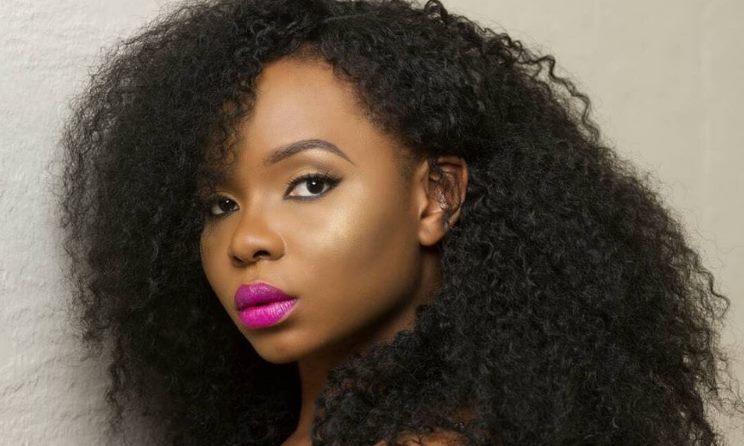
Songs like Yemi Alade's Kissing have women assuming a conventionally male role in romance.

Pop music in the 20th century had its own turns and changes following such factors as the return of freed slaves, world wars and national independence struggles, but it did not reflect the significant involvement and participation of female exponents as influential stakeholders in the industry—at least in southern Nigeria which is the melting pot of Nigerian pop music, Lagos being the country's culture capital. It is fair to say female pop acts have more presence now.

Ideally, pop music culture—in and beyond Nigeria—reflects the social state of a people at different periods of their existence, considering the trends and happenstances of the evolving times. And socio-culturally in Nigeria, men solely initiated romance and romantic gestures towards women until recently when the smoke wisps of Euro-American matriarchy, feminism, role reversal, liberalism and so on began to waft into the Nigerian social space, thus radically influencing how some women view and approach these already established norms.

The entrenchment of man's dominance in romantic propositions can be seen in the numerous albums and singles released by male pop artists between 2000 and 2010 (the first decade of Nigeria’s independence from heavy reliance on modern American pop culture). With the rise of female pop artists in the Nigerian pop music circles since the beginning of the second decade of the 21st century, certain notions have received demonstrated challenges and subtle protest even when many do not notice, and so are rarely discussed or documented.

A quick check of Nigerian female pop artists that have emerged into the spotlight since 2010 gives us such talented ladies as Chidinma Ekile, Tiwa Savage, Yemi Alade, Simi and Niniola. These are already established or newly established. And I have, for quite some time, been examining the sociology, psychology and phenomenology of the lyrics (music scholars call it “texts”) of many songs authored or released by these acts. It seemingly appears that there is a consensus among these lady musicians to stealthily slither into the pop music turf with a mission of revolution. How so? From a consideration of their lyrics.

On 'Kissing', Yemi Alade sings:

You are my sunshine baby mo
Let us be as one
Make I be your baby...
You go be my man…
Munagige bi

Largely, to the Nigerian romantic sensibility, it is strange to have a woman say all of these to a man, especially such lines as "mu na gi ga-ebi”, which is the Igbo expression for “You and I will live together”. In reality, men are the ones who talk about living or cohabiting with a woman because she is moving into the man’s abode. Despite its seeming trivial nature, the line points to a quiet shift in perception.

Another song to consider is 'Joromi' by Simi:

I dey give you signal (Joromi)
Why you no dey see me ah (Joromi)
I give you green light tire (JoromiJoro)
Omokilon bubble o (Joromi)
Make you no dey fumble o (Joromi)
I go shoot my shot e o Joro

In the lines above, a variation of a woman boldly initiating romance is reflected. “Make you no dey fumble o” and “I go shoot my shot” are pressure statements aimed at the man's ego. Even if he has no such desire, he is being told to take the “first shot” or Simi's character will do so. You find this same idea in Chidinma’s 'Oh Baby (You & I)'.

It is common for a Nigerian guy to approach a Nigerian lady to say “I’m loving your way” as first attempt at charming her. But in Chidinma’s 'Oh Baby', the role is reversed. “Mu na gi ga-ebi” is repeated once more, signifying the appeal—by the woman—for an established union.

As reflection of the life of a people, pop music mirrors the society and is in turn influenced by it. Looking into these nuances is not just fun. No! It reveals to us how much our society has changed and is quietly changing in its psychology under the influence of pop music. And as more female artists emerge and climb the Nigerian pop music stage, the antecedents of these senior ones will inspire a foundation that might become a culture in a decade.

Of course, some bold women in Nigerian cities have and are already initiating romance and asking out men they admire but not on a wide scale. And recently, comments attending two videos on social media, where women propose to men shows the reversal of romantic roles still is a novelty. Liberals won’t have problems with such these social shifts but conservatives would.

It remains to be seen if Nigerian men, in their patriarchal inclination, would feel comfortable with having women initiating romance. But female pop artists who author songs suggesting such advances from woman to man are already heavily influencing the psyches of Nigerian women and their men.

The opinions expressed in this article are those of the author and do not necessarily reflect the views of Music In Africa.

Please log in to post a comment.

Most popular

Disclaimer: Music In Africa provides a platform for musicians and contributors to embed music and videos solely for promotional purposes. If any track or video embedded on this platform violates any copyrights please inform us immediately and we will take it down. Please read our Terms of Use for more.

newsletter banner

Subscribe to our monthly Newsletter

Follow us on social media



