




















































World’s biggest choir competition is coming to Africa!
04 Aug 2017 - 09:59


For the first time since they were first held in 2000, the World Choir Games will be held on the African continent. The grand singing competition, which will take place in South Africa’s capital Tshwane from 4 to 14 July 2018, has been described as the world’s largest performing arts event where 400 choirs from around the world contend for top honours in 27 categories.
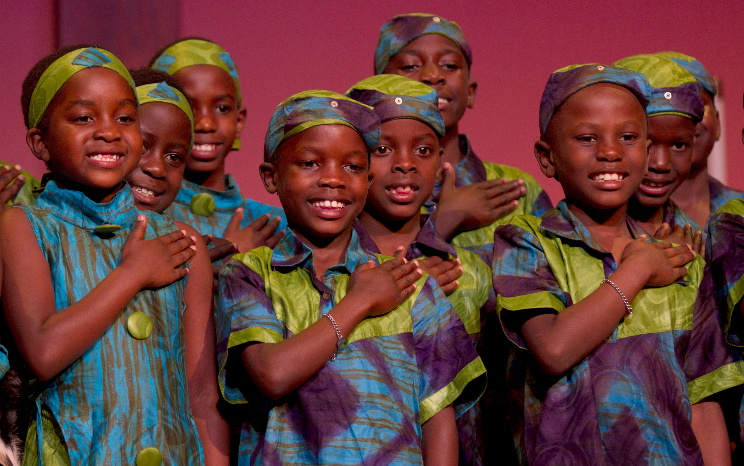
But the World Choir Games, much like the Olympic Games, are more about intercultural participation than mere competition. Music In Africa spoke to the World Choir Games’ Thomas Schüle about the philosophy behind the event and what the organisers would like to achieve in South Africa come next year.
MUSIC IN AFRICA: Why South Africa?
THOMAS SCHÜLE: South Africa is a leading African country when it comes to hosting choral music. More than 50 South African choirs have participated in our previous events and we have learnt that the level of South African choral music is very high. In first spot on our list of choral winners is an African choir – the Stellenbosch University Choir directed by André van der Merwe.
We are confident that with our 27 categories at the World Choir Games, we can include all kinds of choral music in South Africa. We think we can also provide unity to South Africa by bringing together choral associations at one big event where one can participate regardless of skin colour or political orientation. So it’s an event whose moto is ‘singing together brings nations together’.
In Africa bringing nations together can be a challenge. There are issues with visas and high costs for people to travel freely. How are you going to get choirs from other African nations to South Africa?
We have much experience from previous events and we’ve faced this challenge before. There were several events, for instance in South Korea where we had to take care of the North-South issue, where host cities were experiencing the same challenge. Of course, South Africa has special requirements, for instance sending children and youth choirs. Parents are hesitant to send their children because of security concerns. But we have already received a letter from high-ranking politicians inviting those choirs, telling them that travels will be made safe and that participants will be taken care of for the duration of their stay in South Africa. There are of course many other challenges in terms of visas and such. We have a visa department at our headquarters in Germany, which deals only with such matters. These are difficulties we face, but they are not unique only to South Africa.
What about the material concerns? How can a choir of 20, 30, 40 members from a poor African country afford to get to South Africa for the World Choir Games?
All choirs participating in these games, and we’re talking about 400 [25 000 singers] that we expect to take part, are paying for their own travel fees, accommodation and food. They don’t get a fee and they pay for everything. So what makes them join the World Choir Games if it costs them that much? It’s the spirit of the event, the chance to be on stage while one’s national anthem is being played, to win in a category and simply to be part of this unique experience. Many choirs always do it. We are essentially selling emotions and that is the payment for the choirs, so to say.
What about the poor but talented Africa choirs? Perhaps you’ve thought about some way to fund mobility for a few choirs from Africa’s underprivileged areas?
The German government makes available a special fund that is dedicated to participants from crisis areas from around Africa, such as South Sudan, Somalia, Chad, northern Nigeria and so on. It’s a fund that is available. Our biggest challenge now is to create contact and generate participation. At the moment this is where our stumbling block is but it has been indicated to us that support for travel arrangements, accommodation and so on is available.
However, there is a huge number of countries around the world that do not belong to the wealthy side of the street, such as Indonesia and the Philippines. Those choirs are really successful in getting sponsorships from universities, city councils, regional provinces and the private sector. Indonesia is the fourth country in a row that has brought the most number of choirs to our events wherever they are held. The Philippines, which is one of the leading choral nations in Asia, also brings an incredible number to our events, and they are not wealthier than many countries in Africa. Of course, financial situations don’t permit many choirs to participate, and that’s sometimes just the reality of things.
We also want to participate in sustainability efforts in South Africa. We’re not here to make money and leave after the event has been concluded. We are willing to set up various programmes that enable township choirs to participate; we want to get some of them sponsored. We also want to set up programmes where South African conductors can learn from their international counterparts. We want to continue to work in this country with the idea of hosting an event called the African Choir Games in the future. So this is a long-term project where we take into account the special challenges in South African.
There’s about a year to go until the Games in Tshwane…
We’ve been organising this for more than a year already. Once we concluded the previous World Choir Games in Sochi, Russia, we started working on the South Africa games, which will be the 10th anniversary games, immediately after.
How has the South Africa government received your presence here?
We have quite a good relationship with governmental entities in South Africa, such as the Gauteng Tourism Authority and the City of Tshwane, and of course there are some irritations in the beginning because experiences with previous, huge events in SA were not always great throughout. Certain people expect us to make a profit off the country and run away like others did before. Naturally there was some hesitation in the beginning: who are these guys, how do they work, will everything work out? Meanwhile, I believe that these issues have been resolved and we have a good relationship with the parties involved. You know better than us that there are politics going on in the background and we try to move through these waters of various interest. However, we are making progress. We report regularly to the institutions mentioned and we have their support.
Tell us about the atmosphere at a World Choir Games?
The World Choir Games is a huge gathering of choirs from all around the world with 65 countries, sometimes even more, meeting in peace to sing together. Security and police always feel boring at our events because nothing bad ever happens. Even Iran and Israel sing together, so do South and North Korea. At our events there is, so far, only fun. You have to see the atmosphere and feel the spirit of this choral togetherness. My president [Günter Titsch of Interkultur] says: ‘People who sing together will never shoot each other.’ I feel that we add a little peace to the world in times of crisis everywhere. That fills me with happiness and satisfaction, to sit at each opening ceremony, see the spirit and acknowledge that the two years of fighting for this to happen was worth it.
Click here to register a choir for the 2018 World Choir Games.


Most popular

Top Naija songs of 2026
31 Mar 2026

Ghana: Mr Eazi and MOLIY’s ‘Comfort’ earns Urban Music Awards nomination
21 Oct 2026

Top Afrobeats songs of 2026
19 Mar 2026

Top amapiano songs of 2026
16 Feb 2026
Open call: CANEX Music Business Lab and Songwriting Camp
15 Oct 2026
Nigeria: CANEX WKND unveils 2026 programme
21 Oct 2026
Disclaimer: Music In Africa provides a platform for musicians and contributors to embed music and videos solely for promotional purposes. If any track or video embedded on this platform violates any copyrights please inform us immediately and we will take it down. Please read our Terms of Use for more.

Subscribe to our monthly Newsletter
Follow us on social media


Please log in to post a comment.