
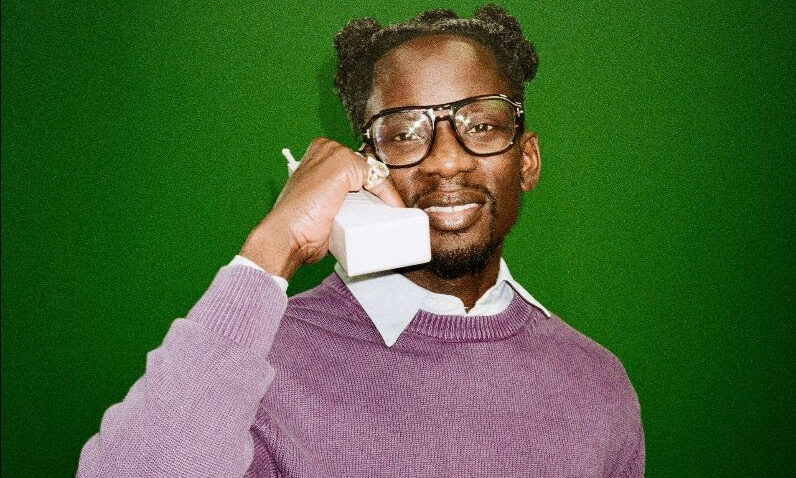























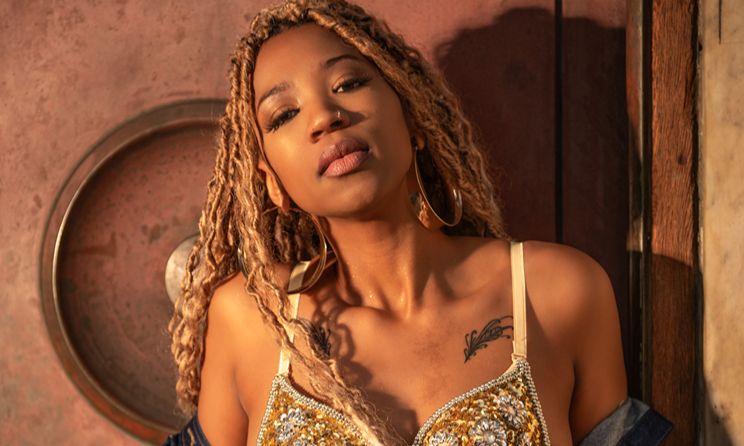






































Last week, Zimbabwean mainstream media was awash with reports about events headlined by top Jamaican artists Beenie Man and Demarco in Harare on 26 August. Music critics, fans and industry players overran the social media space expressing their feelings about the two dancehall artists who performed at different venues a few kilometres apart. Demarco performed at Longcheng Plaza while Beenie Man was at Alexandra Sports Club.

Media reports suggest that Beenie Man, a Grammy award-winning artist, did not live up to expectations and that he had a torrid time trying to woo his fans. In the same breath, local media reported that Winky D, who opened for Beenie Man, won the hearts of many with his electrifying performance and made it difficult for his Jamaican counterpart to reach the bar he had set. Other reviews said Demarco put out a sensational performance, leaving fans asking for more.
Beenie Man, who first visited Zimbabwe in 2010, headlined the 26 August event organised by 2 Kings Entertainment, which also featured locals Jah Prayzah, Soul Jah Love and Cindy Munyavi, while Demarco was in the country courtesy of C&A Entertainment.
The ‘Ruff 'N' Tuff’ singer’s poor performance prompted fans to attack the event organisers and complained that they were bringing “underperforming” foreign acts at the expense of local talent. Some fans went as far as saying that local artists, like Winky D, were much better performers than Beenie Man.
Some promoters, however, differed with this view. Music In Africa spoke to Clint Robinson of C&A Entertainment who challenged local artists to export their brands outside Zimbabwe.
“What the media and local artists need to ask themselves is, would they get 6 000 people if a local artist performed in Zimbabwe without a foreign artist?” Robinson, whose company sold more than 6 000 tickets for the Demarco show, said.
“They should also ask themselves, if Zimbabwean artists performed in Jamaica, would they headline and would people in Jamaica go to watch them? Winky D needs to test his strength on foreign soil where the crowd in not Zimbo. I like Winky D but we need to respect the fact that Bennie Man is world-class.
“I was not at the Bennie Man show. Winky D is Zimbabwe’s best dancehall artist with the best management team. A lot was expected from Beenie Man and from what I am hearing on the ground is that ground was not really impressed. Concertgoers anywhere around the world will enjoy a concert where they can sing along to songs. Winky D sang songs that most Zimbabweans hear on a daily basis and can identify with.”
Punchline Entertainment founder and CEO Hillary Mutake, who watched the Beenie Man and Demarco shows online, took a swipe at local media.
“They put a splendid performance,” he said. “I think the media is not doing justice in their reporting. You cannot tell me Winky D outpaced Bennie Man. I’m so embarrassed journalists can write such stuff. The best that journalists could do is encourage collaborations and not ridicule these Jamaicans. The issue is that people are used to 70% local content so Jamaican music is not that relevant as it used to be. It’s only in Zimbabwe where dancehall is common.”
Mutake downplayed the idea that Zimbabwean dancehall artists are popular in other countries. “In the diaspora, Zimbabwean artists only perform for the Zimbabwean community. Without Zimbabweans in the diaspora, they won’t be going there to perform. Promoters who invite these artists are Zimbabwean promoters, that’s the truth on the ground,” Mutake said, adding that only big names such as Oliver Mtukudzi were performing for crowds other than Zimbabweans expats.
Journalist and blogger Robert Mukondiwa concurred with Mutake. “I didn’t attend the shows but the natural logic is that with people exposed to more local material after the 74% local content policy was introduced, it’s obvious that the crowd would warm up more to the locals than the international acts. The result is that the crowd's rapport with those sets will be markedly more vibrant and welcoming than the international acts, some of whose songs they don’t know,” he said.
The owner of event promotions company Red Fox Family International, Robert Zhuwao, blamed the organisers of both shows. “A stellar performance is subjective relative to one's taste and what one looks at. Reports of Jamaican artists failing to live up to the billing have become the norm. It is the promoter’s responsibility to advise big artists like Beenie Man and Demarco on the songs that will resonate with the type of audience they anticipate, more so given the type of line-up one would have put as supporting acts.”
He also accused local radio stations of not providing enough hype prior to international concerts. “These are big seasoned artists with a large catalogue of hits so there is no way they would fail to give a good account of themselves. Radio stations tend to play more Zimbabwean dancehall to the detriment of international reggae dancehall. The result is that fans sing along to Zim dancehall and very little to international dancehall.
Germany-based journalist and music critic Plot Mhako said: “I attended the Beenie Man concert. I left the Demarco show before he went onstage. Bennie Man’s performance was fine but lacked the thrill associated with the genre and an artist of his calibre. His set was lukewarm and he did not perform complete songs, as he quickly skipped to the next. He also performed a lot cover songs.
“Winky D's set was on point and highly interactive with the audience. He proved that he has mastered the art of engagement and entertainment. He got the audience singing along and dancing to his music throughout the show.”


Most popular

Top Naija songs of 2026
31 Mar 2026

Top Afrobeats songs of 2026
19 Mar 2026

Top amapiano songs of 2026
16 Feb 2026
Open call: CANEX Music Business Lab and Songwriting Camp
15 Oct 2026
Open call: National Arts Festival artistic director in SA
15 Oct 2026
Ghana: Mr Eazi and MOLIY’s ‘Comfort’ earns Urban Music Awards nomination
21 Oct 2026
Disclaimer: Music In Africa provides a platform for musicians and contributors to embed music and videos solely for promotional purposes. If any track or video embedded on this platform violates any copyrights please inform us immediately and we will take it down. Please read our Terms of Use for more.

Subscribe to our monthly Newsletter
Follow us on social media


Please log in to post a comment.