






































NEFCISA
NEFCISA

The Music In Africa Foundation (MIAF) is proud of its partnership with the Industrial Development Corporation (IDC) as a Strategic Implementing Partner (SIP) for its Social Employment Fund (SEF). Through this collaboration, MIAF is running a national programme that is creating jobs, addressing skills gaps, and strengthening South Africa's creative industries — in line with the SEF's overarching goal to generate work for the common good and build community value through employment, social contribution, and inclusive economic participation. Operating under the banner NEFCISA (National Employment Facility for Creative Industries in South Africa), the initiative is recruiting and training participants, matching them with host organisations, and has already placed 1 500 workers across the country — surpassing its original target of 1 000. NEFCISA is delivered through a network of 20 host organisations spanning five provinces, who are actively hosting participants and contributing to work for the common good across South Africa's creative and cultural industries. Key Objectives: Support employment and entrepreneurship in the creative industries. Offer skills development and training programmes. Foster partnerships between public and private creative sectors. Promote South African creativity at both provincial and national levels Foster community development through social contribution.

ACCES
ACCES

ACCES Conference and Showcase Festival is Africa's leading music industry gathering, bringing together the people shaping the future of the continent's music business. Artists, entrepreneurs, executives, investors, policymakers and cultural leaders from across Africa and around the world come to ACCES to build partnerships, exchange ideas, discover talent and create new business opportunities. Since its launch in 2017, ACCES has become the continent's premier platform for professional exchange and music market development. Combining a high-level conference with a curated showcase festival, networking, exhibitions and industry programmes, ACCES offers a unique space where creativity meets business and where African music connects with the global industry.

Gender@Work
Gender@Work

Music In Africa Gender @ Work is a three-year training programme aimed at upskilling and increasing the participation of female professionals in the African music sector. Launched by the Music In Africa Foundation (MIAF) in April 2019, the programme is connected to the MIAF’s ACCES music conference – a pan-African event held in a different African country every year. This connection enables the programme to reach new participants in a different African country every year. The programme marks the beginning of a more concerted effort by the Foundation to support the participation and inclusion of women in all facets of its programmes and the music sector in Africa as a whole. Over the three years, the programme will aim to address gender imbalances in the sector through training, lobbying, facilitating knowledge exchange and dialogues that foster the interest of women. The broader objectives of the programme are to: Provide industry training for women on critical music industry skills, focusing on: Stage management Electronic music production and recording Music business management Technical knowledge Provide an opportunity for both professional and aspiring women to benefit from the Music In Africa network and its broad range of activities in 2019, 2020 and 2021. Provide a solution-based platform in the form of a round table at ACCES with a view to identify challenges, discuss opportunities and lobby for the interests of female practitioners. Offer participants the opportunity to benefit from programmes offered by MIAF’s partners. Increase access to educational materials. Integrate participants in the broader ACCES programme to maximise experience and exposure to the industry. Record and present training materials on the www.musicinafrica.net, including but not limited to tutorials, templates and other best-practice materials. Communicate women-based themes that support the initiatives and messages of the programme. MAIN TRAINING ACTIVITIES Training in first country (Ghana): In the first year, participants will be trained on all aspects of stage management by a team of experienced stage managers from 10 to 17 November 2019. The programme will offer robust classroom training as well as practical, hands-on training in which participants will also be given the opportunity to manage various aspects of the ACCES performance programme. Training in second country: The second training iteration will take place at ACCES 2020 when the programme will diversify its course to include music production lessons and training on other music business topics. A round-table platform will also be introduced to coincide with the ACCES programme. Training in third country: The third training iteration will take place at ACCES 2021 in a different country, offering an advanced course. HOW DO YOU GET INVOLVED?  As a participant, facilitator or trainer: The programme enrolls up to 12 trainees every year. All opportunities are advertised publicly on this website, and will be added to this page. Please keep checking this page for new calls (below under UPDATES & CURRENT OPPORTUNITIES). As a partner Please contact Claire Metais at [email protected]. APPLY The call for applications for 2020 will be announced soon. The Music In Africa Gender @ Work programme is made possible with the support of the Prince Claus Fund, Siemens Stiftung and Goethe-Institut.

Sound Connects Fund
Sound Connects Fund

For cultural and creative practitioners and organisations operating in southern Africa, access to funding remains a major challenge. The COVID-19 pandemic has also had a massive impact on government policy, spending and the economy in general, and has seen spending on culture being moved further down the list of priorities. Further, the cultural and creative industries repeatedly cite four main areas where investment is needed for growth, which are increased visibility, mobility including access to new markets, finance and support structures.

Instrument Building And Repair Project

Experience the Vibrations African Instruments Exhibition online in 3D

flag-img

Johannesburg, South Africa

In operation since:

2014

Contact person:

Urban Village

BIO

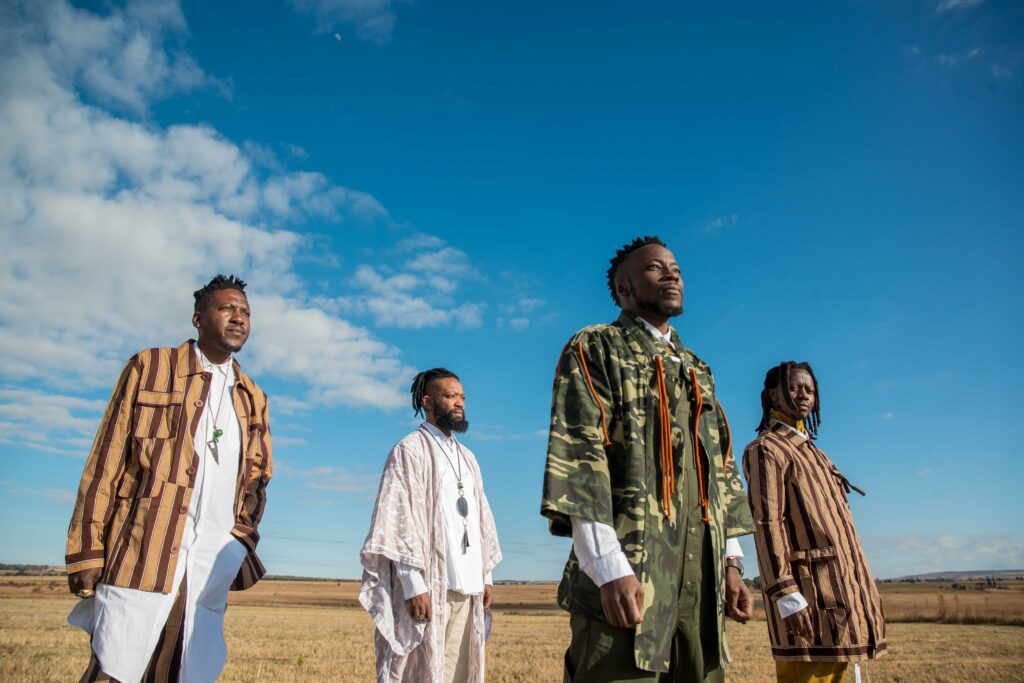
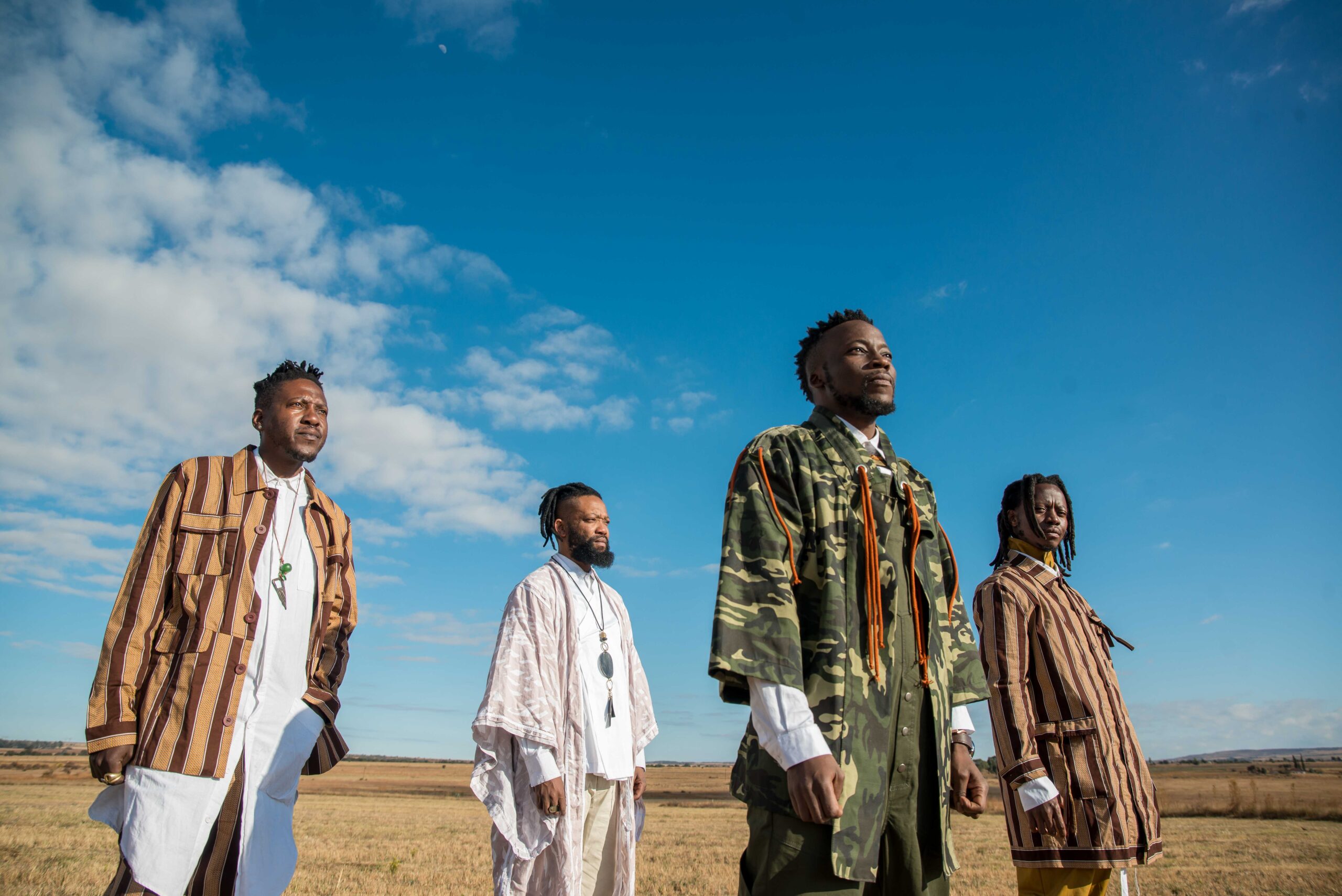
When you have never known you’re the village of origin, how do you find your roots? For the four musicians of Urban Village, who have known only their gigantic township of Soweto, these traditional roots hidden by buildings and concrete are the source of their music.

Soweto, with its million inhabitants, is a city in the city where the black populations from all the South African provinces were penned by apartheid. Attracted by "the city of gold" (Egoli, the Zulu name for Johannesburg), they came to dig the belly of the earth on behalf of the big companies, and formed the first urban proletariat in Africa. Everyone took pieces of their village, their music and their rites to this new town, this new home and from this friction, an original culture was born, that which made Soweto a sprawling urban village. Whilst, others are still digging for that precious metal, the four companions of Urban Village have decided to dig up these mixed legacies of which they are the heirs and share them through music.

Born for the most part in the last years of apartheid, they, like all adolescents of their generation, plunged happily into house and dance music that turned the page of a past too heavy, and offered a new skin. But the past had other secrets, carpeted at the corner of the streets of Mzimhlophe, the Soweto neighbourhood where they lived. Because it was there, around a workers' home, that Lerato the guitarist heard the Zulu musicians and their very particular style, called maskandi. Something to put him on the track, observing and listening to the "Malumes (Uncles)", that is to say the neighbours of the neighbourhood. Lerato learned his instrument on his own, mixing styles from homelands and rural areas to make his own, sharpened in club jam sessions where spoken word, hip-hop and jazz rub shoulders freely. It was in this universe that he met Tubatsi, to which he entrusted a flute and all the dreams it can open, like that of the flute player of Hamelin. The man who soon became the lead singer of Urban Village tamed him, and ended up quitting his job at the bank to jam with the guitarist. He also begins to write, and penned the lyrics of most of the songs on their debut album “Udondolo (Walking Stick)”. This colossus planted like an untamed tree likes to navigate dreamlike spheres, a veteran bugler bugle, PVC rhombes, sanza or even electronic effects making his microphone a surreal vessel for his voice ... Tubatsi seeks in all kinds of instruments the vibrations that resonate with the soul.

In South Africa, music has always been a vector of spiritual as well as political resistance and in the dark hours of apartheid, this powerful mixture took shape in the shadows of churches. This is where Xolani (aka Cush) formed and continues to play drums every Sunday, pushing the faithful into a trance like percussionists do in ancestral ceremonies. God and the ancestors live in the same house, each one wakes them up in their own way. Like Tubatsi, he left his job (he was a debt collector for a while, enough to disgust you for paid work) to devote himself fully to music. Urban Village was missing only one last channel and a bass to ballast their sound: Simangaliso, aka Smash. The youngest of the gang, born when South Africa got rid of apartheid, he studied sound. He too followed the paths of electro before being overtaken by the incredible heritage of Soweto where eras and genres mix: jazz, kwaito, amapiano, house, pop and hip-hop…

All these sounds of the city, these urban villages in Johannesburg, have help them forge a unique style. A powerful folk who carries parabolic texts, sometimes sibylline, as if the old ones had appropriated the codes of today and exchanged proverbs on Whatsapp. They are steeped in the cultural consciousness of yesteryear, including the famous “ubuntu (common humanity)” and Pan Africanism dear to the leaders of the struggles; Winne & Nelson Mandela, Biko, Machel, Mathai, Nkrumah, and Lumumba.

As for their music, it sometimes borrows all its energy from rock, from jazz its swing and its free wanderings, from pop its irresistible gimmicks and from the South African soils of choruses and riffs as we do nowhere else. Their first album, recorded at home with the energy of live music and patiently polished in the studio by Frédéric Soulard (Maestro, Limousine, Jeanne Added), is a journey through all the colours of Soweto. This is where it draws its consistency, its strength, and its identity. That of Soweto, a dormitory town designed to better monitor those who were sent there, has become the laboratory of music where the hopes of an entire people resonate, even today. It’s their Urban Village. Hear it.

Social Networks and Websites

Disclaimer: Music In Africa provides a platform for musicians and contributors to embed music and videos solely for promotional purposes. If any track or video embedded on this platform violates any copyrights please inform us immediately and we will take it down. Please read our Terms of Use for more.

newsletter banner

Subscribe to our monthly Newsletter

Follow us on social media