




















































The recording industry in the DRC and its impact on Kenyan popular music

21 Nov 2014 - 10:08


By Amadi Kwaa Atsiaya
They arrived in a steady trickle from the Congo, travelling through Uganda, through to Tanzania and eventually to the then recording Mecca of the region, Nairobi. Their music was more sophisticated and mature, their dress fancy and fashionable. It is the lack of opportunities in saturated Kinshasa that impacted directly on the music of East Africa, influencing new musical styles all over the region as the resident musicians interacted with and adapted traits of the Congolese style…
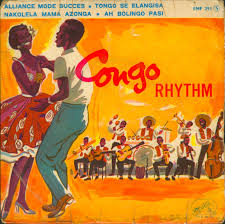
Since the inception of the recording industry in the Democratic Republic of Congo (then Belgian Congo) in the late 1940s, the sector went through a pattern of growth that affected the whole East and Central African region. The various experiences social, economic and political within the Congo had a significant impact on the recording industry, and these effects were felt in neighbouring countries, including Kenya. The factors that had an impact on the Congolese recording industry, and which consequently affected Kenya could be classified into three major strands. The first is geographical, second is social and the third is political.
Geographically, the DRC is a vast country. In the early independence years, the level of physical and technological infrastructural development within the country was comparatively low. The pioneer recording studios of Opika, Esengo and Ngoma Records were all located in Leopoldville (the colonial name of Kinshasa). Geographically, Kinshasa lies to the West, far from other towns in the East, which have over the years produced some of the best guitarists from the DRC. Musicians from the Eastern towns of Bunia, Bukavu, Goma, Beni and Kalemei were far removed from Kinshasa, and would not benefit from the recording facilities of the city.
The journey from any of these towns to Kinshasa takes several days, unless it is by air. This makes it an expensive venture by any means. Having to transport a whole troupe of musicians from the East to Kinshasa in the West for a recording session proved almost impossible. For those musicians who managed to make it to Kinshasa for music prospects, be it in recording or performance; they had to navigate a difficult territory. These bands lacked the social connections that Kinshasa-based bands had. Band music around Kinshasa was built around strong links between bands and their powerful patrons, in most cases, rich people in town who maintained the bands. The musicians around Kinshasa were also comparatively more superior in their knowledge of the market, professionalism and generally more street-smart than their counterparts coming into the capital from the provinces. This network included control and access to recording facilities and opportunities. Besides, the musicians plying their trade in Kinshasa had established theirs as a profession. They drew regular salaries unlike musicians in other places including Kenya and Tanzania, where musicians did it more as a hobby or a side job that did not assure one of regular income. That is, unless they were sponsored by a government corporation or parastatal, as was the case with some of the leading bands in Tanzania in the 1970s and 1980s. Making music to the musicians from Eastern Congo was a very local affair, because the likelihood of getting a recording was remote, so was the chance of having one’s music played on air, or getting publicity through the mass media.
The musicians from the East, lacking the experience and knowhow of the urbane Kinshasa musicians and totally deficient in the other social connections that made things work, found it difficult to make headway. More chances lay in other places that had a Congolese music fan base, but which lacked the cutthroat competition that Kinshasa provided. This kind of place could only be outside Congo.
To the musicians from Eastern DRC, it became more practical to venture into neighboring Tanzania, where they found a ready market. They also found it easier settling in because Kiswahili is one of the languages predominantly spoken in Eastern DRC. This steady flow of musicians into Tanzania formed a community of immigrant musicians from the DRC.
One downside about recording in Tanzania was that under the socialist system of President Julius Nyerere, the government controlled the music industry. All recordings were done exclusively by the state-owned Radio Tanzania, Dar-Es-Salaam. The government also had a say in the lyrics, and musicians had to adhere to official direction, sometimes being provided the entire lyrics for a song! Even though a huge number of Congolese musicians resided in Tanzania, many would cross the border to Kenya to do their recordings. It was also noted that the recording facilities in Kenya were superior compared to what was available in Tanzania, making Kenya a better destination for recording. This meant that the Congolese music was readily available to the Kenyan market, given that it was now being recorded locally.
Politically, Eastern Congo has witnessed long spells of intermittent violence with militias that seek to control various regions of the vast country. This insecure environment has forced some of its talented musicians to seek refuge abroad. Crossing over to the neighboring Tanzania has been one of the shortest routes out of the country whenever there is an outbreak of fighting. Some of these Congolese musicians made a home in Kenya, making a significant contribution to what was produced by Kenya’s recording industry. Congolese bands such as Vundumuna, Les Mangelepa, Orchestra Mazembe, Bana Ngenge and Shika Shika form an important part of the Kenyan pop music narrative, especially in regard to recording.
The big bands of Kinshasa were also significant to Kenya’s recording industry. Whereas some big names like Baba Gaston and Mzee Makassy came as far as Kenya and recorded some of their music in the country, events within the heavyweight bands of Kinshasa also contributed to this trend.
The musicians in big Kinshasa bands such as Franco’s TPOK Jazz and Joseph Kabaselleh’s African Jazz were constantly under internal pressure for various reasons. Part of it was due to misunderstandings between band members and the bandleader, while others hinged on rivalry between the members. This often culminated in a falling out, with some musicians deciding to either form their own outfits, or moving out to a rival band. It is because of such fallouts that East Africa saw the likes of Mose Se Fan Fan playing an important role in shaping the popular music of the region in the early 1980s, and particularly featuring on the Kenyan recording scene.
In 1973, the president of the then Zaire introduced the doctrine of authenticity. Under this set up the government wanted to see more locals participate in business and the government assumed control of many sectors of the country’s economy. These policies had a negative effect on foreigners already doing business in Zaire. Some were forced by circumstances to either close or sell their businesses and leave the country. Others like those in the recording industry found it more difficult to sustain their business at the original tempo and magnitude. As it became more difficult to produce original music in Zaire, the Kenyan counterfeit market took advantage by supplying the Zairean market with many pirated copies of their (Zairean) music. This made it especially difficult for the new entrants in music to attempt recording in Kinshasa.
At this time, major players such as Kiamuangana Mateta ‘Verkys’ of Veve had established themselves as the doyens of the recording industry. Thus, it was very easy for them to arm-twist fellow musicians, or to just use their vantage position to further solidify their position at the center. At times the choices were not very auspicious, because often a musician had to sell the rights to his music, otherwise he would be denied a chance to record. This was one of the motivating factors for bands to cross into neighboring countries like Zambia, touring extensively in search of both a solid fan-base and a place where they could record with comparative ease. Some eventually landed in Kenya in this way.
Thus, the story of popular music recording in Kenya can not be complete without mentioning the role played by the Zairean (Congolese) music industry, and how its contours fed into the Kenyan music world.
Sources:
Rumba in the City of Peace: Migration and the Cultural Commodity of Congolese Music in Dar es Salaam, 1968-1985 Author(s): Alex Perullo Source: Ethnomusicology, Vol. 52, No. 2 (Spring/Summer, 2008), pp. 296-323
Published by: University of Illinois Press on behalf of Society for Ethnomusicology Stable URL: http://www.jstor.org/stable/20174590 .
Accessed: 29/03/2014 16:40
The Record Industry: The Growth of a Mass Medium Author(s): Pekka Gronow Source: Popular Music, Vol. 3, Producers and Markets (1983), pp. 53-75 Published by: Cambridge University Press Stable URL: http://www.jstor.org/stable/853094 .
Accessed: 04/10/2013 13:18


Most popular

Top Naija songs of 2026
31 Mar 2026

Top amapiano songs of 2026
16 Feb 2026

Top Afrobeats songs of 2026
19 Mar 2026

AFRIMA 2026: All the winners
12 Jan 2026

Open call: CANEX Creative Pitch for African creative enterprises
29 Sep 2026

Goethe-Institut Kenya brings Ghanaian and Kenyan artists together for MobiArts concert
05 Oct 2026
Disclaimer: Music In Africa provides a platform for musicians and contributors to embed music and videos solely for promotional purposes. If any track or video embedded on this platform violates any copyrights please inform us immediately and we will take it down. Please read our Terms of Use for more.

Subscribe to our monthly Newsletter
Follow us on social media


Please log in to post a comment.