

































NEFCISA
NEFCISA

The Music In Africa Foundation (MIAF) is proud of its partnership with the Industrial Development Corporation (IDC) as a Strategic Implementing Partner (SIP) for its Social Employment Fund (SEF). Through this collaboration, MIAF is running a national programme that is creating jobs, addressing skills gaps, and strengthening South Africa's creative industries — in line with the SEF's overarching goal to generate work for the common good and build community value through employment, social contribution, and inclusive economic participation. Operating under the banner NEFCISA (National Employment Facility for Creative Industries in South Africa), the initiative is recruiting and training participants, matching them with host organisations, and has already placed 1 500 workers across the country — surpassing its original target of 1 000. NEFCISA is delivered through a network of 20 host organisations spanning five provinces, who are actively hosting participants and contributing to work for the common good across South Africa's creative and cultural industries. Key Objectives: Support employment and entrepreneurship in the creative industries. Offer skills development and training programmes. Foster partnerships between public and private creative sectors. Promote South African creativity at both provincial and national levels Foster community development through social contribution.

ACCES
ACCES

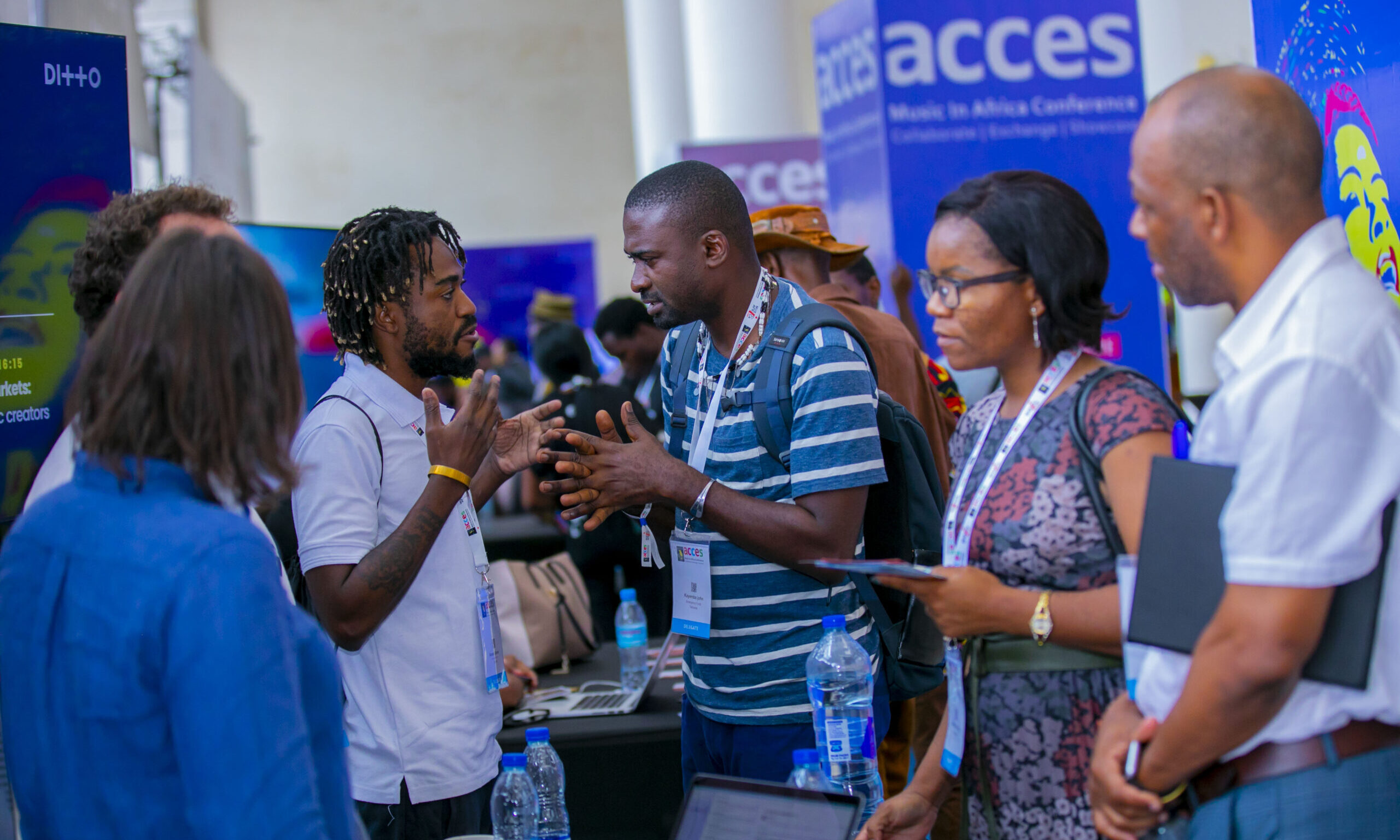
ACCES Conference and Showcase Festival is Africa's leading music industry gathering, bringing together the people shaping the future of the continent's music business. Artists, entrepreneurs, executives, investors, policymakers and cultural leaders from across Africa and around the world come to ACCES to build partnerships, exchange ideas, discover talent and create new business opportunities. Since its launch in 2017, ACCES has become the continent's premier platform for professional exchange and music market development. Combining a high-level conference with a curated showcase festival, networking, exhibitions and industry programmes, ACCES offers a unique space where creativity meets business and where African music connects with the global industry.

Gender@Work
Gender@Work

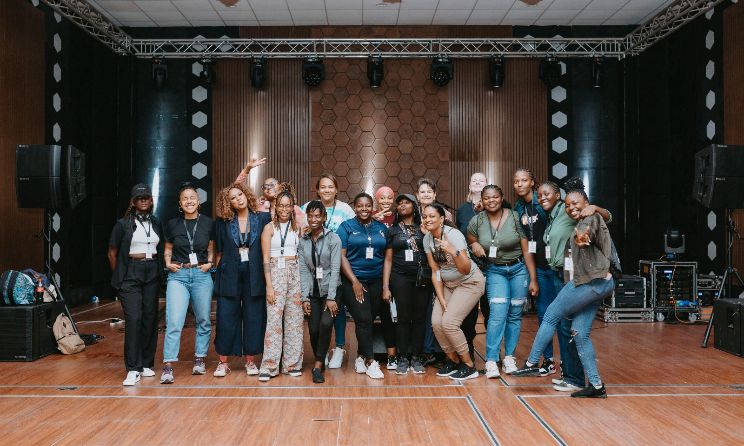
Music In Africa Gender @ Work is a three-year training programme aimed at upskilling and increasing the participation of female professionals in the African music sector. Launched by the Music In Africa Foundation (MIAF) in April 2019, the programme is connected to the MIAF’s ACCES music conference – a pan-African event held in a different African country every year. This connection enables the programme to reach new participants in a different African country every year. The programme marks the beginning of a more concerted effort by the Foundation to support the participation and inclusion of women in all facets of its programmes and the music sector in Africa as a whole. Over the three years, the programme will aim to address gender imbalances in the sector through training, lobbying, facilitating knowledge exchange and dialogues that foster the interest of women. The broader objectives of the programme are to: Provide industry training for women on critical music industry skills, focusing on: Stage management Electronic music production and recording Music business management Technical knowledge Provide an opportunity for both professional and aspiring women to benefit from the Music In Africa network and its broad range of activities in 2019, 2020 and 2021. Provide a solution-based platform in the form of a round table at ACCES with a view to identify challenges, discuss opportunities and lobby for the interests of female practitioners. Offer participants the opportunity to benefit from programmes offered by MIAF’s partners. Increase access to educational materials. Integrate participants in the broader ACCES programme to maximise experience and exposure to the industry. Record and present training materials on the www.musicinafrica.net, including but not limited to tutorials, templates and other best-practice materials. Communicate women-based themes that support the initiatives and messages of the programme. MAIN TRAINING ACTIVITIES Training in first country (Ghana): In the first year, participants will be trained on all aspects of stage management by a team of experienced stage managers from 10 to 17 November 2019. The programme will offer robust classroom training as well as practical, hands-on training in which participants will also be given the opportunity to manage various aspects of the ACCES performance programme. Training in second country: The second training iteration will take place at ACCES 2020 when the programme will diversify its course to include music production lessons and training on other music business topics. A round-table platform will also be introduced to coincide with the ACCES programme. Training in third country: The third training iteration will take place at ACCES 2021 in a different country, offering an advanced course. HOW DO YOU GET INVOLVED?  As a participant, facilitator or trainer: The programme enrolls up to 12 trainees every year. All opportunities are advertised publicly on this website, and will be added to this page. Please keep checking this page for new calls (below under UPDATES & CURRENT OPPORTUNITIES). As a partner Please contact Claire Metais at [email protected]. APPLY The call for applications for 2020 will be announced soon. The Music In Africa Gender @ Work programme is made possible with the support of the Prince Claus Fund, Siemens Stiftung and Goethe-Institut.

Sound Connects Fund
Sound Connects Fund

For cultural and creative practitioners and organisations operating in southern Africa, access to funding remains a major challenge. The COVID-19 pandemic has also had a massive impact on government policy, spending and the economy in general, and has seen spending on culture being moved further down the list of priorities. Further, the cultural and creative industries repeatedly cite four main areas where investment is needed for growth, which are increased visibility, mobility including access to new markets, finance and support structures.

Instrument Building And Repair Project

Experience the Vibrations African Instruments Exhibition online in 3D

Features

Akon, D’Banj and others attend Club Quilox reopening
17 Aug 2015 - 01:30

cc-img flag-img

Friday night. In keeping with the tradition, Quilox, one of Lagos, Nigeria’s finest clubs opened (or reopened) for the rest half of the year. To celebrate, cocktails, wines and whiskey. Girls, obviously selected and made-up with a knowing eye, ferry glasses and stand behind stands. The drinks are free. It is etiquette the Quilox way—if you could snag an invitation to the event you probably can afford those drinks anyway. Consequently, the number of people trying to get in increase. The throng outside the gates would swell as the night wears on.

Banky W at Quilox

The stars are here as well, and their number, too, will increase. There’s rapper Olamide who is excessively subservient as he goes in, bowing before bouncers and other staff. Like everyone else gathered he is aware it is his celebrity, not this display of humility, which gets him in. In any case, this is part of his persona, or as it is called, his brand. He is the down to earth artist, the Lagos boy propelled to stardom by the street and sustained by same. He is with nondescript company, a guard and a manager probably.

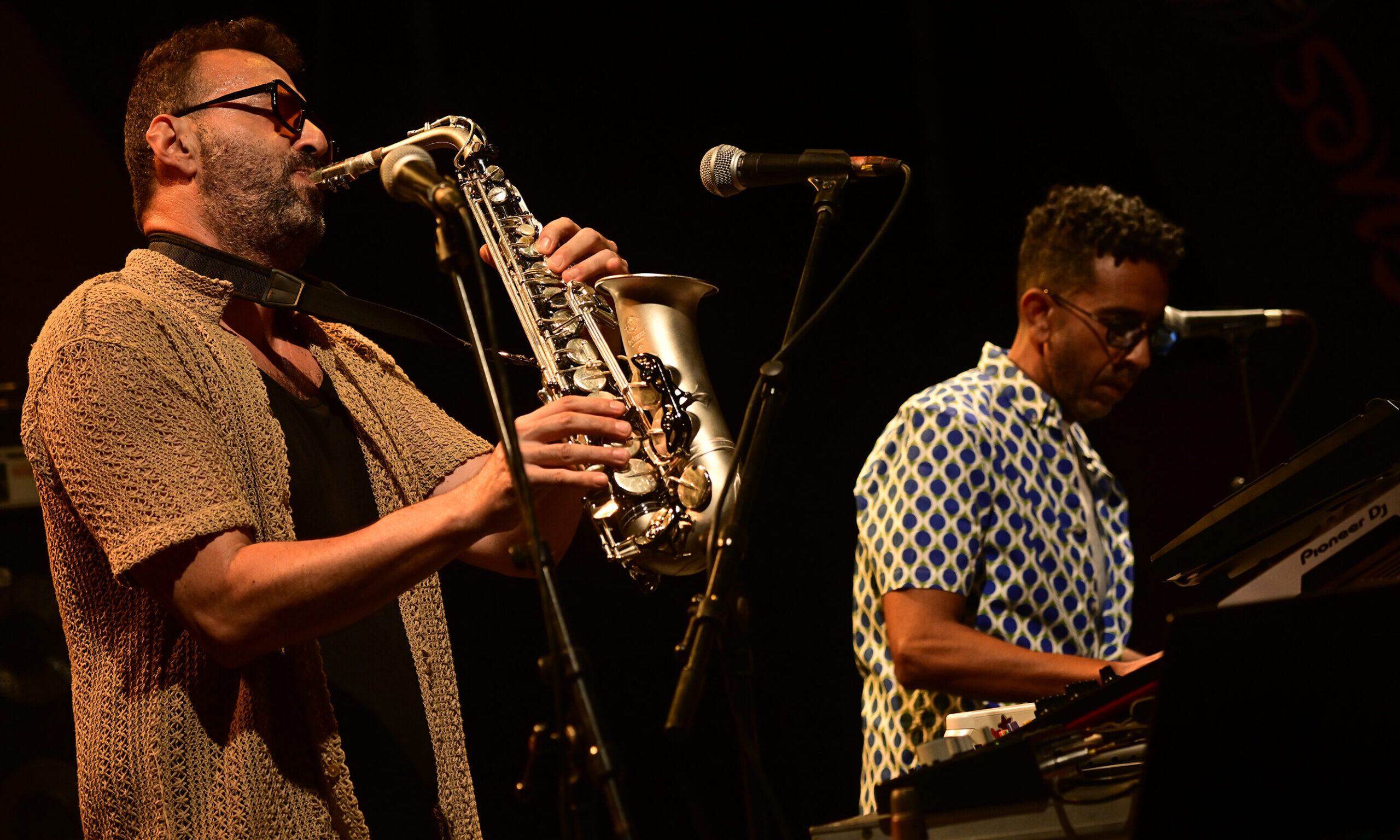
Music is supplied by a band led by saxophonist Yhumie. A rather unusual choice. ‘We wanted something different,’ says Rosie Ogazi, overseer of the night. ‘Not the usual DJ playing plus the saxophonist came highly recommended.’

Yhumie plays sax-renditions of popular tunes. When he gets to playing an Olamide tune the rapper is inside, ensconced perhaps in the renovated club’s VIP area. No interviews on the night, unless you are MTV—then you get the not-too-famous. The ‘big boys’ are within; no microphones near their mouth. Only bottles.

No one but celebrities can get in the club until the official opening for which the singer Banky W is recruited. First he conducts a contest to hand over a phone to the best dressed on the night. Naturally, two women come up. A shouting vote session is conducted and the crowd is split. A repeat brings up the same result; ditto a show of hands. The singer hands the phone to one and tells the other he’ll buy another.

Banky W then asks club owner Shina Peller over. They talk for the benefit of the crowd. And then fireworks light up the Island sky for several minutes. The doors to Quilox opens. Music blares within; huge screens showing music videos hang on the club walls; dancing girls stand on the staircase leading to a level of dancing, drinking patrons. It is all the rage.

At the top of the stairs a hype-man urges the crowd to get it on. Like they need encouragement. At some point this role is taken up by Banky W; not for nothing is he known as the party king.

‘We have two seasons,’ Ogazi says. ‘Every break we recuperate, reinvigorate and then come back with something fresh. There is a new décor and new VIP area.’

Yet it is easier for regulars to tell how Quilox Season 3 is different from Quilox 1 and 2. For everyone else the club has two levels for dancing, drinking and being. The lower one, wider, is cordoned off by a rope and two muscular sentries. It is where the stars and the wealthy gather for the night. Non-celebrities use the walkways and stand around the bar. To head upstairs a special wristband is needed, where standing at the terrace you see cars parked just off the highway and people trying to get in, futilely. It is only a few more hours to dawn and those trying to get in can go home to sleep off the enthusiasm. But not tonight. A selfie within the club’s interior must be taken.

The stars are present and Banky W gives his colleagues their due, shouting their names. D’Banj, Praiz, May D, Mr Songz, Ikechukwu. It becomes easier to say who’s absent: Davido, Wizkid, MI.

MI. Since it launched a few years ago Quilox has had a hold on upscale Lagos and for the city’s resident musicians. Rapper MI made the allure public with a song off his Chairman album (2014). “…because they don jam me for Quilox,” he rapped on ‘Bad Belle’.

Maybe he just couldn’t make it or maybe there’s another reason. Weeks before the rapper tweeted about being disrespected at the club. The club tweeted an apology. But on this night, no one affiliated with the rapper’s Chocolate City label is present. The grudge lingers perhaps.

No such grudge from singer Akon, who comes in straight-faced, protected and led by a few burly men. In his position as club-crier, Banky W greets the American’s entrance with, ‘He’s my brother from a Senegalese mother!’

It is 3:20 am. Akon is fashionably late. The DJ acknowledges his entry with a slew of the singer’s early hits. Then the remix to the song ‘Roll It’ with Banky W and Wizkid and Akon comes on. Banky leads the club in a singalong of his own verse.

Akon doesn’t sing his own verse. He doesn’t have to. His presence is the night’s highlight and he knows it.

Please log in to post a comment.

Most popular

Disclaimer: Music In Africa provides a platform for musicians and contributors to embed music and videos solely for promotional purposes. If any track or video embedded on this platform violates any copyrights please inform us immediately and we will take it down. Please read our Terms of Use for more.

newsletter banner

Subscribe to our monthly Newsletter

Follow us on social media