







































NEFCISA
NEFCISA

The Music In Africa Foundation (MIAF) is proud of its partnership with the Industrial Development Corporation (IDC) as a Strategic Implementing Partner (SIP) for its Social Employment Fund (SEF). Through this collaboration, MIAF is running a national programme that is creating jobs, addressing skills gaps, and strengthening South Africa's creative industries — in line with the SEF's overarching goal to generate work for the common good and build community value through employment, social contribution, and inclusive economic participation. Operating under the banner NEFCISA (National Employment Facility for Creative Industries in South Africa), the initiative is recruiting and training participants, matching them with host organisations, and has already placed 1 500 workers across the country — surpassing its original target of 1 000. NEFCISA is delivered through a network of 20 host organisations spanning five provinces, who are actively hosting participants and contributing to work for the common good across South Africa's creative and cultural industries. Key Objectives: Support employment and entrepreneurship in the creative industries. Offer skills development and training programmes. Foster partnerships between public and private creative sectors. Promote South African creativity at both provincial and national levels Foster community development through social contribution.

ACCES
ACCES

ACCES Conference and Showcase Festival is Africa's leading music industry gathering, bringing together the people shaping the future of the continent's music business. Artists, entrepreneurs, executives, investors, policymakers and cultural leaders from across Africa and around the world come to ACCES to build partnerships, exchange ideas, discover talent and create new business opportunities. Since its launch in 2017, ACCES has become the continent's premier platform for professional exchange and music market development. Combining a high-level conference with a curated showcase festival, networking, exhibitions and industry programmes, ACCES offers a unique space where creativity meets business and where African music connects with the global industry.

Gender@Work
Gender@Work

Music In Africa Gender @ Work is a three-year training programme aimed at upskilling and increasing the participation of female professionals in the African music sector. Launched by the Music In Africa Foundation (MIAF) in April 2019, the programme is connected to the MIAF’s ACCES music conference – a pan-African event held in a different African country every year. This connection enables the programme to reach new participants in a different African country every year. The programme marks the beginning of a more concerted effort by the Foundation to support the participation and inclusion of women in all facets of its programmes and the music sector in Africa as a whole. Over the three years, the programme will aim to address gender imbalances in the sector through training, lobbying, facilitating knowledge exchange and dialogues that foster the interest of women. The broader objectives of the programme are to: Provide industry training for women on critical music industry skills, focusing on: Stage management Electronic music production and recording Music business management Technical knowledge Provide an opportunity for both professional and aspiring women to benefit from the Music In Africa network and its broad range of activities in 2019, 2020 and 2021. Provide a solution-based platform in the form of a round table at ACCES with a view to identify challenges, discuss opportunities and lobby for the interests of female practitioners. Offer participants the opportunity to benefit from programmes offered by MIAF’s partners. Increase access to educational materials. Integrate participants in the broader ACCES programme to maximise experience and exposure to the industry. Record and present training materials on the www.musicinafrica.net, including but not limited to tutorials, templates and other best-practice materials. Communicate women-based themes that support the initiatives and messages of the programme. MAIN TRAINING ACTIVITIES Training in first country (Ghana): In the first year, participants will be trained on all aspects of stage management by a team of experienced stage managers from 10 to 17 November 2019. The programme will offer robust classroom training as well as practical, hands-on training in which participants will also be given the opportunity to manage various aspects of the ACCES performance programme. Training in second country: The second training iteration will take place at ACCES 2020 when the programme will diversify its course to include music production lessons and training on other music business topics. A round-table platform will also be introduced to coincide with the ACCES programme. Training in third country: The third training iteration will take place at ACCES 2021 in a different country, offering an advanced course. HOW DO YOU GET INVOLVED?  As a participant, facilitator or trainer: The programme enrolls up to 12 trainees every year. All opportunities are advertised publicly on this website, and will be added to this page. Please keep checking this page for new calls (below under UPDATES & CURRENT OPPORTUNITIES). As a partner Please contact Claire Metais at [email protected]. APPLY The call for applications for 2020 will be announced soon. The Music In Africa Gender @ Work programme is made possible with the support of the Prince Claus Fund, Siemens Stiftung and Goethe-Institut.

Sound Connects Fund
Sound Connects Fund

For cultural and creative practitioners and organisations operating in southern Africa, access to funding remains a major challenge. The COVID-19 pandemic has also had a massive impact on government policy, spending and the economy in general, and has seen spending on culture being moved further down the list of priorities. Further, the cultural and creative industries repeatedly cite four main areas where investment is needed for growth, which are increased visibility, mobility including access to new markets, finance and support structures.

Instrument Building And Repair Project

Experience the Vibrations African Instruments Exhibition online in 3D

Overviews

Copyright, royalty collection and music piracy in Tanzania

14 Sep 2015 - 14:24

cc-img flag-img

By John Kitime

This text provides an overview of music royalty collection in Tanzania, tracing its history from before the country’s independence until the present day, looking in particular at the steps put in place by government, how these actions have been implemented, and the challenges that musicians face in earning royalties.
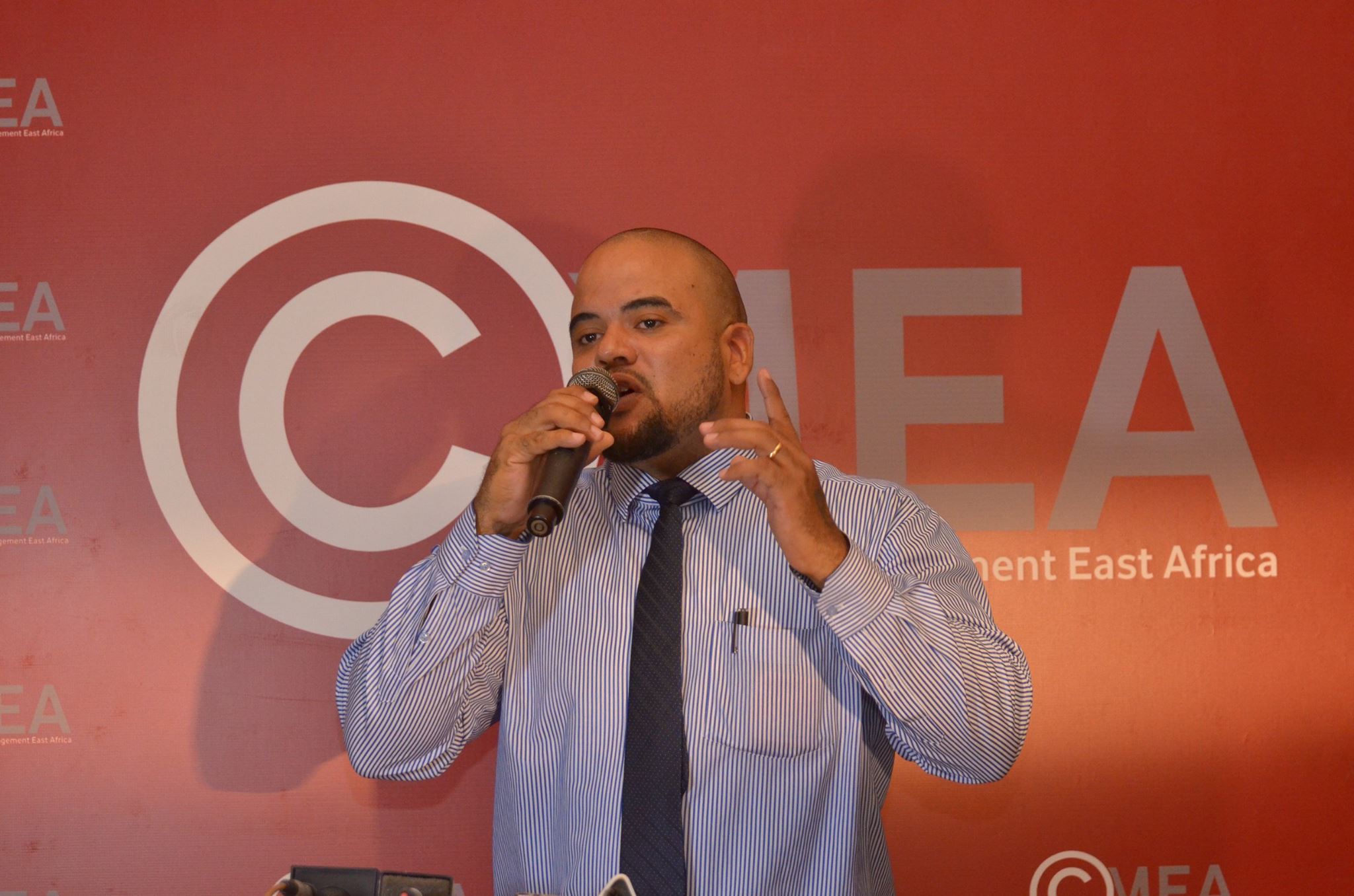
CMEA CEO P Funk Majani. Photos courtesy of CMEA Facebook page

Historical background (1950s-80s)

The first broadcasting station in Tanzania was Sauti ya Dar es Salaam (Voice of Dar es Salaam), established in 1951. At first, the station could only be heard around Dar es Salaam. In 1955, the services were extended to upcountry and renamed Tanganyika Broadcasting Services. In July 1956 it became Tanganyika Broadcasting Corporation. A few years after independence in 1961, it was renamed Radio Tanzania Dar es Salaam (RTD).

Throughout this period and a few years after independence, RTD paid royalties for the music that was aired. Log-sheets were filled after every song was aired and “needle time” recorded, with contributions paid to the British Performing Rights Society (PRS). However, the organization only paid royalties to foreign songs; music from Africa was not paid for. When this came to public attention some time in 1964, RTD was instructed to stop paying royalties altogether as this was considered to be a legacy of colonialism.

Since the mid-1950s, Tanzanian musicians used to cross to Kenya to record and release their music as Tanzania did not have any recording company of its own. Around 1975-76, Kenya and Tanzania got themselves involved in a political wrangle that led to the breakdown of the East African Community. The Tanzania government closed its borders to Kenya for quite a while. This was a big blow to Tanzanian musicians, who relied on the Kenyan recording companies to record and release their music. With this political event, Tanzanian musicians disappeared from the music scene as they could only record in studios owned by the state-owned radio which was then known as Radio Tanzania Dar es Salaam, after which their music would only be played on the radio. This system went on for the next 20 years or so. Occasionally a Tanzanian group would cross into Kenya through illegal routes and record and release records. A number of musicians permanently moved to Kenya and were quite successful, Simba wa Nyika Band being a good example.

The Tanzanian government established the Tanzania Film Company (TFC) in 1968, which was given the task among other things to work as a recording company. TFC did in the 70s record and release some songs, although as there wasn’t a pressing plant in the country, the records were pressed in Zambia. The government also established another entity, the Dar es Salaam Bicycle Company (DABCO), which was the only company allowed to import and sell musical instruments, and also, the only company permitted to import, and distribute records. This caused a huge shortage of recorded music in the country.

By 1976, the audio cassette was introduced to the country. Enterprising businessmen saw an opportunity of making money from the music-hungry market and so began the business of copying and selling music in audiocassette, and music piracy was born in Tanzania. Initially the pirates began by selling foreign cassettes, but slowly cassettes with local music began appearing in shops. This came to the attention of the local musicians, who by 1987 began complaining of piracy and earnestly began pressing their government to come up with a better, workable copyright law. The law at the time, the Copyright Law No 61 of 1966, was just lying on the shelves of the Ministry of Legal Affairs and was never implemented effectively.

Current situation (1990s – present)

By mid-1993, the National Arts Council[i] had come up with the first draft of a new copyright law, but it took another six years before it was brought up to the parliament and made a law. During these years, music pirates had grown in financial strength, with more advanced equipment and more efficient distribution systems. By then the public had developed a culture of buying pirated music. In 1999 Tanzania finally introduced the new Copyright and Neighbouring Rights Act (No. 7 of 1999). This was after more than 10 years of struggle, mostly by musicians, who felt the need for a better law after seeing the birth and growth of piracy since the 1980s.

In 2006, the Copyright and Neighbouring Rights (Production and Distribution of Sound and Audiovisual Recordings) Regulations[ii] were issued. Among other things, these regulations mentioned the use of the bandelores, which are numbered stickers pasted on legal CDs or DVDs as an anti-piracy device. Part of the regulations are: a person shall not produce, distribute or import for distribution sound recordings or audio-visual recordings in Tanzania except under a license issued by the Copyright Society of Tanzania under these Regulations referred to as the “Society”. Secondly, an adhesive label, in these Regulations referred to as the HAKIGRAM, shall be affixed to each and every sound recording or audio-visual recording which is distributed or offered or otherwise exposed to the public for distribution by way of sale, hire, rental or otherwise within the United Republic

The law provided for the establishment of the Copyright Society of Tanzania (COSOTA)[iii], which was the body that would oversee the functioning of the regulations. The regulation has failed to take off because the Copyright Society, which is funded by the Government, never got the seed funds to kick start the system and implement it effectively.

In 2013 the Tanzanian government came up with Films and Music Products Regulations 2013, which implemented a system of using Tax Stamps on films and music to curb piracy. This regulation demanded that all film and music products (CDs, DVDs, etc) must have a Tax Stamp. Unfortunately this move has not been successful. Today music distributors have almost completely stopped distributing music, except for a few gospel albums. Musicians have resorted to releasing singles, promoting them heavily in order to earn an income from live performances instead of record sales.

With the introduction of multi-party politics in 1992, the government permitted the establishment of private broadcasting stations. According to the statistics by the Tanzania Communications Regulatory Authority (TCRA)[iv], up to 2012 there have been some 80 radio stations and 31 TV stations. None pays royalties. All the independent broadcasters inherited the tradition of the government-owned radio station of not paying royalties - and all use the same excuse again and again for musicians who tried to ask for royalty payments: “We are promoting you”. Sometimes they simply stop playing any music by the bothersome musician. The fact that many new musicians simply want their song on the air in the hope of getting booked for live performances has been a benefit for corrupt radio DJs wanting to be paid for playing the music. It is common knowledge among musicians in Tanzania that you have to pay for your music to be aired.
In 2013 the Tanzania Musicians Network (TAMUNET), a local musicians’ organization, came up with a report on the Study on Artist Copyright Management Royalties Collection and Distribution. One of the proposals was that the national government-owned broadcasting station should be the first broadcaster to start paying royalties. Unfortunately this has not yet happened.

Musicians are now getting some royalties from the use of their music as ring tones and ring-back tones, but the payments are not stable and information on the incomes of the music is not readily available. In March 2015 the government released a new proposed regulation, the Communication to the Public Regulation, 2015, as it is still a proposal it is yet to be made public, the regulation again revisits the various modes of royalty payments.

However, the missing link in implementing the payment of royalties is the fact that none of the most influential Tanzanian musicians seem to find any problem in their music being used for free. This is one of the arguments that music users like using every time the question of royalty payments continues to come up. In conclusion, despite government’s apparent intentions, royalty collection in Tanzania remains largely ineffective, making it difficult for musicians to make a professional career from recorded music.

Please log in to post a comment.

Most popular

Disclaimer: Music In Africa provides a platform for musicians and contributors to embed music and videos solely for promotional purposes. If any track or video embedded on this platform violates any copyrights please inform us immediately and we will take it down. Please read our Terms of Use for more.

newsletter banner

Subscribe to our monthly Newsletter

Follow us on social media