


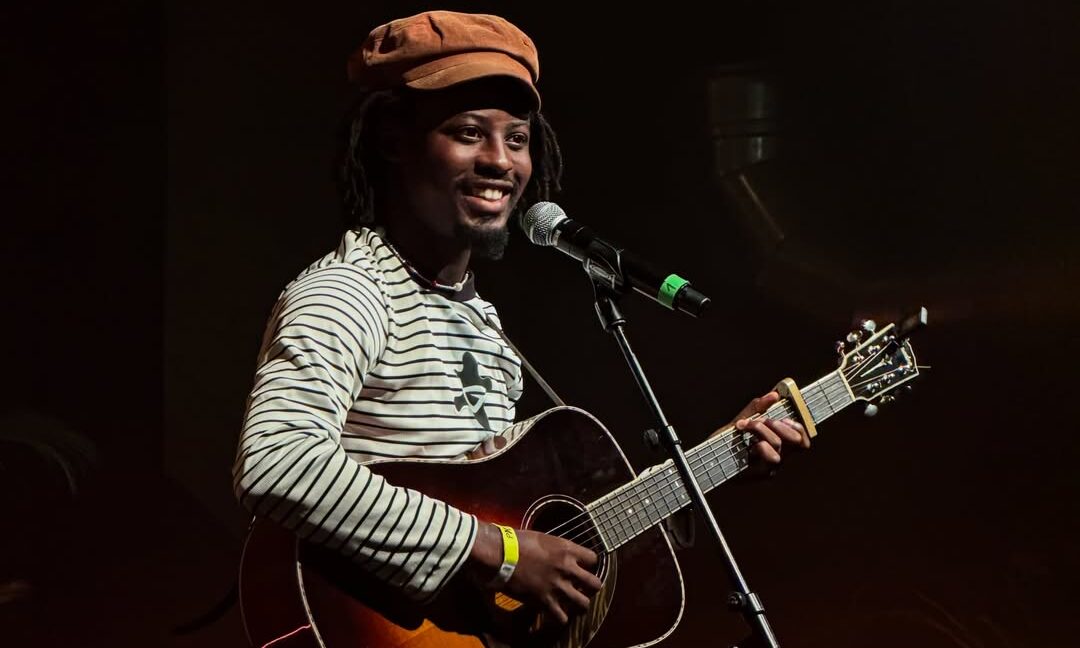












































Sax maestro Isaiah Katumwa talks about his new album Dance Again

09 Jul 2021 - 12:23


Ugandan jazz saxophonist Isaiah Katumwa has worked with an intriguing roster of artists, demonstrating a mind and ears open to a wide range of sounds. The musician, who is presently based in the US, released his new album Dance Again on 9 July. The collection’s melodic African brand of contemporary jazz was co-written, produced, recorded and mixed by American saxophonist and multi-Grammy nominee Darren Rahn. It attracted the talents of musicians from the American contemporary jazz scene, including Christian Teele, Eric Valentine, Adam Hawley and multi-platinum selling jazz icon Dave Koz.
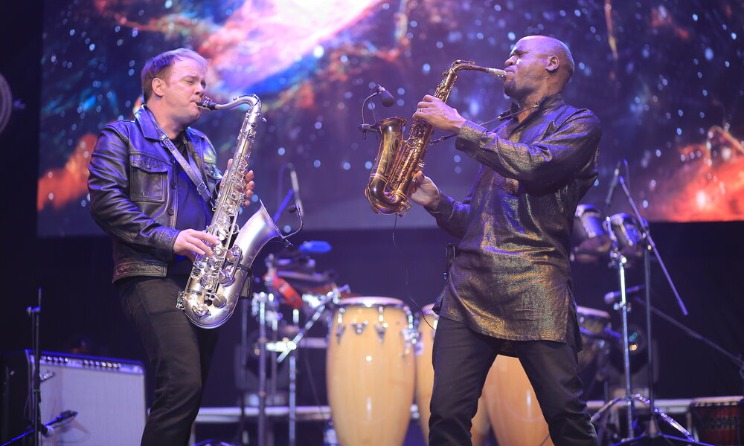
Katumwa describes himself as a performer who “crosses styles”, which is evident through the broad range of songs on Dance Again, including the title track that was released on 17 May.
We caught up with Katumwa to talk about his new album and learn more about his music and career highlights.
LUCY ILADO: Did you always know you wanted to make jazz?
ISAIAH KATUMWA: My first deliberation was not to start with jazz. But because I was learning the saxophone, the music I had to listen to was jazz and instrumentals. When I started, my playlist featured American jazzists and Manu Dibango. It was not until I encountered the music of Dave Koz and Hugh Masekela that I seriously considered being a jazz musician. They helped me understand that to stand out, I had to create a sound that represented my heritage, story and what convictions I had as I played.
How has your work evolved over the years?
I have always balanced structure and improvisation, so the quality improved with each release. On this new album, the sound leans more on the contemporary jazz format. I spend most of my time in the US, so this influence is just natural and forms the foundation of my music.
What’s the vision of the music on Dance Again?
My goal is to be authentic. Dance Again is influenced by the many styles of music that I grew up listening to, including zouk, rumba, salsa and kizomba. My proud moment comes when I can interpret various sounds in a way that both Africans and Americans can appreciate. I think this is what determines the uniqueness of this release.
You hold the American music market in high regard. Why?
It’s undeniable. The most significant influence of my music is contemporary jazz which is grounded in America. Secondly, the music industry is controlled in America because of its structures and global influence. As much as I may not want America to define my sound, I know that I can only promote my heritage if I share it on the American platform.
We cannot talk about all the tracks on Dance Again but I do want to know what it was like working with Dave Koz on ‘Nsiima’.
Anyone who knows him will tell you that he is an incredible human being besides being an excellent saxophonist. When he agreed to be on this album, it was unbelievable. The African approach of the song was a little bit outside his comfort zone, but he cracked it and humbled me. During that time, I also learnt that he loves to share, do workshops and interact, especially in the area of the saxophone. So that gave me an idea: I plan to bring him on a tour of the continent. It’s an exchange that I know he will be happy to support.
What do you hope emerging jazz musicians take away from this album?
I hope that someone will be inspired and motivated to believe that anything is possible. It’s been a long lonely journey of faith, resilience, patience, sacrifice and quite an investment both financially and emotionally thus far. I am still walking it and trying to learn as much as possible.
Do you see yourself as a leader on the improvised jazz scene in East Africa?
My intention is not to be a leader but rather the best that I can be. But what I do put a lot of emphasis on is being true to myself, and I guess that is what makes me different. I acknowledge that I have a big responsibility. Hence, I have to work on my skill and package myself well to participate in the global music community as an East African.
How do you ensure that you do not lose focus of your goals?
One thing that checks me is being in constant contact with my mentors – musicians who inspire me – and follow what they do. Although I now consider them my friends, I still seek their advice and guidance. I also try to move by the principles of my Christian faith.
Can you share with us some of your career highlights?
I consider myself so blessed because I have met and played with all the seven musicians that influenced my sound: Hugh Masekela, Miriam Makeba, Angélique Kidjo, Manu Dibango, Kirk Whalum, Jonathan Butler and Dave Koz. Having several singles get on the Billboard’s Smooth Jazz chart is also a big deal. Still, I think releasing my first international album that happens to feature my long time musical idol, Dave Koz, tops the list
What legacy do you want to leave behind?
I think we all contribute in our generation what we can and to the best of our ability. I consider my journey a road map for anyone interested in this style of music. When I joined the industry, I had no one to look up to for guidance because jazz was still unfamiliar territory. Now, I believe that those who came after me have no doubts about the possibilities and opportunities of being innovative.
How would you compare the jazz scenes in America and Africa?
It’s hard to compare these markets because jazz is part of America’s culture. As a first world and the biggest economy, its growth, education and promotion has been consistent and supported by the government. On the other side, African musicians are doing their best as growing players. The audiences are increasing day by day, even with limited or no music education. The internet is helping us close this gap one step at a time. As we get the African audience more exposed, collaborations will be a thing, and I hope that radio stations will play their part.
What is your perception of African jazz today?
I often want to run away from the word jazz because the world has changed and shown us that the definition of jazz is not definite. It makes me happy to see young musicians contributing to the evolution of this genre. I am aware that people prefer to enjoy jazz in its original format, which is also acceptable.
Which jazz musicians from the continent should the world look out for?
I am fond of Jack Muguna, Nairobi Horns Project and James Gogo (Kenya), Brian Mugenyi and Michael Kitanda (Uganda), Mike Aremu (Nigeria) and Kunle Ayo (South Africa). I also recommend Somi (Rwanda), Moses Zamangwa (Tanzania), Charmant Mushaga (Uganda/DRC) and Richard Bona (Cameroon).
Listen to and buy Dance Again here.


Most popular

Top Naija songs of 2026
31 Mar 2026

Top amapiano songs of 2026
16 Feb 2026

Top Afrobeats songs of 2026
19 Mar 2026
AFRIMA 2026: All the winners
12 Jan 2026
Call for applications: ACCES 2026 Emerging Artist Spotlight Competition
01 Oct 2026
Goethe-Institut Kenya brings Ghanaian and Kenyan artists together for MobiArts concert
05 Oct 2026
Disclaimer: Music In Africa provides a platform for musicians and contributors to embed music and videos solely for promotional purposes. If any track or video embedded on this platform violates any copyrights please inform us immediately and we will take it down. Please read our Terms of Use for more.

Subscribe to our monthly Newsletter
Follow us on social media


Please log in to post a comment.