





















































Call for applications: Training bids for Sound Connects Fund
14 Sep 2021 - 10:40

Goethe-Institut, in partnership with the Music In Africa Foundation, invites a company or a consortium of companies/freelancers to bid for a contract to provide training and support services for the MEAL component of the Sound Connects Fund (SCF).
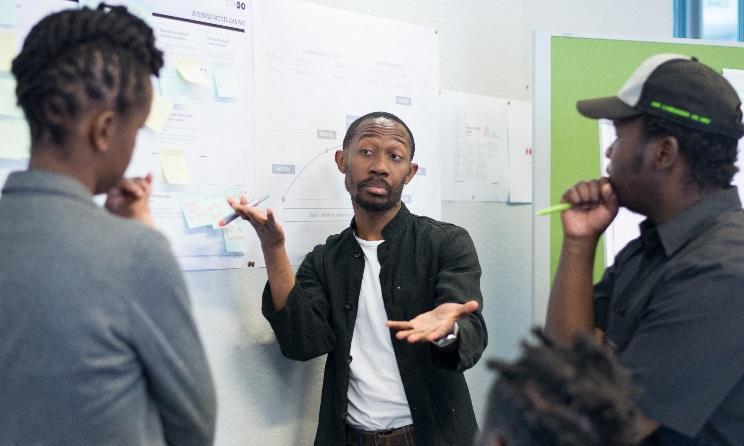
Goethe-Institut and the MIAF recently began the implementation of the SCF – an ACP-EU Culture Programme-funded project that aims to support creatives in nine Southern African countries, namely Zimbabwe, Zambia, Malawi, Mozambique, Angola, Namibia, Botswana, Lesotho and eSwatini.
The SCF project will support creatives and practitioners through sub-grants to improve their products and services in order to help them gain more access to markets and finances while implementing initiatives focused on audience literacy.
Key responsibility/objective
Develop and implement a training programme and monitoring and evaluation (M&E) support services targeting beneficiaries of the SCF project (primarily arts organisations from across Southern Africa). The service shall be delivered in the institutionalisation of the Monitoring, Evaluation, Audit and Learning (MEAL) programme of the fund.
MEAL plan
Monitoring, Evaluation, Audit (Accountability) and Learning (MEAL) are critical for building a strong, global evidence base around the SCF project, for assessing the wide and diverse range of interventions being implemented while also capacitating the grantees to fully contribute to economic growth in the region.
A key area of focus will be around ongoing learning and reflection, which will ensure that grantees periodically learn from experts, their own performances and each other to improve and perform to the desired standards.
Essential elements of the bid
The aim is to conclude a framework contract with a company/a consortium of companies or of freelancers who shall fulfil all the deliverables as follows:
Monitoring and evaluation tasks
- Read the available project information to gain a strong understanding of the action, its goals and targets.
- Develop a well-structured and efficient work plan.
- Facilitate and conduct M&E induction workshops for successful grantees in consultation with the SCF management. However, the main objective will be to capacitate each grantee to monitor their own engagement and performance and have the ability to deliver on their envisioned outputs and outcomes.
- Institutionalise the M&E principles in each grant.
- In consultation with SCF management, support all grantees on M&E and support them with their individual M&E plans and the implementation thereof.
- In consultation with SCF management, develop complementary reporting templates that may be used by grantees to report on achievements/challenges.
- Train the SCF team members on the use of M&E as a project management tool.
- In consultation with SCF management, produce two short promotional videos in English about the actions of the programme and its achievements (July 2022 and July 2023).
- In consultation with SCF management, conduct an evaluation of the grantees’ projects to see if they have achieved their intended outcomes (mid-term and end-term evaluations).
Facilitation of learning (Sound Connects Academy)
- The service provider will need to have an understanding of the typical needs of the grantees and be able to provide training, assessment and certification for different courses and where possible, accreditation. The courses should be presented in a hybrid fashion using virtual methods and face-to-face interactions where conditions allow. The training will need to be presented in English and the trainer will need to be able to produce and/or source content that can be accessed digitally by the trainees. The grantees/trainees will range from about 10 to 15 in number, but this figure will increase during the project’s second and third year. The trainees are practitioners in the creative industry across different mediums and reside in different countries in Southern Africa. The grantees will be trained in various courses, including, but not limited to, financial management, fundraising, managing the arts programme, business development, communication, marketing, and international cultural cooperation.
- The learning programme as described above will be known as the ‘Sound Connects Academy’ and learning material will be accessible by both the grantees and the general creative and cultural sectors.
- In consultation with SCF management, facilitate learning events for the grantees to learn from each other, where the focus would include what is working and not working, and areas for improvement.
- In consultation with SCF management, facilitate grantee catch-up Information exchange sessions.
- In consultation with SCF management, the service provider will need to produce learning materials in PDF, presentations and tutorials that can be downloaded from a portal that will be specifically created for the purpose; and that can be accessed by everyone that has responded to the bid call. These learning materials are to be uploaded and made accessible during different times during the life of the project and will be announced publicly as to their availability.
Writing of best practice reports (short publications)
- In consultation with SCF management and using SCF project data, produce an annual Good Practices Publication in English (physical copies and web-based). Physical copies also distributed to all grantees and stakeholders.
- In consultation with SCF management, develop annual publications that can be used by arts practitioners to learn about the various learning points of the academy reporting (for example, covering topics such as Financial Management, Fundraising, Managing the Arts Programme, Business Development, Communication, Marketing and International Cultural Cooperation). The publications’ tentative dates are July 2022 and July 2023. Formats: physical copies but should be possible to upload to a web portal. Physical copies shall also be distributed to stakeholders across the region.
- In consultation with SCF management, research into policy and legal frameworks and produce a research paper on policy and legal frameworks impacting CCIs in Southern Africa.
- In consultation with SCF management, produce annual project reports emanating from collated project data.
The language of the reports and books shall be English. However, it will be advantageous for the service provider to demonstrate their capacity to translate materials to Portuguese.
NOTE: The expertise of the consultant will guide the deliverables of the outputs in these terms of reference, but the final tasks and scopes will be approved by the SCF management team.
Profile of service provider and qualifications of personnel
- Expertise and experience of working in the Southern Africa region in M&E training and support and developing MEAL reports.
- Expertise in M&E processes including log frame creation, data collection, data analysis, data visualisation and programme evaluation.
- A professional team with a wide range of diverse abilities.
- Experience in impact and outcome evaluations and performance assessments.
- Experience in monitoring support (monitoring/performance frameworks, indicators and plans, data quality audits/assessments.
- Experience in capacity-building training and workshops, M&E systems development and support mentoring.
- Experience in conducting professional training and learning using different mediums.
- Experience in evaluation and research and report writing.
Qualifications of personnel
- Clear indications of all personnel involved (by providing respective CVs) – preferably personnel is qualified in qualitative and quantitative data collection and has a decent understanding of the cultural and creative space in Southern Africa. Past experience working in/with the different focus countries of the project is preferable.
- Overview of past experience of the bidding company/consortium of companies/freelancers covering at least the last three years (maximum the last six years).
- Indication of language abilities, especially with regard to Portuguese. Any personnel involved in the M&E training and support must be able to communicate fluently in English.
Budget plan and other aspects
- Prices (presented either in ZAR or EUR) must include any taxes and other components (e.g. internet access, working materials, etc.). Goethe-Institut will only pay the total price as indicated by the offer. An indication of the desired payment modalities (e.g. monthly, quarterly, instalments, etc.) would be desirably included in the bid.
- Any equipment needed for the provision of the tasks shall be provided by the contractor. Travel by the service provider where necessary will need to be included in the work plan, but listed as separate items in the offer with related costs. Project-related travel, expenses are reimbursed exclusively in accordance with the finance protocols existing in the SADC region. All travel has to adhere to the COVID-19 protocols currently operational in the region.
- The Music In Africa Foundation and Goethe-Institut shall not be able to provide working spaces.
General provisions
- Rights of usage: The Goethe-Institut and Music In Africa Foundation shall be granted an exclusive right to use the products of the contract for all known and unknown types of use, which is unlimited in terms of time, space and content. This right of use also extends to the right to utilise individual parts or the entire product in connection with other works not originating from the contractual partner.
- Criteria for selection: A committee compiled by Goethe-Institut and the Music In Africa Foundation will evaluate the different bids submitted. Submissions after the deadline will not be considered. Goethe-Institut reserves the right to ask for additional documentation after submission. The evaluation consists of four parts: Price (30%), quality of proposed project team (20%), regional expertise (20%) and quality of the offer (30%). The offer with the highest number of cumulative points across all four sections will be awarded.
- Relevant project documents: Upon conclusion of the contract, including the necessary confidentiality provisions, relevant project documents will be made available to the successful bidder. The log frame can be requested by potential bidders before the submission of an offer.
Submission of proposals
Only qualified and experienced service providers capable of delivering services on time and at affordable rates with a proven track record will be considered. The successful service provider will work closely with the overall project coordinator and is accountable to Goethe-Institut. The contract will be signed with Goethe-Institut and the service provider is expected to present (within a week of signing the contract) their MEAL training and support plan to Goethe-Institut as a PDF document.
Interested service providers should submit detailed technical and financial proposals with a detailed budget detailing all costs related to this call.
The set of proposals should include:
- A technical proposal with an executive summary, appendices and CVs of personnel.
- A financial proposal should recommend a payment schedule based on milestones and deliverables.
- A detailed work plan outlining activities, deliverables, milestones and targeted completion dates.
- A list of references for similar work done. Full contact details of references (including email, telephone numbers, addresses, contact person, cellphone numbers and websites, if any).
- The service provider should agree to sign Goethe-Institut’s agreement with agreed addendums, and, when necessary, variations of terms of contract.
General information
The service provider’s contract shall be one year (12 months) with an option of renewal for another year (12 months), subject to satisfactory deliverables of agreed and contracted terms. There shall be predefined and agreed milestones and deliverables for each task and a payment schedule to suit the delivery. The proposal should therefore demonstrate the fee structures across the main deliverables as indicated in this call for SCF management to consider.
General provisions
- Bidders should note that this is a project where time, affordability and availability are of essence. Once contracted, there will be no extension of allocated time beyond the closing date.
- Failure to comply with the provisions of the contract could render the cancellation of the contract without prejudice to the contracting party.
- Goethe-Institut reserves the right not to appoint any consultant/service provider or to appoint the work to more than one bidder.
- Goethe-Institut reserves the right to undertake reference and other checks, and by responding to this bid, the consultant(s)/service provider hereby gives Goethe-Institut consent/authority to undertake such checks.
- Goethe-Institut reserves the right to withdraw this bid or amend these terms of reference by notice in writing (email or posting on the website) to only shortlisted bidders who will have responded to this call prior to the closing date.
- The award of the contract will be based on best value for money – that being the best outcome for Goethe-Institut as a whole, considering price and economic, environmental and social benefits (if applicable).
- Goethe-Institut reserves the right not to make an award or to accept the lowest bid.
Application process
Candidates are invited to submit a budget and proposal that is a maximum of 15 pages, outlining proposed process with time frames, by the closing date.
Questions regarding the award of the contract must be sent to Dr Johannes Backhaus [email protected] and or Ms Priscilla Mwasinga at [email protected] in English with the subject line ‘Training and support services for the MEAL programme’ by no later than September 8 2021.
The questions of all bidders and the answers of the contracting authority will be made available to all bidders anonymously. If, in the opinion of the bidder, the tender documents contain errors, inconsistencies, and/or if, in the opinion of the bidder, there is an infringement of the regulations in the award procedure, the bidder must notify the awarding authority of this immediately before submitting the tender.
Anticompetitive behaviour
Anticompetitive arrangements, particularly agreements and recommendations regarding the following are forbidden:
- Profit Margin.
- Profit sharing.
- Prices.
- Deficiency compensation/redundancy pay, etc.
- Terms & conditions for delivery of service, payment and contract which influence the pricing apart from exceptions mentioned in the GWB (German Competition Law, implementing Article 101 of the EU treaty).
- Whether to submit or not to submit an offer.
Miscellaneous
- The information, materials and documents made available by the contracting authority may only be used for the purpose of this tender, have to be kept strictly confidential and are not allowed to be recirculated to third parties without prior approval of the contracting authority.
- Costs incurred for the preparation and presentation (including travel expenses) for the bid cannot be reimbursed. Unless otherwise agreed, the documents, samples, etc. attached to the bid will pass into the ownership of the contracting authority. Bidders cannot claim a reimbursement of any costs.
Submission of offer
Offers need to be submitted electronically (preferably in one PDF) in English to Dr Johannes Backhaus at [email protected] and Ms Priscilla Mwasinga at [email protected] with the subject line ‘Sound Connects Fund MEAL Training and Support Services Proposal’ no later than 15 September 2021 at 6pm CAT.
Late submissions will not be considered.
About the Sound Connects Fund
The Sound Connects Fund is a multifaceted initiative aimed at accelerating development and increasing the capacity of the cultural and creative sectors in Southern Africa. From 2021 to 2024, the fund will award grants worth €2.85m and offer a robust capacity-building programme (to the value of €570 000) to eligible creative and cultural industry organisations in nine SADC countries: Angola, Botswana, eSwatini, Lesotho, Malawi, Mozambique, Namibia, Zambia and Zimbabwe.
The Sound Connect Fund is an initiative of the Music In Africa Foundation in partnership with Goethe-Institut and made possible with funding from the ACP-EU Culture Programme – a project implemented by the Secretariat of the African, Caribbean and Pacific (ACP) Group of States and funded by the European Union (EU). The Sound Connects Fund is also co-funded by Goethe-Institut and Siemens Stiftung.
To find out more about the Sound Connects Fund, visit the official website.


Most popular

Top Naija songs of 2026
31 Mar 2026

Top amapiano songs of 2026
16 Feb 2026

Top Afrobeats songs of 2026
19 Mar 2026

AFRIMA 2026: All the winners
12 Jan 2026
Open call: CANEX Creative Pitch for African creative enterprises
29 Sep 2026

Goethe-Institut Kenya brings Ghanaian and Kenyan artists together for MobiArts concert
05 Oct 2026
Disclaimer: Music In Africa provides a platform for musicians and contributors to embed music and videos solely for promotional purposes. If any track or video embedded on this platform violates any copyrights please inform us immediately and we will take it down. Please read our Terms of Use for more.

Subscribe to our monthly Newsletter
Follow us on social media


Please log in to post a comment.