














































User created content: TikTok, Instagram and OTT messaging apps
24 May 2022 - 07:10


In South Africa and around the world, the COVID-19 pandemic has led to the average person spending an increased amount of time on social media.[1] This has seen a subsequent rise in social media advertising and related revenue, as content creators across the globe have looked to cash in on this latest shift in the “attention economy”.[2]
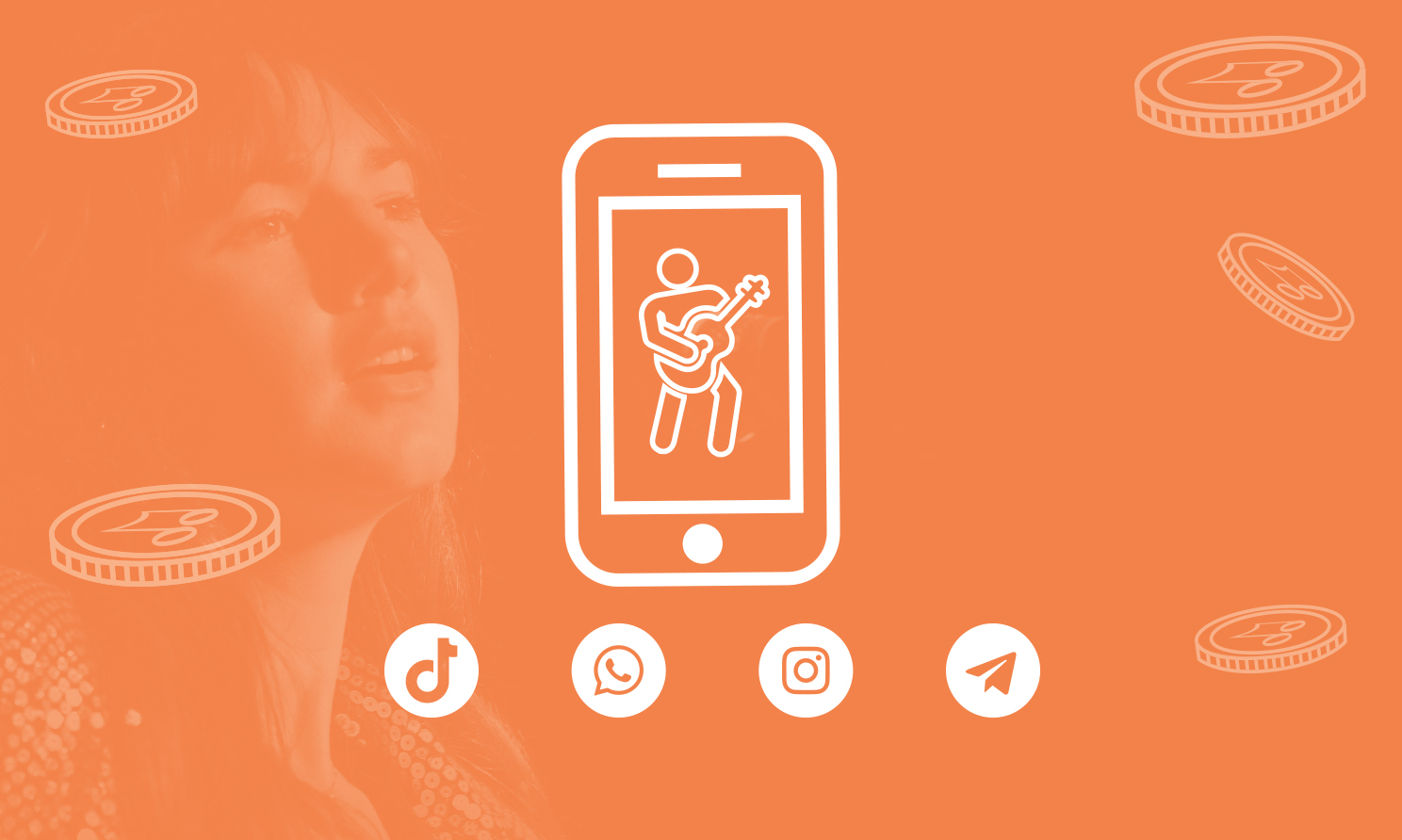
This article surveys some emerging social media revenue streams, such as TikTok, Instagram and over-the-top (OTT) messaging apps such as WhatsApp and Telegram. According to Music In Africa’s Revenue Streams for Music Creators in South Africa 2022 report, user created content generates an average monthly income of R10 735.
TikTok
TikTok is one of the fastest-growing social media platforms in the world, with an estimated 2 billion worldwide users, and nine million users in South Africa alone.[3] Moreover, music by South African songwriters has already caused a sensation on the platform, with Master KG’s ‘Jerusalema’ featuring Nomcebo racking up more than 1 billion views on the platform in 2020 alone.[4]
This is why the local music industry was abuzz in 2021 with the news that TikTok confirmed “a multi-year licensing agreement that spans 58 territories across the African continent, which will see South African songwriters, composers and music publishers paid royalties when their music is used on the video-sharing social networking service.”[5]
The deal was established between the platform and local collection management organisations (CMOs) the Southern African Music Rights Organisation (SAMRO) and the Composers, Authors and Publishers Association (CAPASSO). Wiseman Ngubo, CAPASSO’s then chief operations officer, commented at the time that the organisation was “happy to have reached an agreement with TikTok in order to ensure that pan-African songwriters are taken care of on the platform.”[6] Ngubo also pointed out to Business Insider that “streaming royalty calculations are not based on a fixed rate per stream, rather they are based on what is termed a pro rata share of the available pool. This means, in essence, royalties are determined by one’s market share, as determined by usage, in each period.”[7]
Therefore, despite some helpful resources – such as this online calculator and this comprehensive survey from Business Insider – it remains too early to speculate accurately about estimated earnings for South African musicians from TikTok. However, artists who are interested in monetising their content on the platform should take note that, much like YouTube’s Partner Program, TikTok does have a Creator Fund for established users – and it also has an official partner in South Africa in the form of online marketing company Webfluential.
In an interview with Radio 702, Ryan Silberman, CEO of Webfluential, explains that, “[The company] partnered with TikTok to scale the ability for brands and agencies to actually work with creatives on TikTok.”[8] And, in a separate interview with The Sunday Times, Silberman outlined the process that creatives can follow to start earning a revenue stream from TikTok:[9]
- Firstly, ensure that your music is properly registered with the relevant CMOs, SAMRO and CAPASSO. Although these payments will be separate from any money you earn from partnering with brands through the services of Webfluential, if your music is not properly registered, you will not be able to collect your royalty payments.
- Next, register on the Webfluential online portal, where you will capture your payment details.
- Brands will then liaise with Webfluential to book creatives to deliver on pre-agreed marketing objectives.
- TikTok users then create and share content according to the pre-agreed brief, with payment structures arranged so that they are paid per post.
Jon Savage, a director at InBroadcasting, a division of HaveYouHeard, has been working on a top 40 chart show for Africa for many years. In September 2021, he launched the programme on TikTok, and in his words “It just went bananas, engagement went through the roof.” As a content strategist specialising in innovations in broadcasting and technology, Jon has found the TikTok algorithm highly responsive and incredibly powerful. “There is a whole new environment where people you've never heard of are the most famous people in the world. It is a space for newcomers. None of the rules apply. You can actually legitimately get massive viewership in a short time, if you hit the right content at the right time. If the TikTok algorithm sees that you are adding value to audiences, it will decide to show you to more people and you can blow up quickly. But you have to be willing to experiment and learn, take risks and work with people who really understand the TikTok universe.”[10]
From an artist’s perspective and in addition to royalty earnings and monetisation through brand partnerships, TikTok also allows creatives to earn money from donations/contributions. For example, Wian, a self-taught magician who is the most-followed TikTok user in South Africa, earns money when fans purchase ‘roses’ or ‘diamonds’ on the platform. Each of these tokens has a monetary value and can be redeemed by the creator for cash.
Instagram also experienced a boom following the outbreak of the COVID-19 pandemic, and has taken steps to capitalise on these gains by adding several new features such as integrated e-commerce platforms that are primarily aimed at Business Profile users.[11]
There are a few key ways musicians can earn money on Instagram, with most of these avenues covered in greater detail in other articles of the Revenue Streams for South African Musicians series.
- Music. Creators who sign up with Facebook Music can earn royalties when their tunes are used in Instagram Stories. These deals are structured similarly to the TikTok deal discussed above, with SAMRO distributing royalties in a proportional share of the revenue Facebook has allocated that month (based on the total views of photos or videos that contain your music).[12]
- Advertising. Please see our articles on advertising revenue, influencer marketing and brand partnerships for more information.
- E-commerce. Please see our articles covering merchandise and affiliate marketing for more information.
- Direct fan contributions. For those who create live-streaming content, Instagram Badges is a feature that allows viewers to directly support content creators. Meanwhile, in January 2022, the company also launched an early test of Instagram Subscriptions, a model where creators will be able to offer their followers paid access to exclusive Instagram Live videos and Stories.[13]
Messaging apps
By 2025, more than 3.5 billion mobile users will use over-the-top (OTT) messaging applications, such as WhatsApp and Telegram, as their primary means of communication.[14] It is therefore unsurprising that musicians around the world have taken to these platforms for innovative release strategies.
For independent South African record company Black Major and its artist DJ Lag, close analysis of their fan base led to a targeted, underground and immediate WhatsApp release that culminated in international exposure. Citing the “pivotal role” that the messaging app played in the emergence of gqom music, the company stated, “This groundbreaking use of WhatsApp pays tribute to the role that this cheap and efficient messaging application plays in the lives of South Africans every day.”[15]
Mobile messaging applications present an exciting opportunity for musicians to spread their music quickly and in a targeted fashion. However, initiatives like these are best executed as part of a coordinated campaign, as simply distributing your music to your fans is not, by itself, a clear pathway to generating revenue.
[video:https://www.youtube.com/embed/Is9PTIYkVBo width:744 height:446 autoplay:0]
Video: In this interview with TheJournalist DJ, DJ Lag discusses the release of his first album and the experience of touring Europe.
Go online to grow offline
In addition to utilising these specific platforms, South African musicians ought not to neglect the self-marketing function of social media.
“You have to tell people about the work you do so they don’t forget about you,” musician and composer Brendan Jury stresses.[16] Every post, every comment, every subscriber, every share and every friend that talks about your content is an opportunity to grow your customer base. For example, to sell music on Platoon, producer Crighton Goodwill puts together a content release plan over three months to have enough time to make sufficient noise about it. By uploading one track at a time every two weeks and then hyping that one track with a post every day, he creates his own online content stream, giving the audience insights into his journey and music environment.[17]
Meanwhile, Cape Town-based saxophonist and social activist Buddy Wells uses Twitter to raise awareness around economic issues such as using public money for public benefit. “I think it is important for artists to be active in change, trying to improve the world,” he explains. After Red Bull closed down its global recording studios operation in 2020, Wells took up the opportunity to convert the old Cape Town studio space into the Blue Room Jazz Lounge and Heritage Studios. He employed trumpeter Darren English and his company English Design to create posters. The iconic designs immediately put Blue Room on the map – showing that once an initiative has started to attract attention and gain momentum through social media, “the age-old strategy of word-of-mouth kicks in and a fan base begins to develop.”[18]
Speaking in 2020 about the SAMRO licensing deal signed with Facebook, chairperson Nicholas Maweni commented, “The technological evolution we are experiencing is a welcome development, as it creates new avenues through which the public can experience creative works while at the same opening up new opportunities for our members.”[19]
Time will tell how much profit is to be made, but with incredible market demand and licensing deals in place, South African musicians stand to benefit from emerging social media revenue streams.
Resources and citations
- [1] Greyling, T., Rossouw, S., & Adhikari, T. (2021). “The good, the bad and the ugly of lockdowns during Covid-19”. PLoS ONE. 16(1). Accessed on January 25, 2022: https://doi.org/10.1371/journal.pone.0245546
- [2] Moore Law. (2021). “COVID-19, Influencers, and Revenue: How the Coronavirus pandemic changed the game for content creators”. Accessed on January 25, 2022: https://www.moore-law.co.uk/covid-19-influencers-and-revenue/
- [3] BusinessTech. (2021). “The biggest and most popular social media platforms in South Africa, including TikTok”. Accessed on January 25, 2022: https://businesstech.co.za/news/internet/502583/the-biggest-and-most-popular-social-media-platforms-in-south-africa-including-tiktok/
- [4] Birjalal, A. (2021). “Master KG's banger 'Jerusalema' has over 1 billion streams on TikTok”. IOL. Accessed on January 25, 2022: https://www.iol.co.za/entertainment/music/local/master-kgs-banger-jerusalema-has-over-1-billion-streams-on-tiktok-e3fdb338-d1a0-4517-86aa-60df2107060b
- [5] Vaal University of Technology. (2021). “TikTok’s local musician remuneration plan”. Accessed on January 25, 2022: https://www.vut-research.ac.za/tiktoks-local-musician-remuneration-plan/
- [6] Seroto, B. (2021). “SAMRO and CAPASSO partner with TikTok”. Music In Africa. Accessed on January 25, 2022: https://musicinafrica.net/magazine/samro-and-capasso-partner-tiktok
- [7] Business Insider South Africa. (2021). “TikTok will pay South African musicians for every play under a just-signed deal”. Accessed on January 25, 2022: https://www.businessinsider.co.za/tiktok-will-pay-south-african-musicians-for-every-play-under-a-just-signed-deal-2021-4
- [8] Luckoff, P. (2020). “TikTok signs first African influencer partnership with SA-inspired company”. Radio 702. Accessed on January 25, 2022: http://www.702.co.za/articles/400142/tiktok-signs-first-african-influencer-partnership-with-sa-inspired-company
- [9] Nkanjeni, U. (2021). “Obsessed with TikTok? Here’s how it can make you serious coin”. The Sunday Times. Accessed on January 25, 2022: https://www.timeslive.co.za/sunday-times/lifestyle/2020-11-02-obsessed-with-tiktok-heres-how-it-can-make-you-serious-coin/
- [10] Original interview for Music In Africa with Jon Savage: January 20, 2022.
- [11] Francisco, E., Fardos, N., Bhatt, A. & Bizel, G. (2021). “Impact of the COVID-19 Pandemic on Instagram and Influencer Marketing”. International Journal of Marketing Studies. Vol. 13, No. 2. Accessed on January 25, 2022: https://doi.org/10.5539/ijms.v13n2p20
- [12] Motumi, M. (2021). “SA artists whose work is used on TikTok, Facebook and Netflix will now get royalties”. IOL. Accessed on January 25, 2022: https://www.iol.co.za/the-star/news/sa-artists-whose-work-is-used-on-tiktok-facebook-and-netflix-will-now-get-royalties-018a8f37-7dbb-419d-b076-403460fbbdbc
- [13] Perez, S. (2022). “Instagram launches early test of creator subscriptions in the US”. Tech Crunch. Accessed on January 25, 2022: https://techcrunch.com/2022/01/19/instagram-launches-early-test-of-creator-subscriptions-in-the-u-s/
- [14] Statista. (2022). “Number of mobile messaging users worldwide”. Accessed on January 25, 2022: https://www.statista.com/statistics/483255/number-of-mobile-messaging-users-worldwide/
- [15] Black Major Records. (2017). “DJ Lag announces new FREE EP to release via WhatsApp”. Accessed on January 25, 2022: https://blackmajor.co.za/news/dj-lag-announces-new-free-ep-release-via-whatsapp/
- [16] Original interview for Music In Africa with Brendan Jury: November 20, 2021.
- [17] Original interview for Music In Africa with Crighton Goodwill: November 25, 2021.
- [18] Original interview for Music In Africa with Buddy Wells: December 15, 2021.
- [19] Motumi, M. (2021). Ibid.
This article is part of the Revenue Streams for African Musicians project, supported by UNESCO’s International Fund for Cultural Diversity in the framework of the UNESCO 2005 Convention on the Protection and Promotion of the Diversity of Cultural Expressions, the Siemens Cents4Sense programme, Siemens Stiftung, Goethe-Institut, the National Arts Council of South Africa and Kaya FM.
Editing by David Cornwell and Kalin Pashaliev


Most popular

Top Naija songs of 2026
31 Mar 2026

Top Afrobeats songs of 2026
19 Mar 2026

Top amapiano songs of 2026
16 Feb 2026

AFRIMA 2026: All the winners
12 Jan 2026

Visa appoints Fally Ipupa as face of Visa Pay in Democratic Republic of Congo
23 Sep 2026
NAAK and Vumaala to take SA electronic sounds to Amsterdam
02 Oct 2026
Disclaimer: Music In Africa provides a platform for musicians and contributors to embed music and videos solely for promotional purposes. If any track or video embedded on this platform violates any copyrights please inform us immediately and we will take it down. Please read our Terms of Use for more.

Subscribe to our monthly Newsletter
Follow us on social media


Please log in to post a comment.