
























































By Keyti
Senegalese rap music is considered today as a genre of its own; a genre with such a persuasion and mobilization power that it is often feared.
In the history of music in Senegal, the meteoric rise of rap music is probably one of the most interesting phenomena to witness. For several decades, rap music has become the true voice of the youth and is now accepted as an art. Furthermore, it has proven to be a powerful force capable of persuading and mobilizing the masses. This makes it the most controversial music genre in Senegal.
Thousands of young people are using this musical genre to express their creativity, struggles and dreams of a better life, from the depths of the Fouta region in the north to the remotest village of Casamance in the south and from the border with Mali to Dakar, the capital city.
The Rise of Senegalese Hip-Hop
In the early 1980s, Dakar was booming and changing. In its early days, Dakar had been home to mostly middle-class neighborhoods. As the city expanded, suburbs emerged for more disadvantaged people coming from other parts of the country, often fleeing a severe drought that lasted for decades. These new demographic and economic factors, combined with a strong tradition of immigration, opened the city of Dakar to the rest of the world and thus to new lifestyles, clothing fashions and music trends.
In this context, hip-hop began to take over Dakar. Dances like ‘smurf’, popping and breakdancing inspired the creation of hundreds of dance groups across the city. The growing Americanization trend of Senegalese youth through these dances opened the doors to rap in the mid-1980s. Indeed many of the early rappers’ careers started with dance. Most of them plunged back into anonymity, with the exception of Duggy Tee and Matador, who enjoyed successful music careers.
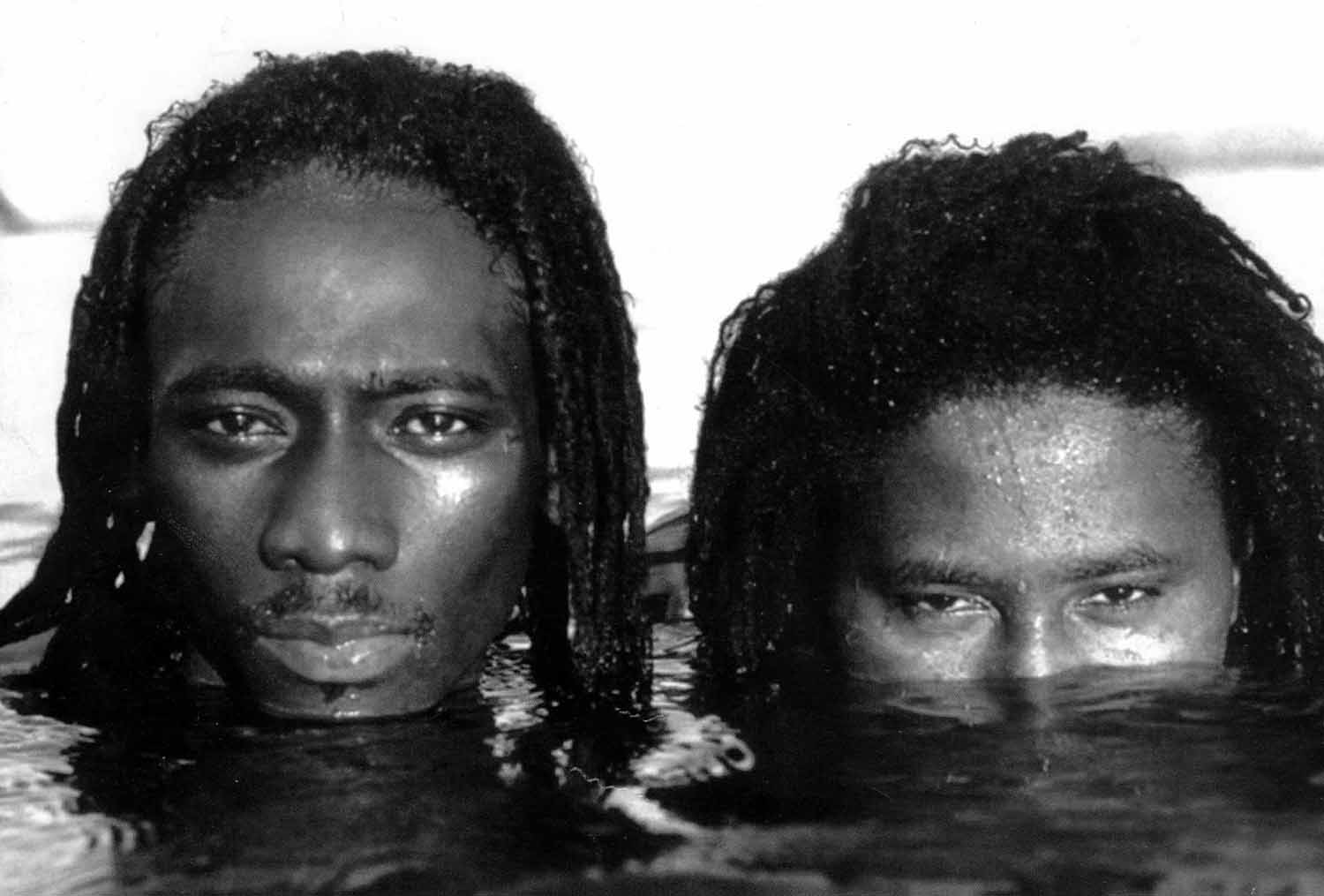
One of the greatest paradoxes of the introduction of hip-hop music in Senegal is that unlike the United States, where it originated, or Europe, it was the privileged class that first adopted and promoted its lifestyle. It all started in neighborhoods like Point E, Fann and the Sicap - upmarket residential areas of Dakar - and later gradually invaded the rest of Dakar. This is simply because the wealthier youth had the opportunity to travel abroad and were returning with albums, movies and VHS tapes of rap videos. These tapes were copied and exchanged throughout the city. The first groups and artists to emerge were King & Kool, Donj, Positive Black Soul, Supreme Spirit, MBA, Koc Kool-Sis, Supreme Black and Al & Two. This first wave of rappers remained essentially confined to the upmarket or middle-class neighborhoods, nightclubs and posh colleges of Dakar. For example, Catholic colleges such as the Sacred Heart or the Marists hosted many of the earliest hip-hop concerts.
It is with the creation of groups like BMG, Pee-Froiss, Gnoul te Rapadio or Yatfu whose members came from more popular areas that the average Senegalese became acquainted with rap music. From that moment on, rap music was present in almost every neighborhood’s party, particularly during the ‘Xumbeuls’, night parties organized in support of local football clubs.
Despite its popularity at live events, it was only in 1991 that the first rap single from a Senegalese artist was released. It was a single by MC Lida, a rapper unknown on the local scene because he was living in Italy at that time. His maxi-album Teubeul Ma Teub opened the way for local rap production. Many people consider Positive Black Soul’s album released in 1992 Boul Falé as the first Senegalese rap album because of the aura of the rap group at the time and the fact that they were living in Senegal. After these early releases, so many albums have been recorded that it has become very difficult for the public to follow and keep up with all of them.
Hip-Hop in Senegal Today
Today, 25 years after its emergence, the Senegalese rap industry is undoubtedly one of the most prolific of the continent, with artists coming from all over the country as well as Dakar. They have also managed to retain a solid audience over time. However, despite this relative success, we cannot ignore the difficulties that rap artists still face. In a global music environment with numerous challenges, the local rap industry is struggling to structure itself. Albums come out one after another but most of them face the same fate - they are commercial flops because of issues like a lack of distribution networks, which often makes them inaccessible to the public, a lack of proper promotion and a lack of live performances. Today only a handful of hip-hop artists are able to live off their craft and the only artists who tour regularly including outside of the country are Matador, Didier Awadi and Daara J Family.
The other major issue facing Senegalese rap is that most songs are performed mainly in Wolof. This makes it difficult to have an international career, unlike artists from other parts of west Africa, who rap mostly in French and can therefore sell themselves internationally. One of the reason Senegalese artists rap in Wolof is probably because of the high illiteracy rate in the country. But this choice limits their audience to approximately 13-14 million people at most, as this language is spoken only in Senegal, Gambia and in some regions of Mauritania.
Another illustration of the Senegalese hip-hop industry’s precarious situation is the rise of mixtapes, which are slowly replacing studio albums because they are easier to produce and sell, and involve lowers costs and greater profits. However, in the past five years a new generation of artists such Pps the Writah, Nitdoff, Canabasse, Simon and others are trying to transform the local rap scene by putting in place structures such as formally registered companies.
Hip-hop as Political Activism
The strength of Senegalese hip-hop is the political commitment of the rappers, which has helped them maintain an international presence. Since its inception, Senegalese rap has been strongly influenced by politics. Most rappers denounce poor living conditions and the abuse of political power - almost to the point that every rapper feels obligated to address politics in order to be heard. The first albums of groups such as PBS, Pee Froiss, BMG and others set the tone, with titles clearly and openly accusing African or Senegalese leaders to be the cause of the populations’ suffering. Examples include ‘Ceci N’est Pas Normal’ (this is not normal), ‘L’Afrique n’est pas démunie mais désunie’ (Africa is not destitute but lacks unity), ‘Louy Ndayou Lii’ and ‘Boul Wakh’.
During the presidential elections of 2000, rappers rallied the Senegalese people and encouraged them to register and vote in order to get rid of the socialist regime that had been in power for 40 years. Through concerts and the use of media, rappers campaigned in their own way so that the voice of the people could be heard. On the evening of 19 March 2000, Senegal experienced its first democratic transition when Abdoulaye Wade was elected.
Later, in 2011, Wade himself would pay the price of the political commitment of the same rappers who had participated in his election as president. Indeed, after 10 years of Wade’s rule, social disparities had increased and living standards deteriorated, except for a handful of his closest supporters. On top of that, recurrent floods occurred in the suburbs of Dakar and other communities, there were constant power outages and the educational system was failing. All these issues inspired a group of rappers (Keurgui, Fou Malade, Simon and Djily Baghdad) to join forces with a number of journalists and create the Y’En A Marre (enough!) movement. That would mark the beginning of the end for Abdoulaye Wade’s regime, who subsequently lost the elections of 2012.
After more than 25 years of existence, Senegalese rap is rightly regarded as the second most popular Senegalese musical genre after mbalakh. Hip-hop artists are anxious to keep alive the strong values of the original hip-hop pioneers. Since the genre first arrived in the country, rappers have remained a political guard and an opposing force. Thus, their relationships with politicians are not always good. After the battles of 2000 and 2012, hip-hop artists are today more involved in education through various artistic programmes that encourage the youth to take a more active role in the society.
The generation that made the hip-hop genre popular in Senegal is slowly disappearing and giving way to a new generation that is dreaming of an international career. Until that happens, the younger generation is facing the same challenges faced by their elders, namely the lack of professionalism and the absence of reliable distribution networks.


Most popular

Top Naija songs of 2026
31 Mar 2026

Top Afrobeats songs of 2026
19 Mar 2026
Ghana: Mr Eazi and MOLIY’s ‘Comfort’ earns Urban Music Awards nomination
21 Oct 2026

Top amapiano songs of 2026
16 Feb 2026
Open call: CANEX Music Business Lab and Songwriting Camp
15 Oct 2026
Nigeria: CANEX WKND unveils 2026 programme
21 Oct 2026
Disclaimer: Music In Africa provides a platform for musicians and contributors to embed music and videos solely for promotional purposes. If any track or video embedded on this platform violates any copyrights please inform us immediately and we will take it down. Please read our Terms of Use for more.

Subscribe to our monthly Newsletter
Follow us on social media


Please log in to post a comment.