

















































For all of its intentions to reward outstanding musical work regardless of commercial acclaim, it appears that the Grammys will continue to be criticised as a scheme that simply doesn’t get it.
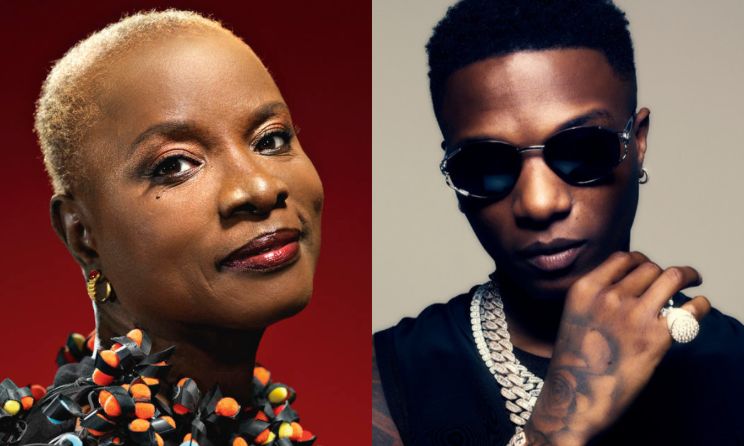
The recently held 64th edition of the Grammys was characterised by major snubs, adding to a long list of accusations levelled against the awards. To many within the Afrobeats community, however, Wizkid losing out on a Grammy in the ‘Year of Essence’ is the real travesty of justice – so let’s start there.
Afrobeats, which has recorded resounding global success in the past decade, attained new heights in the past year. Wizkid, who rose with the genre’s global ascendance and is one of a handful of Nigerians at the forefront of the genre, has been integral to Afrobeats’ glorious maturation in the past year. Earlier in 2022, his Made in Lagos made history by becoming the longest charting album by an African act on the Billboard World Albums chart. The Tems-assisted ‘Essence’, the biggest song on the album, also attained major milestones.
Add that to the fact that in recent years Grammy oversight body the Recording Academy has welcomed more Africans to its ranks – including Nigerian musicians Bankulli and DJ Spinall as well as British-Ghanaian DJ and producer Juls – and it is understandable why Wizkid had been touted as a frontrunner in both the Best Global Music Album and Best Global Music Performance categories ahead of the awards.
But Wizkid suffered the same fate as Burna Boy when the ‘Ye’ singer lost to Beninese legend Angélique Kidjo in 2019. The following year, when Burna Boy picked up the Best Global Music Album Award, the argument went that Kidjo’s absence from the category meant Burna Boy’s clearest shot at the gilded gramophone. In 2022, her year of return, Kidjo reclaimed the trophy, bringing her Grammy tally to five. It is not that Wizkid’s Made in Lagos lost in the Best Global Music Album category; it lost to Kidjo. Fans of the genre will be gradually nicknaming Kidjo as the ‘Killer of Afrobeats’, and next year’s potential nominees will be praying that Kidjo doesn’t make music in 2022.
True, Kidjo’s album does honour Afrobeats in her choice of collaborators on the work, most notably Mr Eazi, Sampa the Great and Yemi Alade. On a number of occasions when she walked up the podium to accept a Grammy, Kidjo drew focus to Africa’s rising voices. “Four years ago, on this stage, I was telling you that the new generation of artists coming from Africa is going to take you by storm and the time has come,” she said in 2020. “This is for Burna Boy. Burna Boy is among these young artists that come from Africa that are changing the way our continent is perceived and the way African music has been the bedrock for every music.”
And yet, her victory at the 64th Grammys has been interpreted as a big snub to Afrobeats, which had a direct double nominee in the international categories. This might also corroborate the perception of many that there seems to be a ‘sanitised’ world music cast that the Grammys prefer – Kidjo being one of them. As a result, Afrobeats musicians looking to secure Grammy notice must be seen associating with her. If this theory holds true, we must give credit where credit is due for her ability to consistently crack the Grammy code, which apparently begins with production. Some argue that Black Coffee’s Subconsciously album didn’t resonate with the Academy either, save for its magnificent production, which, frankly, has always been the case. Expected, to the minds of many. When you’re at the top, it’s easy to command the best experts on your project. It follows that there may well be many other Grammys on the horizon for Kidjo.
Kidjo’s victory, while it may be thoroughly deserved due to proven and superior craftsmanship over the decades, may be lifting the lid on a number of other deep-seated problems within the scheme, with Wizkid’s manager Jada Pollock dismissing the Recording Academy as “a committee full of opinions.” It’s almost as though the West is once again defining what African music should sound like, and what the profile of the African musician should look like.
The awards platform has also faced backlash for perceived business bias, corruption leading to the firing of former Grammy boss Deborah Dugan, likely meddling from the big record labels, and its secret voting committee. In 2020, Canadian popstar The Weeknd accused the Grammys of corruption after he was snubbed in the nomination process. Ahead of the 64th edition, the Recording Academy said it was scrapping the model of having anonymous groups of experts from within the Academy voting for nominees – a gesture acknowledging the criticism.
Granted, African acts are gaining more recognition at music’s biggest night. Africa went into this year’s Grammys with a historic nine nominees, its biggest contingent to date. Artists from these parts have essentially monopolised the Best Global Music Album category. This year’s awards saw Black Coffee emerge as the first-ever South African to win the Best Dance/Electronic Album Award (albeit sadly overshadowed by the Afrobeats debate). Africa is replete with a wide variety of sounds. Still, in the grand scheme of things, it seems to have been underappreciated at the awards. It’s somewhat peculiar that only nine African acts have won Grammys since the beginning of the awards in 1959. Additionally, just two acts from the continent have won 10 Grammys (Kidjo and South African a capella group Ladysmith Black Mambazo boast five trophies each). Despite its global domination over the years, Afrobeats boasts only one Grammy Award thanks to Burna Boy’s victory in 2021.
And the Grammys are a big deal. “There is a certain value to it in terms of us also wanting our sound not to be only original but globalised,” two-time nominee Rocky Dawuni told me ahead of this year’s Grammys. “If we are able to get that recognition, then that recognition is one of the things that can help shed more light on our work and music”. During his acceptance speech last year, Burna Boy suggested that a Grammy is proof that “no matter where you are, no matter what you plan to do, you can achieve it no matter where you’re from, because you’re a king.” Wizkid himself, in congratulating this year’s African winners for “consistently shining light to the continent” noted that “African music [is] rising.”
And so, why did Afrobeats deserve a Grammy in 2022? For one, the world is consuming the Nigeria-led genre at a dizzying rate. If the Grammys claim to have grown a brand of integrity, they must try harder to reflect the times and what fans are actually listening to. For now, the Grammys are failing one of the most spoken-about genres in the world, which is projected to grow even more in the big global music markets.
To compound this, the Grammys have been branded by insiders as a PR mechanism used to push music for a variety of reasons – either to sell more of it or sell albums that aren’t performing as expected. They prioritise image over success and popularity. The uproar surrounding Wizkid’s Grammy loss, while understood, may be misdirected at first glance. After all, the scheme celebrates “artistic achievement, technical proficiency and overall excellence in the recording industry, without overt regard for album sales or chart performance.” This may be the exact kind of criteria needed to push ulterior agenda – the difference between an exact science and biased opinion when selecting winners. It has to be said that it is entirely possible for an album to be both masterfully crafted and commercially successful. Kidjo’s Mother Nature is founded on pristine production, but so is Wizkid’s Made in Lagos. That the latter is the most popular African album from 2021 should not diminish its value as a masterpiece deserving the most prestigious laurel the music world has to offer.
Overall, it is important to note that the international music categories do not belong to Afrobeats alone. The West should not determine what the African sound is, but contemporary West African music enthusiasts should not be seen as doing that either. At the same time, the categories must not be the preserve of folk-leaning artists, and so the Recording Academy must find a balance between the traditional and contemporary, and be seen as truly representing the temperature of the music scene as determined by those who really matter: the fans.


Most popular

Call For Applications : ACCES seeks a UK-based performer
10 Sep 2026

Top amapiano songs of 2026
16 Feb 2026

Top Afrobeats songs of 2026
19 Mar 2026
AFRIMA 2026: All the winners
12 Jan 2026

Open call: Goethe-Institut grants for Southern African creatives
08 Sep 2026

Open call: Ernst von Siemens Music Foundation 2026 funding programmes
04 Sep 2026
Open call: FAME Week Africa, Pressure Cooker Studios songwriting camp
09 Sep 2026
Disclaimer: Music In Africa provides a platform for musicians and contributors to embed music and videos solely for promotional purposes. If any track or video embedded on this platform violates any copyrights please inform us immediately and we will take it down. Please read our Terms of Use for more.

Subscribe to our monthly Newsletter
Follow us on social media


Please log in to post a comment.