
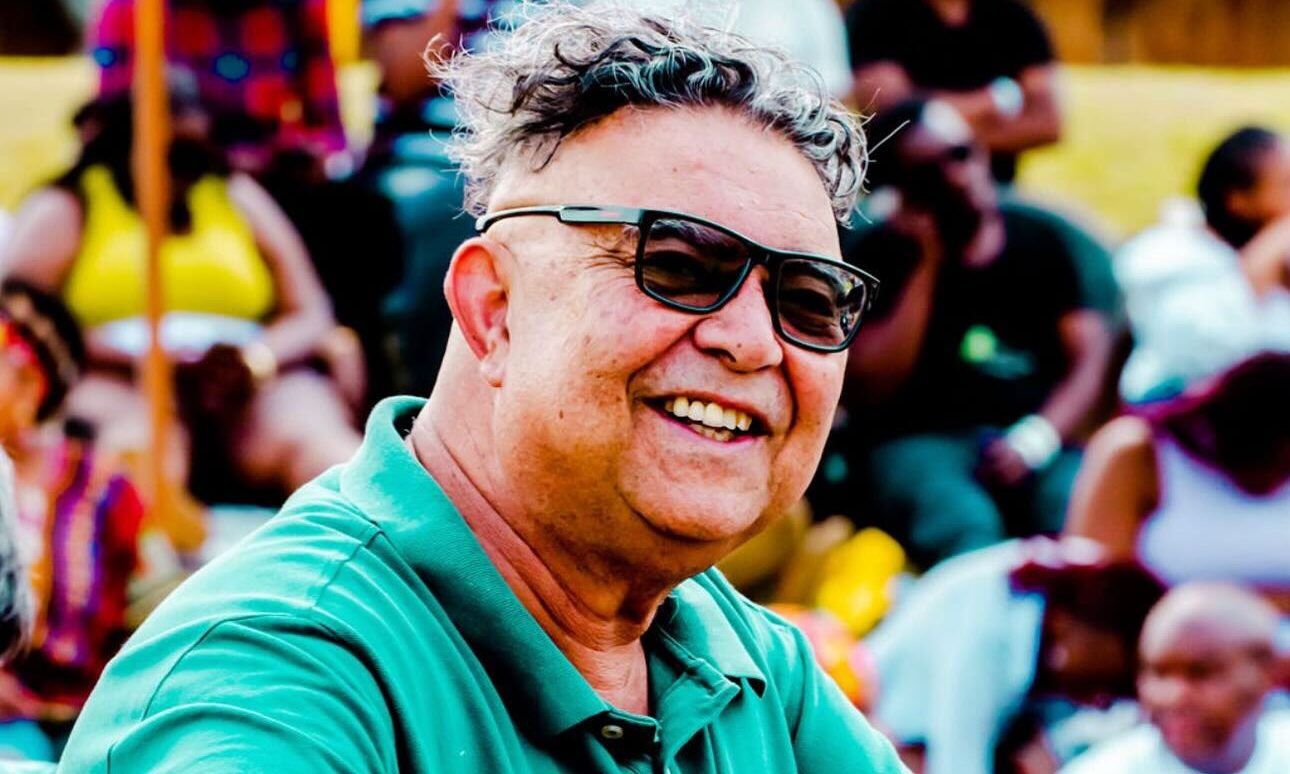



















































While the late Lucky Dube remains the most famous South African reggae artist, he was not the first. Alongside Colbert ‘Harley’ Mukwevho, Mozambique-born, Pretoria-based Carlos Djedje is considered by many to be the father of South African reggae, performing and recording as early as the 1970s, long before the rise of Lucky Dube and Ivorian star Alpha Blondy in the 1980s.
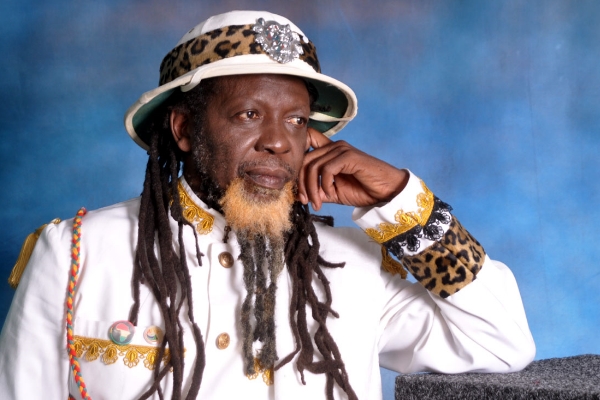
Djedje, whose early albums included Remember Them, No Apartheid and Ahoy Africa, saw his role as inextricably linked to the struggle for freedom, and his lyrics frequently referred to apartheid injustice. Since the fall of apartheid in the early 90s he has remained active, though without the fame and fortune of his compatriots, quietly going about his task to educate and liberate through reggae. His music continues to take him around the world. Now in his mid-60s, in 2014 he performed at the Penang World Music Festival in Malaysia as well as the Africa Festival in Würzburg, Germany. He has also performed as far afield as Spain, the UK and Denmark, and is making plans to get to Jamaica and even China in the near future. Djedje has also just finished working on a new album, fittingly entitled Conscious Reggae, and also has a greatest hits compilation in the works. He sat down with Music In Africa to share his thoughts…
Though performing since the late 1970s, Djedje remembers performing in Swaziland in December 1983 alongside Jamaican icon Peter Tosh - a landmark moment in the history of African reggae music along with Jimmy Cliff’s 1980 concert in Soweto and Bob Marley’s performance at Zimbabwe’s independence - as a turning point in his career. “It was very good,” he recalls. “It was an inspirational show. I’d been playing reggae, but meeting Peter Tosh was another thing… People from all over the continent were there to come and witness the show... We did three shows, I think between the 16th and the 18th. After performing, because I looked like Peter Tosh back then, they thought I was him, and they carried me around. I had to tell them, ‘No, Tosh is still coming!’ It was an eye-opener performing there with a legend like that.”
The key of reggae’s enduring popularity, says Djedje, is that it’s not commercial. “We’re living in a world where we need to be educated. Our music educates the people. It’s not there to make money. We need money, but we don’t want to commercialise it to make money and not give people what they want. So we’re like teachers, ambassadors, at the end of the day.”
Although South Africa’s political and cultural landscape has changed drastically since the early 1990s, Djedje’s role remains much the same. “It never changed. I carried the struggle through reggae music, even up to today. Because we are free in South Africa, but the continent is not free - from wars, diseases, corruption, that kind of thing. We’re still doing the same thing. We thought maybe because we are the last people in South Africa (to get democracy), everything will be much better, but it’s becoming worse. There are wars every day in Africa. And who is suffering? The children, the mothers, they’re the ones suffering. So for me, it’s aluta continua - the struggle goes on.
“Until Africa is free from corruption, wars, diseases, we must empower ourselves… If we don’t have that connectivity, we’re nothing. This is Africa - we’re free but not yet united. What we need is the unity of Africa.”
Djedje now has his sights set firmly on the overseas market, which he feels is more open to reggae artists. His recent tours to Germany and Malaysia have come about thanks to the South African Department of Trade and Industry (DTI), which funded a group of local artists, including another reggae stalwart, former Robben Island political prisoner James Mange, as well as singer Naledi ya Tshwane. “The DTI is taking us to expose our music to people that organize festivals like WOMEX,” says Djedje. “The DTI is doing a very good job. It it wasn’t for the DTI, we wouldn’t see these places. We were making contacts. Like right now, I’m working to get to Jamaica through the DTI. So we’re spreading our wings…But you must be streetwise. There’s a platform, but how do you come out of that platform and start flying?
“Musicians can still make money. There’s a lot of money, provided you know what you’re doing. If you look at sports, sportsmen are getting funded on a daily basis, but the musician must struggle to get funds. We are serving the same purpose as soccer players, because we entertain the people. In fact we are more educational. At the end of the day we teach the people how to become human, to understand themselves, where they come from, where they’re going. They say a tree without roots is not a tree - it’s just floating, it’s not stable. When the wind blows, it goes. So if governments all over the world want to have stable nations, they should look after arts and culture.”
While European and Asian audiences seem more enthusiastic than those at home, Djedje bears no grudges with local audiences and insists that he does not live in the shadow of Lucky Dube’s legacy. “I’ve always said they give me that respect, those that know that I am the first to play reggae music. You can sow, but not be the reaper - sometimes you plant and when you die other people come and eat your fruits. But for me it doesn’t matter, there’s no competition. People should know who started reggae music in South Africa - for me that’s important. When Lucky took over, he took reggae to the highest peaks, representing South Africa.”
With over three decades of experience, Djedje has a wealth of information and advice for aspiring musicians. For him, education and self-discipline are the keys to a long career. “The most important thing to become a musician is for them to look after themselves, and to look after each other. They must stay away from drugs, liquor, whatever is not good for them. When you become a celebrity, everybody wants to entertain you - and what they will give you is liquor, and then drugs. People want to surround you, but you’ve got bad elements also that surround you. I know a lot of very good musicians that didn’t make it, just because of those substances. So that’s how you can sustain yourself as a musician - to be disciplined. The most important thing is to be disciplined.
“Young musicians, musicians across the board - first of all, they should attend school, because how can you run a business without education? When they’re through with school, then they can serve another master, which is music. But without education, your life will be bleak. Because now we are free, and what you need in freedom is to be educated...”
Djedje recently released this video for the single 'Dont Kill The Rastas' from his new album. It's a tribute to those who were killed in the struggle for freedom, both at home and abroad.


Most popular

Top Naija songs of 2026
31 Mar 2026

Top Afrobeats songs of 2026
19 Mar 2026
Ghana: Mr Eazi and MOLIY’s ‘Comfort’ earns Urban Music Awards nomination
21 Oct 2026

Top amapiano songs of 2026
16 Feb 2026
Open call: CANEX Music Business Lab and Songwriting Camp
15 Oct 2026
Nigeria: CANEX WKND unveils 2026 programme
21 Oct 2026
Disclaimer: Music In Africa provides a platform for musicians and contributors to embed music and videos solely for promotional purposes. If any track or video embedded on this platform violates any copyrights please inform us immediately and we will take it down. Please read our Terms of Use for more.

Subscribe to our monthly Newsletter
Follow us on social media


Please log in to post a comment.