


















































Cassper Nyovest: I’m in position to lead African hip-hop
06 Apr 2018 - 13:08


A young photographer rushes into the studio first, holding a camera with both hands. Nimbly, he pans to the room’s glass door. Enter Cassper Nyovest.
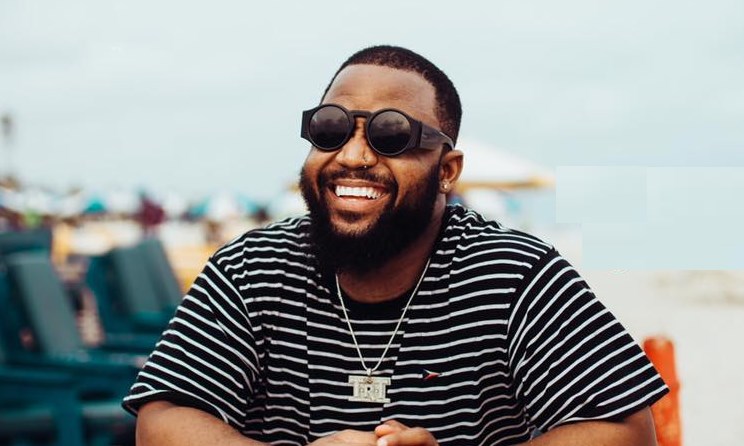
The South African rapper holds an iPhone to his face and is followed by an entourage of four. Handshakes and felicitations bounce around in the room. Before he sits, Cassper takes several selfies and, alongside a picture of the Starr FM logo on the purple wall, he tweets: “Ghana tune in!!! We here!!! STARR FM!!! 103.5!!!"
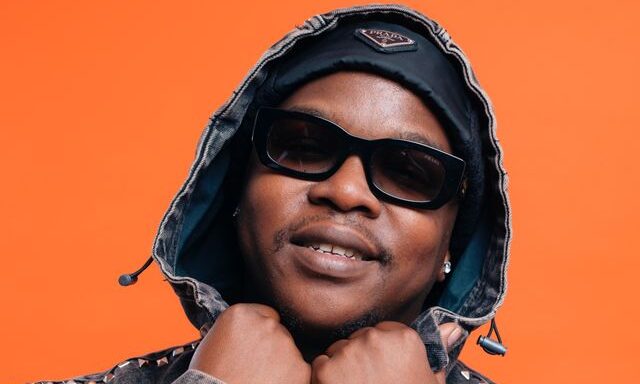
Accra is clearly home to the Mafikeng native. Notice the liberty in his gait. He sports a full beard, sparkly jewelry hang from his neck, ears, left nostril, and over both wrists. But for black sunglasses, his colour of choice today is pink. His t-shirt is bereft of sleeves, his majestic biceps on display. His shorts end at the knees; his feet are covered in trendy white trainers. He’s just climbed up the Meridian House for a radio interview, but he could be going to the gym.
When Ed Sheran’s 'Shape of You' comes on, he nods and sings along ardently. He’s impressed by the mix; his face contorts from intense passion as he yells to presenter Giovanni over the music.
“Is that you doing the mix?"
Giovanni smiles and nods.
“That’s sick bro!”
Due to time constrainst, our conversation takes place right in the Starr FM studios, during a lengthy break in the music, instead of the nearby restaurant we had agreed on.
The rapper’s motive for visiting these parts is simple: “To check out the scene, spread the name, record some music.” But, in 2018, what is the evidence that one’s trip to Ghana has truly been worthwhile? He must perform the “One Corner Dance”, submit positive judgment on jollof from this country, and experience Shatta Wale's heat simply because he called someone else his favorite dancehall singer. Cassper undergoes all these rites. Therefore, he was here.
Cassper's alias Mufasa captures the rapper’s stature in African hip-hop, especially over the past few years. For one thing, it is testament of how steadily and imposingly he has proven himself in the ranks of African hip-hop. If anyone still harbors misgivings on why his name is so frequent in discourse about the continent’s biggest rap exports, here are one or two facts: all three albums he’s published have gone platinum; he’s been honored nearly 40 times by a plethora of high-profile award establishments (Channel O Music Video Awards, MTV Africa Music Awards, South Africa Music Awards, SA Hip-hop Awards, All Africa Music Awards – AFRIMA, Urban Music People Awards, etc); he has topped many "Best MC’ lists; and he has collaborated with rap elders such as The Game, Talib Kweli, MI Abaga, Kwesta, HHP, DJ Drama, and Black Thought among others. And, yes, he has filled up arenas where pop giants as Justin Timberlake, Rihanna, Chris Brown, and Trey Songz have all fallen short.
“I felt like I was in the position to…kind of…lead in African hip-hop,” Cassper says about his decision to adopt Mufasa as alias.
Like the character in Disney's The Lion King, the rap Mufasa holds his household very dear. Two of his albums: Tsolofelo (2014), and Thuto (2017) were named after his sisters, and his family has constantly been the subject of his songs. When anyone has made unsavory comments about his kinfolk, they have had to face legal action for instance. The man even christened his record label Family Tree.
"My father is a great man cuz he made a lot of great people," says Cassper. "He was a teacher. So, my father was never like a successful businessman, but he taught successful businessmen. There are so many people that came from him, from his teachings. I’m one of them. My popularity mostly comes from my humility, and that’s what I learned from my dad, so I’m a product of my father."
Cassper’s mum, Mme Muzuki Phoolo, calls him “messiah” now. And why not? The decision to allow young Refiloe to chase his dreams has paid off richly. “It’s overwhelming for my mum to put me on such a high pedestal and to motivate me in such a way, especially with Bible scriptures," he says. "Because, also, I come from a point where my parents were not really happy about me dropping out of school, so the fact that they’re happy about how my life turned out is really dope."
He divulges, with genteel pride, that his grandmother, at a point, had not less than 26 people living under her roof – something that has influenced his culture of having a large family around. Indeed, he also admits that, for his FNB gig, he was willing to part with everything (including his cars, resorting to Uber) to make the concert happen, but could not bring himself to letting his house go – not just because it was a beautiful place, but because his family lived there.
Hip-hop portrays a precise story: the journey from penury to opulence. It is perhaps, why the philosophy of trophies is so dominant in the culture. Whether they are plaques, or jewelry, or cars, or record sales, they represent a redemption. "I got to a point [where] I still enjoy having sports cars and whatever, but they don’t mean as much to me anymore.” This explains why he put up his cars up for sale for the FNB show.
“At that moment, my dream meant more than having a car. Having a car doesn’t mean anything when the stadium is empty, or you don’t have [the] exact stage that you wanted to have, and you don’t give people the experience that you wanted to give them…so, I would [rather] do without everything I didn’t need to make sure that this dream comes true.”
Again, the FNB gesture was to prove how seriously he takes his craft, “to show people that I’m all in – and I needed them to be all in as well. I’m not half-stepping”.
Also known as Soccer City or The Calabash, the FNB is the largest stadium in Africa. Cassper’s bid to fill it was the boldest attempt by any South African musician. Just 7000 shy of the 75, 000 target, the numbers were still an iconic milestone, swiftly catapulting the show unto global headlines. But what did it mean to Nyovest himself?
“It was important for me as an African in general. When you break it down to me firstly being a South African, then me being a South African hip-hop artist, and then being an independent South African hip-hop artist, then it becomes too personal. It was really more about just being an African and making headlines all around the world about what happened in Africa last night. It felt good for me to make news as an African for the good reasons –cuz we’re always in the news for corruption, poverty, and all that stuff that’s going in our continent, so it was just dope to be in the news for some dope stuff.”
At this point in his career, filling up stadiums has become normal. This year, he intends to take the series to the 85 000 capacity Moses Mabhida stadium, Durban. Fearless ambition has ensured that the man is ahead of the pack by quite a stretch.
Cassper is not only music overlord of the “rainbow nation”. His inroads elsewhere are also noteworthy. For example, he has performed in more African countries than any other rapper, and this year will see him consolidate his impact on the continent. Indeed, his trip to Ghana is in this direction.
"The best thing to do is collaborate. It’s all about growing together as Africans, and building each other, so that, a time will come when he will be able to sell out venues in Ghana, and colleague Sarkodie for instance, can do same in South Africa. It’s bigger than hip-hop."
Interview over, Cassper walks up to one of the swivel chairs, across the massive table from Giovanni. He wears one of the large headphones, but before he sits to engage Accra, he does the famous Shaku Shaku dance, the new dance step from Nigeria. Cassper’s got moves, too.
A version of this piece appears on the ENews GH website


Most popular
Open call: 2026 Gender@Work music industry training in Johannesburg
09 Oct 2026

Top amapiano songs of 2026
16 Feb 2026
Gambia: Suntou Susso announce UK tour for ‘The Path of a Griot’
09 Oct 2026

Top Afrobeats songs of 2026
19 Mar 2026
Call for applications: ACCES 2026 Emerging Artist Spotlight Competition
01 Oct 2026

Top Naija songs of 2026
31 Mar 2026
Disclaimer: Music In Africa provides a platform for musicians and contributors to embed music and videos solely for promotional purposes. If any track or video embedded on this platform violates any copyrights please inform us immediately and we will take it down. Please read our Terms of Use for more.

Subscribe to our monthly Newsletter
Follow us on social media


Please log in to post a comment.