












































The small nation of Swaziland has gained a reputation in recent years as the last standing absolute monarchy in Africa. It has a population of about one million people. This text provides an overview of its cultural policy, specifically the key legislation and institutions governing the music sector.
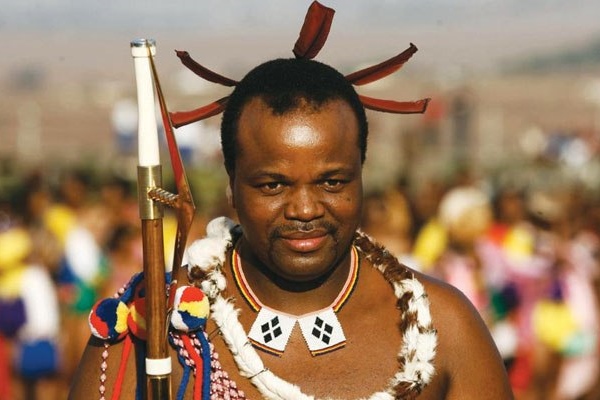
Swaziland is rich in its traditional cultures that are part and parcel of the functional cultural identity of the people. Traditional festivals such as the Incwala and Umhlanga draw thousands of Swazis in impressive intricate displays that include songs and dancing. During the apartheid regime in neighbouring South Africa, artists, activists and intellectuals often sought refuge in Swaziland. Many great musicians had periods of residence in Swaziland as a stepping-stone to other African countries or the world at large. Some Swazi musicians followed, leaving little legacy within the country and creating the perception that if one wants to gain international recognition, one needs to leave the country.
There is now a new wave of committed young artists who are making waves internationally whilst remaining in Swaziland and contributing to a revival of a local culture that values and promotes the arts. A number of independent initiatives started by artists have cropped up to help give artists a platform in the kingdom. However, it is still widely believed that content from South Africa is of higher value than local content, and thus fetches higher demand and payment than what local artists are producing.
Institutions
There is a clear need for a policy environment that encourages and enables the production and consumption of local art. Many see this as the responsibility of the Swaziland National Council for Arts and Culture, which falls under the Ministry of Sports, Culture and Youth Affairs. It is an administrative organisation that aims to promote, preserve and co-ordinate all matters pertaining to arts and culture in Swaziland, set up in 2008 further signifying the government’s commitment to the development and promotion of arts and culture.
There are a number of council members in the form of associations for artists that represent them and lobby on behalf of their interests, most notably the Swaziland Arts and Music Association (SWAMA) and the Association of Christian Artists of Swaziland (ACASWA). These associations are independently run and can be registered with the Council with the necessary documents.
Legislation
Parliament passed its standing policy for arts and culture in 2010 with a vision to create an enabling environment that facilitates the preservation, development, promotion and sustainability of arts and culture and to make it accessible to every person. The policy makes some grand statements in its key interventions in the music industry regarding the support of musicians, educators, researchers and event organisers, which are seemingly all in the industry’s best interests and would do well to achieve the vision stated in the bill, although little thought seems to have been given as to how these interventions are going to be put into action.
Lacking a detailed plan of action and responsibilities, many feel that the council has failed to fulfil their promises and at times hamper the industry with the lack of support in issues such as the Copyright and Neighbouring Rights Bill of 2014 that has yet to be passed. This will enable artist to collect royalties for radio and television play locally and internationally, providing much-needed income for local talent, along with curbing piracy of music, protecting artists’ property and enforcing penalties for piracy and illegal distribution of music.
In the meantime, the Swaziland Arts and Music Association has taken the initiative to collect royalties for their artists internationally via partnerships with associations such as the Southern African Music Rights Organisation (SAMRO) , which collects and distributes royalties due to local artists that are members of the association.
Another vital bill that is under review in Parliament is the Swaziland Broadcasting Bill. It would enable a number of independent radio stations to obtain broadcasting licenses and be recognised as media entities, increasing the air play of local content and subsequently the variety of content that would be possible to be broadcast. A number of community radio stations such as the Lubombo Community Radio and NGOs have formed an advocacy campaign to pressure the parliament into passing the bill. The main radio stations are under the Swaziland Broadcasting and Information Services (SBIS), a state-owned entity that has two radio channels.
Looking ahead, a new Arts and Cultural Bill has been proposed. But to the dismay of many stakeholders, many of its regulations have been taken from the now defunct Zimbabwean bill in the form of a Statutory Instrument for Arts Industry Regulations 2014. It would require all event organisers to register with the council, as well as venues that host events to also register and pay and annual registration fee for a certificate to host events. On top of this, a 5% fee from any gate takings will be taken if an international artist is performing.
What is also in question is that promoters have to submit dates, venues and content of a festival three months prior to the event, along with the clause that state that the council can choose to cancel the above mentioned certificate at any time as they wish makes the intentions of the council an issue of freedom expression. Many stakeholders feel this worrying and unfair, due to double taxations, freedom of speech, and harsh penalties for noncompliance. The transparency of the bill has been compromised and it’s hard to ascertain in what stage it is in.
This forthcoming bill, as well as the other bills currently under review, have sparked a much needed dialogue and renewed efforts to advocate for the arts. Civil society has become increasingly engaged in finding a way forward to create a healthy cultural environment for artists and stakeholders
Further reading:
- Zwane, T. "'Copy and Paste' Arts Bill Infringes Artists Rights" Sunday Observer, 5 October 2014. <http://www.pressreader.com/swaziland/sunday-observer/20141005/281590943805792/TextView>
- Dlamini, T. "No Big Deal Over Copied Bill - SNCAC". Swazi Observer, 14 October 2014. <http://www.pressreader.com/swaziland/swazi-observer/20141014/281767037473589/TextView>
- Simelane, Z.M. 2016. ‘Copyrights, royalties and music piracy in Swaziland’. Music In Africa. <http://musicinafrica.net/copyrights-royalties-and-music-piracy-swaziland?section-context=overview-texts>


Most popular
Call for applications: ACCES 2026 Emerging Artist Spotlight Competition
01 Oct 2026

Top amapiano songs of 2026
16 Feb 2026

Top Naija songs of 2026
31 Mar 2026

Top Afrobeats songs of 2026
19 Mar 2026
AFRIMA 2026: All the winners
12 Jan 2026
Open call: 2026 Gender@Work music industry training in Johannesburg
03 Oct 2026
Disclaimer: Music In Africa provides a platform for musicians and contributors to embed music and videos solely for promotional purposes. If any track or video embedded on this platform violates any copyrights please inform us immediately and we will take it down. Please read our Terms of Use for more.

Subscribe to our monthly Newsletter
Follow us on social media


Please log in to post a comment.