






















































Copyrights, royalties and music piracy in Swaziland

18 Apr 2016 - 09:40


This text provides an overview of the related subjects of copyrights, royalty collection and music piracy in Swaziland.
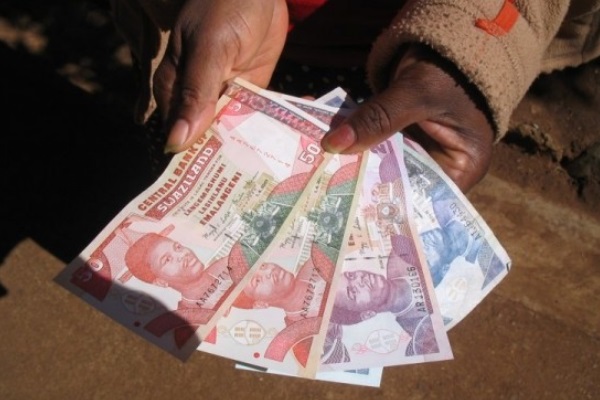
Music piracy
Like any other place in the world, music piracy is a major concern in Swaziland. This is made worse by the fact that Swaziland still doesn't have a Copyright Bill. At shops and internet cafes, vendors in all towns are illegally selling music to the public. They duplicate original work and distribute music all over the country at low prices. Consumers are often misled and convinced to buy - some even think they are doing the right thing, not noticing that what is given to them is not the original work. For artists in Swaziland, a small country with a population of less than 1.3 million, it’s hard to make money through CD sales.
Even though Swaziland don't have a Copyright Bill, piracy is still a crime. Although it doesn’t happy often, police do conduct raids and pirates can be arrested and sentenced or pay a fine of E60 (R60 or about US$4). Most offenders can afford to pay the fine and after doing so will simply continue with their illegal business.
Copyrights and royalty collection
Royalty refers to the compensation for the use of property usually copyrighted works, patented inventions or natural resources, expressed as percentage of receipts from using the property or as a payment for each unit produced.
On 6 November 2015, a draft of the Copyright and Neighboring Rights Bill of 2014 was submitted to Swaziland’s parliament before the Ministry Of Commerce, Industry and Trade. The objectives of the bill are to provide for the protection of copyrights subsists (and therefore of the protection of expressions of folklore), the authorization and protection of neighboring rights, and the establishment of a Copyright Office and a Copyright Society. It also outlines the penalties for infringing copyright laws, and necessitates the repeal of the old Copyright Act of 1912.
Where copies of a sound recording are made for commercial purposes, the new draft law call for a notice consisting of a symbol (P) and the date of the first publication of the recording to be printed on the copies, placed in such manner as to give reasonable notice of the claim of protection.
The proposed law stipulates that a Copyright Office must be established. This shall be responsible for registration of copyrights and other matters in terms of the Copyright Act. The offices shall be public and form part of the civil service. The office must have the staff required to carry out the provisions of the act.
The Copyright Office will be responsible of all matters affecting copyrights in Swaziland, specifically:
- supervising the Copyright Society,
- advising government and its agencies on all matters pertaining to copyright,
- monitoring the position of Swaziland in relation to international copyright conventions, treaties or agreements,
- advising government on the conclusion of bilateral and multilateral agreements on copyright between Swaziland and other countries,
- organising outreach and awareness creation programmes to inform, educate and sensitize the public on matters of relating to copyright, and
- maintaining a database on copyright matters and authors and their works.
The Copyright Society shall be a non-profit-making body corporate, capable of suing and being sued in its corporate name and subject to the Act, and of performing all acts that bodies corporate may by law perform. The society shall represent and defend the interest of copyright owners in various categories of works protected in terms of the act in Swaziland and abroad.
The operations of the Copyright Society shall be governed by the Copyright and Neighbouring Rights Society of Swaziland Board. The board shall consist of a representative from the Ministry, a registered legal practitioner, two representatives of an association considered by the Minister to be representative of authors, two representative of an association representative of performers, one representative each from the ministries responsible for information , culture and education, and one representative of traditional leadership.
Penalties
Section 69 of the draft Copyright and Neighboring Rights Bill of 2014 states that Swazi musicians will have to apply in writing for an individual or blanket authorization of any “utilization of expressions of folklore”. The minister will then grant authorization and may attach a tariff as he may determine, the proceeds of which shall be collected in a central fund to be created for the development and promotion of national culture and folklore.
According to the bill, a person cannot temper with a work without the authority of the owner of the copyright. Any person who causes a literary or musical work to be performed in public, or any person who causes a broadcast to be re-broadcast (knowing that the copyright subsists in the work and the performance) shall be guilty of an offense. Any person guilty of such an offense will be liable to a fine not exceeding E20 000 (R20 000 or about US$1300) or to imprisonment not exceeding three years, or both, depending on the offence.
A person who imports or distributes copies of “expressions of folklore” derived from Swaziland or copies of translations, adaptations, arrangements or other transformations of such expressions made outside Swaziland without the authorization of the Minister commits an offense for which he or she is liable on conviction to a fine not exceeding E25 000 (R25 000 or about US$1640) or to imprisonment for a period not exceeding five years, or both.
If a person utilizes an expression of folklore in contravention of section 66 of the Copyright and Neighboring Right Bill , he or she commits an offense and is liable on conviction to a fine not exceeding E10 000 (R10 000 or $650) or imprisonment not exceeding two years, or to both.
Conclusion
Swazi musicians hope the proposed law will improve the local music industry and help protect their work. With the Copyright and Neighboring Rights Bill, Swazi musicians will be able to make money from royalty collection and will compensated for their musical works.
There have been ongoing negotiations between the Swaziland Arts and Music Association (SWAMA) and the Southern African Music Rights Organisation (SAMRO). SWAMA president Lutfo Dlamini wants SAMRO to help SWAMA members collect their royalties. All this bodes well for the future of copyright protection and royalty collection in Swaziland.


Most popular

Top amapiano songs of 2026
16 Feb 2026

Call for applications: ACCES 2026 Emerging Artist Spotlight Competition
01 Oct 2026

Top Naija songs of 2026
31 Mar 2026

Top Afrobeats songs of 2026
19 Mar 2026
Open call: 2026 Gender@Work music industry training in Johannesburg
03 Oct 2026

AFRIMA 2026: All the winners
12 Jan 2026
Disclaimer: Music In Africa provides a platform for musicians and contributors to embed music and videos solely for promotional purposes. If any track or video embedded on this platform violates any copyrights please inform us immediately and we will take it down. Please read our Terms of Use for more.

Subscribe to our monthly Newsletter
Follow us on social media


Please log in to post a comment.