
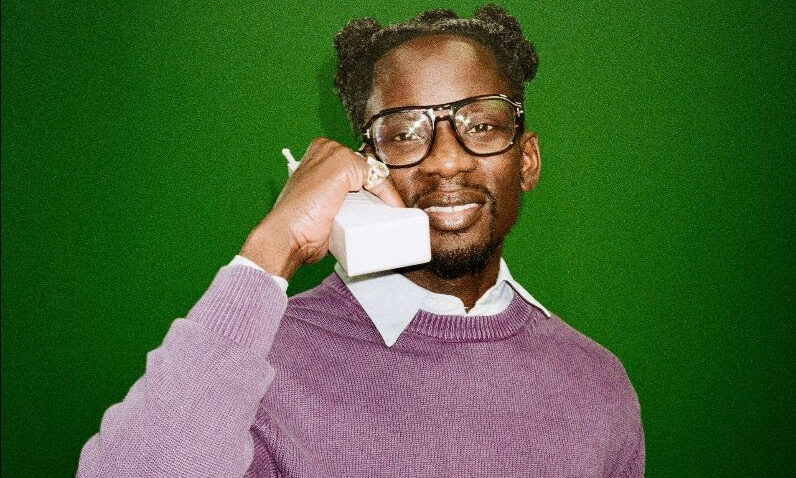
















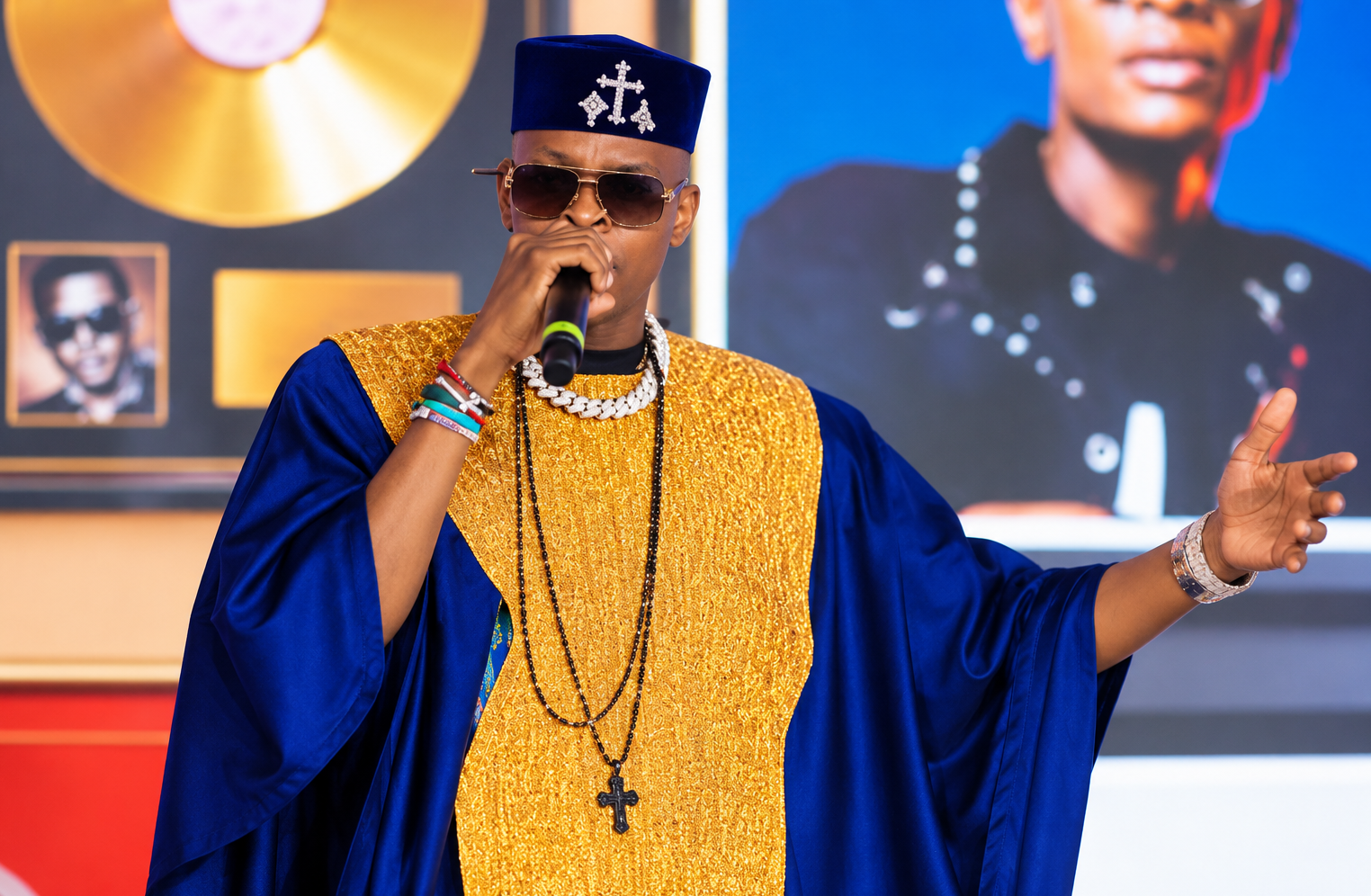































Femi Koya: My band is a pan-African Afrobeat touring machine

17 Apr 2018 - 16:06

Making waves on foreign soil is a difficult task, especially if you’re playing a genre that isn’t as big as in your own country. You also have to learn about what makes other cultures tick, find musicians who understand your vision and slowly push your brand towards enough paying gigs to keep you going.
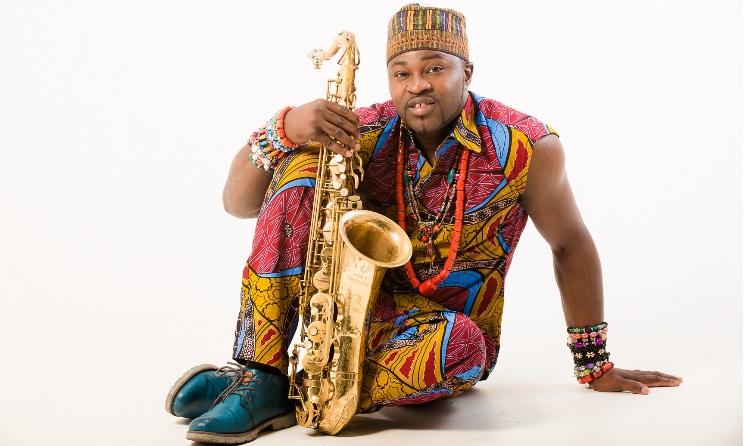
When Nigerian musician Femi Koya came to South Africa in 2005, he didn’t think that one day he would make headlines in a country that prefers hip hop, kwaito (now gqom) and house to most other genres. But the 37-year-old saxophonist has defied the odds and established himself and his 12-piece band as one of the most powerful live acts the country is currently getting to experience.
Continuing the legacy of Afrobeat legend Fela Kuti, Koya joins some of Africa’s biggest names at Bassline Fest next month where he will share the stage with Yemi Alede, Salif Keita, Nakhane, Ghorwane, Nathalie Natiemba, Elida Almeida, Azah and Sekou Kouyate, among others.
Bassline Fest, which was held under the Africa Day banner until last year, will take place on the historically important Constitution Hill in Johannesburg from 25 to 27 May when Koya is expected to perform songs off his upcoming album Village Afrobeat.
Music in Africa caught up with the buoyant musician about his career in South Africa, Afrobeat and the significance of Felabration.
MUSIC IN AFRICA: What brought you to South Africa?
FEMI KOYA: My coming to South Africa was not planned, it was something that happened because it had to happen. South Africa is not on the list of countries that I wanted to go to in 2005 and I was not even thinking of leaving my country because by that time my music was just coming up. I used to play in clubs and different places in Lagos, so for me it was just playing and playing.
I was playing in my room and a friend came through and said: ‘There is a Nigerian church in South Africa that needs a choir director who can play during church service and they will pay your rent and salary.' I said: ‘That’s cool, that’s good and if I do that I would be able to meet the great people whose music I love such as Miriam Makeba and Hugh Masekela.’ I grew up listening to their music in Nigeria, so for me it was an opportunity to meet these people and also work and get paid. So when I got here, the story changed and everything wasn’t as promised. I found myself on the streets of Yeoville [Johannesburg] and I had to decide either to go back home or stay. And the story about Lagos is that when you leave that city, let’s say your position or space, 150 people will take over that space. So there is nowhere you can come back to and say: 'Ah, but you know, I was in South Africa and it didn’t work so I had to come back.' So I decided to stay and started making music and working with my saxophone.
How is Afrobeat music perceived in South Africa?
Afrobeat is huge in South Africa and around the world. It’s just that there aren’t enough people playing Afrobeat. There is Afrobeat and Afrobeats. Afrobeat was pioneered by the late Fela Kuti and Afrobeats is what Yemi Alade and Wizkid play, which is beautiful as well. So Afrobeat is more conscious and if you listen to it, it’s more message-wise, content-wise and it talks about social issues. Afrobeat is very close to reggae because of the message. When I came here I played all kinds of music such as mbaqanga, jazz and other genres but I deemed it fit to be original and play what I know.
Afrobeat in South Africa seems to be liked more by white people than black people. What’s your take?
Yeah! That’s true. Most of my shows are attended by white people and it’s very difficult to find black people. Even Nigerians. I think white people like the originality of Afrobeat but it doesn’t mean black people don’t. There is more of an European attraction to Afrobeat. The other thing is that as blacks we don’t open platforms to ourselves and get into that market. Africans don’t really appreciate themselves, we don’t really appreciate our own stuff. But people outside Africa are like: ‘Wow, this is awesome!’ But then we want to sell to them their own stuff, they’ll be like: 'Man, I am in Africa, play me something African.' I’m not blaming Africa. When you go to Europe, you see that a lot of Europeans want to wear African stuff, but this happens so much in Africa.
What’s the significance of Afrobeat today?
The significance of Afrobeat music is still the same in the sense that everything that you hear today comes from the originators of Afrobeat who sat down to coin this music. For example, Fela Kuti sat down and said: ‘I no be gentleman at all, I no be gentleman at all’. Now in these modern days, people search for this content and then they probably modernise it. So the reason it’s very relevant is because everything that is being said in the past is still happening at the moment. And what I say to people is, if we are not contributing new content and bringing new things to the platform, what happens in the next generation to come? It means there won’t be any content because we are just taking and making no contribution. So in my own understanding we should take some time and look back and ask ourselves what are we doing for the future? So I deem it fit to stick to my Afrobeat and that’s what I do.
Dele Sosimi was in the country last year. Did you guys meet and have you worked together in the past?
I haven’t worked with him but I know him as one of the artists who played with Fela. He is one of the pioneers of Afrobeat music in the UK. I talk to him on social media, so when he came to South Africa for the Music In Africa lecture and performance, which featured Black Motion and DJ Kent, I asked if we could meet. So we met and talked about the industry.
I’m releasing my third album Village Afrobeat on 28 April and I need to take it to the UK, and I need to meet Dele. On this particular album, I wanted to express myself and I wanted to make my contribution to Afrobeat very clear. On my past albums I featured the likes of Soweto Gospel Choir and Pops Mohamed. I have worked with a lot of musicians such as Angélique Kidjo, Baaba Maal, Simphiwe Dana and others. I also worked with Wizkid when he was here in South Africa for the MTV Awards.
How were you received at the Mieliepop Music Festival last month?
Mieliepop Festival is more like home. I call it the ‘Republic of Millies’ because it’s a beautiful place, it’s a hideout and the people love that. We performed last year and this year as well, so it’s been great. We also did Oppikoppi festival. This year we have so many festivals coming up including Bassline Fest on 26 May. This is important to me because I believe in the positivity of all things African.
What are your expectations of Bassline Fest?
It’s going to be fire, it’s going to be serious fire! Africa Day is very, very important to me because it’s a time where Africans understand that we’re not just Nigerians or South Africans first – we are Africans first. It’s a day when people reflect and understand where we come from, go back into the struggle and celebrate our achievements. It’s like it’s the only time we catch up with our true self.
Also, Yemi Alade is coming to this festival. She has been here a few of times before but she hasn’t performed for people, so this will be like a great time to meet her because she is an epitome of modern Afrobeats, and I am the real ‘McKoya’ [laughs]. So we are going to have serious jol that night because she has been looking for ‘Jonny’ in her song and I am also looking for ‘Lerato’ in my song. So I don’t know, somebody is going find somebody.
Are you going to be part of Felabration in Nigeria this year?
No, I won’t be part of Felabration in Nigeria but we will be doing Felabration here in South Africa. I have permission from the organisers of Felabration to host a South African edition. So what I do here in South Africa is to bring Lagos here. If you don’t have an opportunity to go to Nigeria, just attend my show and you will understand Lagos big time. This year we will do Felabration in Johannesburg, Pretoria and we also working on taking it to Mozambique. There are still discussions in the pipeline.
How big is your band?
I have a nine-piece band and when I bring in my dancers we are talking about 12 members.
Do you manage to pay them all?
Aha! [laughs]. That’s where the war is and that’s why we are always on the road. One thing that I have made sure I don’t do is accept any gigs because I just want to take them. I accept gigs because there are sufficient for the band. You may not find us on a lot of platforms – it’s because what we get is not sufficient for the band. My band is not a Nigerian band. My band has members from the DRC, Ghana, South Africa and Nigeria and so we are more or less like a pan-African band.
Buy Bassline Fest tickerts here.


Most popular

Top Naija songs of 2026
31 Mar 2026

Top Afrobeats songs of 2026
19 Mar 2026
Ghana: Mr Eazi and MOLIY’s ‘Comfort’ earns Urban Music Awards nomination
21 Oct 2026

Top amapiano songs of 2026
16 Feb 2026
Open call: CANEX Music Business Lab and Songwriting Camp
15 Oct 2026
Nigeria: CANEX WKND unveils 2026 programme
21 Oct 2026
Disclaimer: Music In Africa provides a platform for musicians and contributors to embed music and videos solely for promotional purposes. If any track or video embedded on this platform violates any copyrights please inform us immediately and we will take it down. Please read our Terms of Use for more.

Subscribe to our monthly Newsletter
Follow us on social media


Please log in to post a comment.