















































The Composers, Authors and Publishers Association (CAPASSO) is one South Africa’s top collective management organisations (CMOs), collecting and distributing royalties on behalf of its 7 000 direct members. Founded in 2014, the licensing agency has made a significant impact on the continent in terms of royalty administration and has expanded its footprint into the international music market.
Despite the COVID-19 pandemic, the CMO has been able to continue steady operations. In April, it partnered with Chinese short-form video platform TikTok on a multi-year licensing deal that will cover 58 African territories. It also facilitated the formation of the Music Creators South Africa organisation to spearhead the independent representation of music composers in the copyright and royalty collection space.
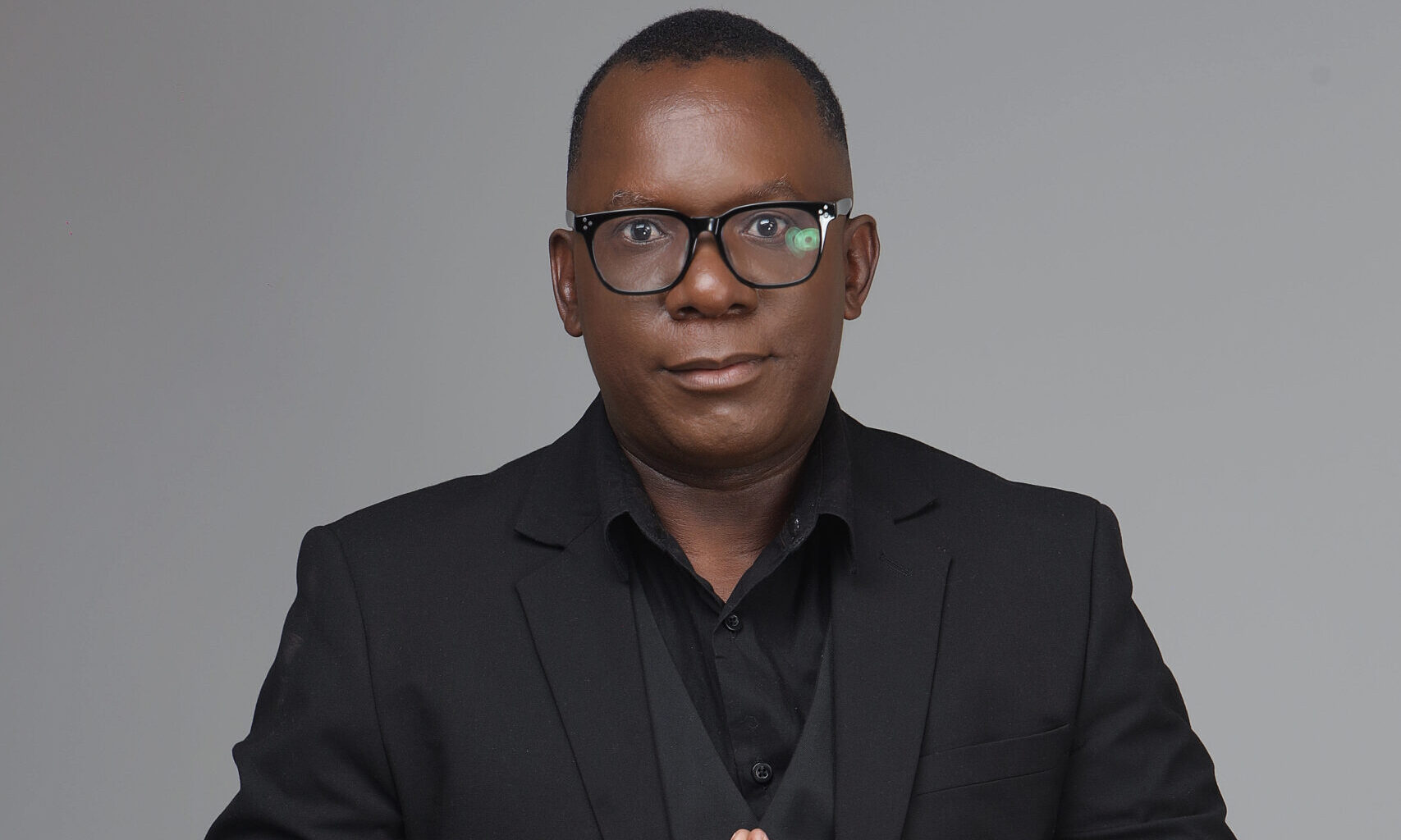
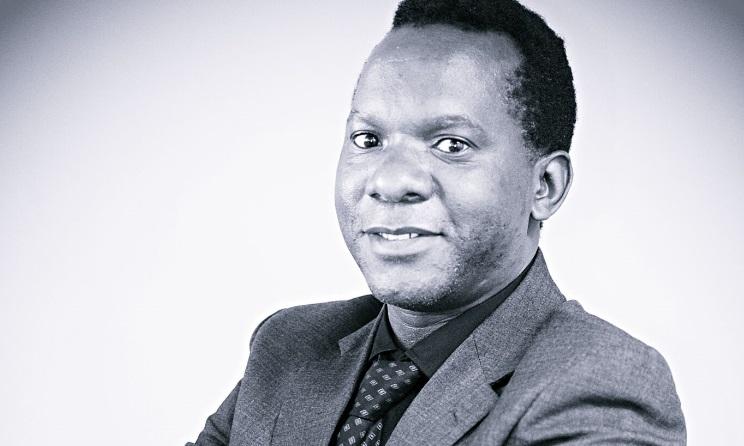
CAPASSO’s role in the royalty space is often confused with other local CMOs like the Southern African Music Rights Organisation (SAMRO), the South African Music Performance Rights Association (SAMPRA) and the Independent Music Performance Rights Association (IMPRA). Music In Africa spoke to CAPASSO CEO Jotam Matariro to get a broad perspective of the CMO’s work and mission, what it stands for, the COVID-19 pandemic and royalty collection in Africa.
MUSIC IN AFRICA: What are some of your achievements since you joined CAPASSO?
JOTAM MATARIRO: I joined CAPASSO in 2014 as a finance manager and took over as the CMO’s general manager in 2017 following the departure of the then CEO. In May 2017, I attended the CISAC Africa annual meeting in Kigali, Rwanda, with 37 other African CMOs. CAPASSO had just been admitted a month earlier as a provisional member of CISAC [the International Confederation of Societies of Authors and Composers] and was very inexperienced with the international music market as an organisation. At this meeting, the lack of digital royalties on the continent was a major topic of discussion. At that time, CAPASSO had only one DSP [digital service provider] licence.
Despite the little experience, we offered to provide an African solution to digital licensing of musical works. In 2018, I presented the African strategy on digital licensing – the CAPASSO Hub – to the CISAC Africa committee in Abidjan, Ivory Coast. Members unanimously approved the strategy and it was implemented by CAPASSO. To date, the CAPASSO Hub comprises 25 African CMOs and all major DSPs are licensed in all 25 countries. This has brought about a huge benefit to African composers who are now earning digital royalties. CAPASSO therefore managed to lead African CMOs to be at the same level as CMOs in developed countries in digital licensing of musical works.
What differentiates CAPASSO from SAMRO, SAMPRA and IMPRA?
Music has different copyrights that are managed separately by different rights holders as well as collectively managed by different CMOs. There are basically two main copyrights in music, namely copyright in the sound recording and copyright in the composition. The copyright in the sound recording arises from the recording of music and is owned by the one who pays for the recording – usually a record label. This copyright in South Africa is managed by SAMPRA and IMPRA. The record label and the performer of the song therefore become members of either IMPRA or SAMPRA, which will license and pay them for their sound recording rights.
The copyright in the composition arises when a song is written, composed or arranged. Anyone who makes an original transcription or arrangement of musical works is the owner of the copyright. The right may, however, be transferred to a publisher by way of agreement. This right is further divided into performing and reproduction rights, which are collectively managed by SAMRO and CAPASSO, respectively.
This therefore means that every time a song is exploited, CAPASSO collects for the reproduction of the musical work, SAMRO collects for the performance of the musical work and IMPRA or SAMPRA collect for the performance of the sound recording. CAPASSO and SAMRO distribute to composers and music publishers, while IMPRA and SAMPRA distribute to record labels and performers. In cases where the composer is also the artist, then they have to be a member of CAPASSO, SAMRO and either of SAMPRA or IMPRA at the same time to maximise royalty collection. Each of the societies will pay for the specific right they manage for each song.
How has the COVID-19 pandemic affected CAPASSO’s operations?
Like any other organisation, CAPASSO suffered from the difficulties faced by licensees as a result of the COVID-19 pandemic. The exploitation of music production in adverts also took a huge knock. However, recently we have seen an increase in online reproduction for advertising purposes. The losses were, however, compensated by an increase in streaming revenue. I can therefore describe the effect as slowing down the growth of the CMO.
What other challenges are you facing as CAPASSO and what measures have you put in place to overcome them?
The major challenge we are currently facing is failure to get metadata from rights holders and especially smaller publishers and composers. We have introduced less cumbersome methods of musical works notification, which requires minimum computer knowledge to be able to notify works. We also have a team that assists members to notify their musical works manually and online. It is very important that members notify their musical works, because although we may have licensing agreements in place, without the musical works in the database, we are unable to submit claims for usage of the music in order to be paid.
What tech measures has your organisation employed to advance its operations within the mechanical rights space?
CAPASSO uses a back-office system that has the ability to process millions of lines of data to identify our members’ works across the continent in order to collect and distribute the royalties.
When will CAPASSO’s members begin to benefit from the licensing deal you signed with TikTok?
The first distribution is scheduled for December 2021 and thereafter every quarter.
What is considered before an artist or organisation joins CAPASSO?
It is very simple to join CAPASSO. One just needs to own copyright in a recorded song and that’s it. There is no waiting period. The moment your form is successfully submitted online, you are a member.
Which affiliates collect royalties on behalf of CAPASSO in territories where the CMO has no physical presence?
CAPASSO has bilateral agreements with other CMOs around the world like MCPS [the Mechanical-Copyright Protection Society] in the UK, the Australasian Performing Right Association and Australasian Mechanical Copyright Owners Society in Australia and BUMA/STEMRA in the Netherlands. In the US, we are represented by the Muserk rights management company.
What are the challenges of the royalty space in Africa and how can these challenges be addressed?
Broadcast licensing remains a major challenge on the African continent. A survey by CISAC revealed that only 40% of broadcasters operating on the continent are licensed. Outside South Africa, CMOs find it difficult to even licence state broadcasters and this is a huge concern, as one would expect governments to be advocates for supporting payment for the usage of copyright material.
The other challenge, once again, is the lack of metadata. This affects the collecting of digital royalties resulting in massive loss of income for the entire continent. Rights holders are taking too long to understand the importance of metadata in order to benefit from digital exploitation of musical content. There is a need for an extensive education drive across the continent to make sure CMOs and rights holders take the issue of metadata seriously. It is my view also that CAPASSO and the Music In Africa Foundation can play a significant role to achieve this.


Most popular
Call for applications: ACCES 2026 Emerging Artist Spotlight Competition
01 Oct 2026

Top amapiano songs of 2026
16 Feb 2026

Top Naija songs of 2026
31 Mar 2026

Top Afrobeats songs of 2026
19 Mar 2026
Open call: 2026 Gender@Work music industry training in Johannesburg
03 Oct 2026
AFRIMA 2026: All the winners
12 Jan 2026
Disclaimer: Music In Africa provides a platform for musicians and contributors to embed music and videos solely for promotional purposes. If any track or video embedded on this platform violates any copyrights please inform us immediately and we will take it down. Please read our Terms of Use for more.

Subscribe to our monthly Newsletter
Follow us on social media


Please log in to post a comment.