













































Interview: ‘Nigeria’s music business is a mess’ – part II
06 Sep 2017 - 15:34


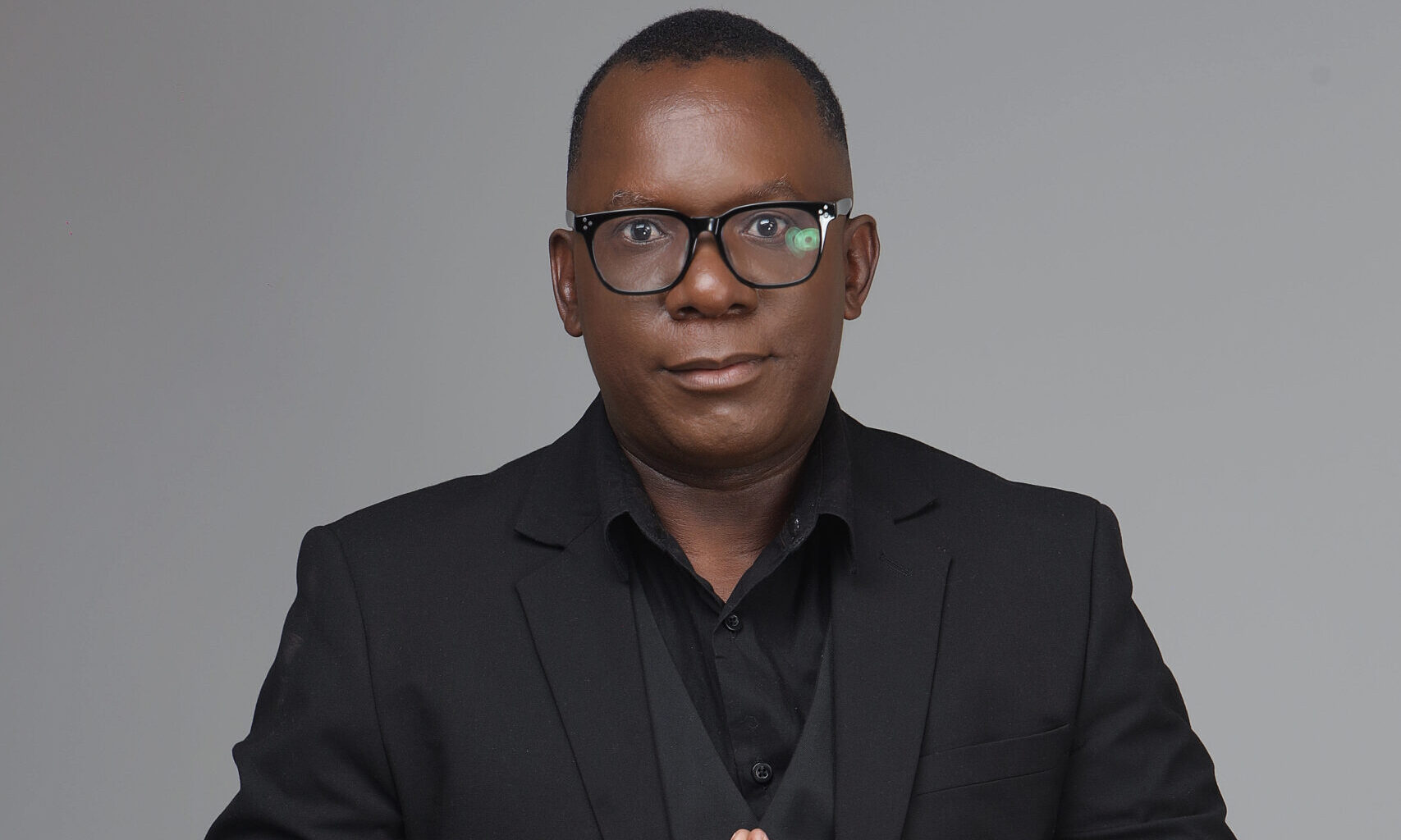
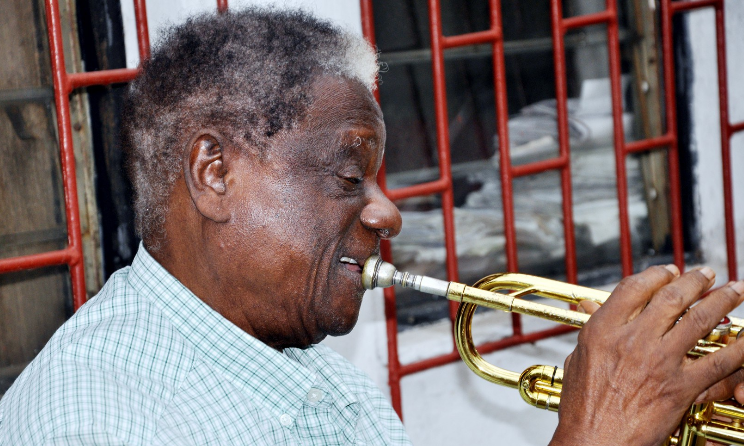
This is the second part of an interview with Nigerian record label executive Michael Odiong. Read part 1 here.
MUSIC IN AFRICA: What do you think of Nigerian music today?
Michael Odiong: From both personal and company perspectives, we have lost serious content. Lyrically, philosophically, everything. When you listen to, for example, highlife from the 1960s, it was about love. It was about reality. Olaiya could sing about love so much but it was not vulgar.
But Victor Olaiya could be accused of vulgarity.
You mean 'Omode n shey mi, sisi mi da / Olo jowo ko wa sun s’aya mi / Ko wa fun mi l’oyan tutu mu oh'? [Translation: I'm like a child, where is my lady? / Darling, come lie on my chest / Come and give me cold breastmilk to drink.]
Yes.
How many people understood Yoruba and what he was saying? 'Baby Mi Da' is a love song. Some of the lyrics get to the point. But the question is, is it that vulgar that people cannot listen to it? Listen to most of Lil Kesh’s lyrics. Listen and watch. Let’s not even look at the lyrics. Watch the videos of most of these young artists. It’s all about nudity. It’s all about alcohol.
Most of the songs that sounded vulgar back in the day were actually not aired by radio stations. You could only listen to it when your father bought a turntable and played it at home. Now we have a lot of stations not censoring anything. As long as the artist pays good money to the on-air personality, they play it.
The age of an artist making waves today is between 20 and 45. Those between 35 and 45 today grew up listening to songs in the 1970s, 1980s and early 1990s. A lot of people looked up to the likes of Evi Edna [Ogholi], Ras Kimono, Alex Zito, Alex Cole. But these guys all disappeared for greener pastures because of SAP. Ibrahim Babangida drove all of them away. Music wasn’t making money. International record labels left the country. Nigerian owners took over and of course the business was different. Maybe they were not being treated the way the oyinbos (whites) were treating them.
Are you saying Nigerian artists were treated better by white people?
A white man will make sure an artist is very comfortable. When others say, 'Look, you don’t have any content,' the white man sees the potential, takes it, pushes it and they see results. But the Nigerian case is not so. Once they say, 'You don’t have anything, everybody kills it there'. Sometimes they say, 'This one na my person, this is the person I want.' They bring in sentiments instead of business. So these guys left the country. The younger ones who were listening to their music, who were trying to be musicians, did not have any mentorship.
American hip hop was what they were listening to. And some said, 'Since this is here, let’s make something that's different. Let's say it’s Afro hip hop.'
Is this progress?
To a large extent it's not progress. It's progress in the sense of beats but not in terms of lyrical content. People say Nigerian movies like juju a lot. But in the real Nigerian environment, what happens? Do they not do juju? Whatever movie you watch is peculiar to its environment. Americans do not believe in juju. They believe in action. That's their society. Come to Nigeria, it’s a different ball game. Juju is the in thing.
Same with music. What has happened is lyrics-wise, they've learnt from the West instead of learning from Nigerian artists where music was all about developing consciousness in the minds of people. Listen to music from the 1970s and 1980s. 'Ilu Le' was recorded in 1973 by Victor Olaiya but is it not still relevant today?
Look at Ghana. No matter how hip hop you are, when you listen to Ghana music, you will know it's from Ghana because they haven't lost touch of Ghanaian highlife. And some of them are not as vulgar as Nigerian songs. They still have a culture that they fall back on. Listen to Congolese music. You cannot hear those hip hop things. How you convey the message is what matters. Like I told you earlier, 'Mofe mu’yan' (I Want to Suck Breast) by Victor Olaiya was vulgar back in the 1960s but it was only the elders who enjoyed it. It wasn’t for public consumption per se. But today, it's a different case.
That’s probably the one Olaiya song that has survived the years. It is the one he remade with 2Baba.
'Omo Pupa' and 'Mr John Show Me the Way' are there still. And because I initiated the concept for the remake I can tell you that 'Baby Mi Da' was not supposed to be the song with 2Baba.
We were to record 'Omo Pupa'. One day I went to meet the MD of Spinlet. We said, 'Look, why don’t we do Olaiya-2Face?' I said, 'Fine.' He got in touch with Efe [Omoregbe, 2face's manager] and Efe agreed. That was how we initiated that. We penned down 'Omo Pupa' to be done. And after two or three months trying to get them into the studio, they got the producer whose name I’ve forgotten. He did the beat but it wasn't until we got to the studio for voicing that we realised that it was not 'Omo Pupa' that had been sequenced.
'What do we do? Dr Olaiya are you going to flow with this?' He said, 'There’s no problem, we’re already here'. '2Baba? how far?' He said he was already writing his lyrics. And in less than an hour they had voiced it. Everything was done and when that song came out I didn’t believe that it was the same song. Because that wasn’t our intention. But somehow through providence, that came up and everybody was on point on the song.
A lot of our old music seems to be patronised by foreigners.
Maybe it’s a case of a prophet not being honoured in his own house. You go to Europe, UK, America and you see 20- to 30-year-old students studying African music, studying Nigerian music. They want to know the intrigue. What made this music unique? What made this artist different? What was the percussion used? Why was it used? What gives it the flair of music it is? They want to learn. But unfortunately in Nigeria, it is not the case. Rather, we are pursuing Western music which we are not even getting properly because we are not copying them the right way. Even the people playing Western music are now coming to Africa.
We have a very big issue that has to do with the psyche of the people in power. By power, I mean the brands. Who is in charge of the brands? If you have somebody who is 25 to 30 years old, how do you tell such a person that a Ras Kimono, Blackky or Uwaifo is relevant when he might not have even listened to their song? You understand? To him it will not sell. He’d rather take a Davido.
Is that wrong?
In a way it's wrong and in a way it's not. It's wrong in the sense that if you think that these younger ones, who do not really have that brand message but are using their face to sell music, are the ones who will bring in the money, then you have a long-term problem. Because the same way those artists reign is the same way you’ll keep on paying new artists that will come in. Because they do not have lasting content. But when you take somebody who has content, who has character, who people can identify with, it is easier to sell your brand.
Many hit songs have been forced on you by the radio stations who collect money to play them. So you listen to this person but not to this older person. This means we have to continue recycling new artists. We have to continue listening to different artists. You go to America and the UK, Madonna is over 50 and she’s still touring, making serious money. Can we afford to have a Victor Uwaifo tour this nation and fill a stadium?
Is this about distribution?
We have distributors in Lagos and Onitsha and they still buy Osadebe, they buy Celestine Ukwu, they buy Rex Lawson. They buy all those old ones. From our research, it’s not 60-year-old people who buy those songs. It's younger people.
The system on the ground is not favourable to our veterans. Every year they go and bring some veteran from the US. Brian McKnight, Chaka Khan and the rest of them. Why can’t you bring an Evi Edna to the same show to come and play? Two years ago, Blackky closed a show that Brandy and UB40 played. Nobody could meet his standard, even UB40 and Brandy. This wasn’t my judgement but the judgement of the people who watched the show. So are we saying that we don’t have veterans who can be paid good money to come and perform? Why do we have to bring foreign veterans? Is it because they’re foreign?
Why did it have to take Idris Abdulkareem to fight for Nigerian artists before they could be recognised? If he did not have that fight with 50 Cent, Nigerian artists would not be given the privileges they have today. It took one man to change that whole scenario.


Most popular
Call for applications: ACCES 2026 Emerging Artist Spotlight Competition
01 Oct 2026

Top amapiano songs of 2026
16 Feb 2026

Top Naija songs of 2026
31 Mar 2026

Top Afrobeats songs of 2026
19 Mar 2026
Open call: 2026 Gender@Work music industry training in Johannesburg
03 Oct 2026
AFRIMA 2026: All the winners
12 Jan 2026
Disclaimer: Music In Africa provides a platform for musicians and contributors to embed music and videos solely for promotional purposes. If any track or video embedded on this platform violates any copyrights please inform us immediately and we will take it down. Please read our Terms of Use for more.

Subscribe to our monthly Newsletter
Follow us on social media


Please log in to post a comment.