
























































By Thomas Rajula
According to a 2015 Price Waterhouse Cooper report, consumer spending on live music events in Kenya is set to grow, with a Compound Annual Growth Rate (CAGR) over the next five years of 3.8%. However, the report says live music is the smallest of the three music sectors and by 2017 will only account for 10% of music revenues in the country. This text explores the live music scene in Kenya.
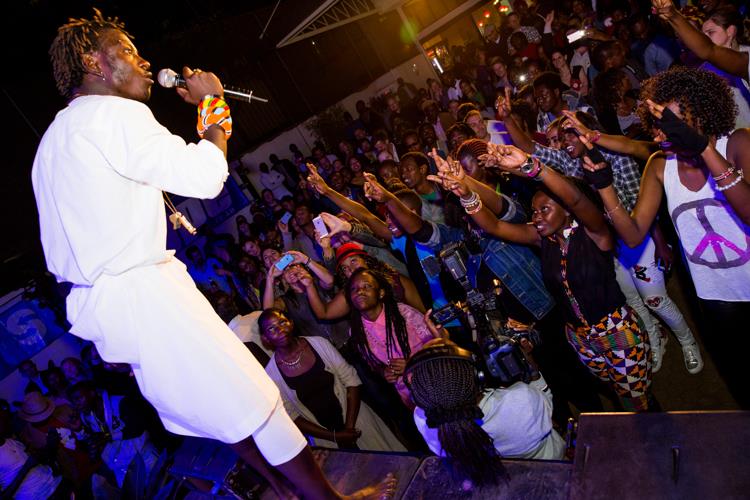
Festivals
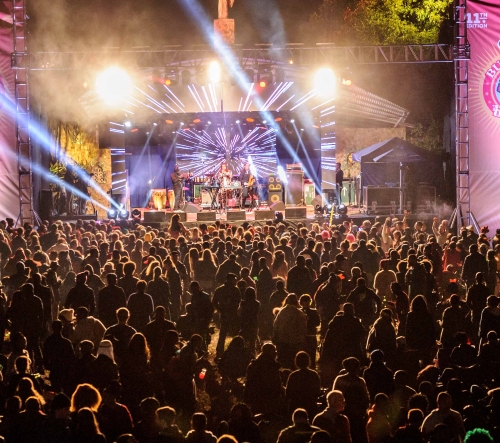
Nowhere else in Kenya is the live music scene as vibrant as it is in Nairobi. Arguably the entertainment hub of East Africa, there’s a big concert almost every month, while weekly live shows are countless. There are countless events and performances that go unnoticed all over the country. A quick browse through any of the local daily newspapers will reveal someone or a band performing at an entertainment establishment somewhere.
The most notable live music event in the country is the annual Kenya Colleges and Schools Music Festival[i], which celebrated its 89th edition over 10 days in August 2015. Traditionally, only African music is played at this event.
Hakuna Matata Festival and Koroga Festival[ii] are among the many events where one can experience live music. Another annual event, the Rift Valley Festival in Naivasha, has taken a break in 2015 but is set to come back in 2016. It is an annual festival that incorporates various forms of art and takes music enthusiasts out of the rather crowded Nairobi music scene.
Some counties have introduced cultural carnivals that run for a week or more. These promote tourism to the counties, as well as cultural exchanges between residents and visitors. For example, Marsabit Lake Turkana Cultural Festival (MLTCF)[iii] is now becoming a permanent fixture on the calendar for residents in Loyangalani town. The Mombasa International Cultural Festival is another good example due to the number of visitors (both local and international) that show up.
With live music performance being an avenue to showcase an artist’s talent, artists have been in the past frustrated by the lack of platforms where to showcase. It was out of similar frustrations that Blankets and Wine[iv] was born. The event, which was initially an afternoon of live music, quickly became a favourite, expanded to the coastal town of Mombasa before gaining popularity in Uganda and Rwanda. Founded in 2008 by artist and entrepreneur Muthoni Ndonga (aka Muthoni DQ), the event emphasizes live band performances rather than ‘playback’ shows using backing tracks. For this, she charged Kshs1000 (just under US$10) so that the bands could get paid. The event became very successful and did more than 50 monthly editions, before evolving into a two-day festival. The new music festival, Africa Nouveau, was held for the first time in September 2015 in Nairobi.
“The Kenyan music consumer has now become very conscious about vocal and instrumental delivery during shows, which prior to felt more like karaoke with a lot of lip syncing or shouting behind the tracks,” says Muthoni of the event’s focus on live music performances.
Corporates have also jumped on the bandwagon. Safaricom, Kenya’s largest mobile phone network, leads the way in this regard. The company has sponsored the annual Safaricom International Jazz Festival[v] since 2014. The festival was created to give Kenyan music lovers an avenue to savour local and international jazz talent. Due to huge public interest in the event, Safaricom has now created the Safaricom Jazz Lounge, a series of more intimate events that lead up to the main festival. Through these events, Safaricom supports Ghetto Classics, a Korogocho-based music programme that seeks to use music education to instill life skills in youth, so far supporting more than 300 youth from the informal settlements.
Jameson Live Party[vi], sponsored by Jameson whiskey, is usually an end-of-year party with live performances by international artists. The 2015 edition takes place at Ngong Racecourse on 12 December.
Nairobi will soon witness the birth of yet another festival. The One Africa festival will be staged at Nairobi’s Kenyatta International Conference Centre on 5 December 2015.
Venues and regular club events
Top venues for hosting music events in Nairobi are Ngong Racecourse, Carnivore Grounds, Mamba Village, Nairobi Arboretum, Safaricom Kasarani Indoor Stadium and Kenya International Convention Centre. Nationwide there’s Machakos People’s Park and Machakos Golf Club in Machakos, Pirates and Mombasa beaches in Mombasa, Diani Beach in Diani, Jomo Kenyatta Sports Stadium in Kisumu and Athletics Club in Nakuru. Cultural centres active in promotion of live music include the local Goethe-Institut and Alliance Francaise in Nairobi.
The music on offer typically reflects the region itself. Bar events usually showcase mostly ethnic/region-based genres locally referred to as Bango or Taarab (from the coastal region), Mugiithi (from the central region) Katitu (from eastern) and Benga (from the lakeside), among others. Media outlets such as Royal Media have been instrumental in the sponsoring club nights.
One popular platform where one can experience live music with the artist performing their own songs (as opposed to cover versions) is the weekly Thursday Nite Live concerts[vii]. Abdi Rashid Jibril runs the hugely popular event in Nairobi under his promotion company Roots International, which has been running now for more than three years. The event is held at Choices Club in Nairobi’s Industrial Area. “For the last four years, Thursday Nite Live has provided music lovers of all stripes, predominantly middle management type professionals, internationals and cultural workers, with great music by the artists themselves,” explains Jibril.
Jibril is expanding the scope of his event. On 20 September 2015, he organized the first Cool Waters Jazz Festival, which featured Aly Keita (Ivory Coast), Kareyce Fotso (Cameroon), Ayub Ogada and Isaac Gem (both from Kenya). “These are platforms for original music, expansion of audience experiences of music and economic means for all involved. We have nice aesthetics, a good sounding room, and various spaces - both indoors and outside - for audiences and TV screens in all those spaces for people to feel part of the concert,” adds Jibril. Besides the event at Choices and now the festival, he is also a production coordinator for Sondeka Festival, a three-day exhibition that celebrates all creative arts, including music and literature, at various locations in Nairobi between September and October.
Another popular live music venue, Pawa 254 in Nairobi hosts Rooftop Sundowner[viii], a great musical experience every first Friday of the month between 6pm and 10pm. The programmer for the event, Sarah Malliah, says Rooftop Sundowner parties provides a platform for authentic, often non-commercial, East African artists who are committed to creating socially conscious music that educates and uplifts society. “We aim to offer audiences with an alternative, memorable musical experience. There is a large community of talented artists in East Africa. However, there are many barriers for these artists to gain country- and region-wide exposure. Rooftop Sundowner aims to mitigate these barriers,” explains Malliah.
‘Live at the Elephant’, on the other hand, takes place on the last Friday evening of every month. The event’s manager, Marvin Maveke, explains the names were to show the proprietors’ support for animal conservation. “The Elephant - previously known as Kifaru (Swahili for ‘rhino’) - serves as office space for Rainmaker Ltd., a music production company. Kenya’s renowned artist Eric Wainaina and Sheba Hirst had been searching for a venue where he would be performing every week. This proved to be very difficult and thus they decided to turn the garden space into a performance venue,” explains Maveke.
The monthly GoDown Gig[ix] is another fun-filled platform designed to showcase local talent at its best, and is open and free for audiences from all over Nairobi. Typically, the gig stages three local bands of diverse styles including Afro-fusion, benga, genge and Afro-jazz.
Rainmaker recently set up a partnership to host an East African artist every quarter to come to Nairobi. Following this agreement, the selected artist will perform from Thursday through to Saturday (at Thursday Nite Live at Choices, Live At The Elephant and The GoDown Gig).
Whether one is looking for homegrown music, hip-hop or reggae, the Nairobi musical will not disappoint. Nairobi Rhapsody is a hip-hop themed event that takes place every Thursday night at Ebony Lounge, located in Nairobi’s Museum Hill area. Buddha Blaze, co-founder and artist developer under Spark Africa, explains why he sees a need to have a purely hip hop event in a sophisticated establishment:
“We’re celebrating hip-hop. I felt there was no place someone from the corporate world could actually go to enjoy hip-hop music. Nairobi Rhapsody tries to give back to the four elements of hip-hop: DJs, artists, break-dancers and graffiti. Sometimes you’ll have one without the others, of course. We don’t like to force anything; everything’s pretty organic. We’re just being authentic to the culture”. Attracting a mature, up-market crowd mainly because of the club’s location, Buddha stresses that everything is about connection; it’s a movement. In 2015 Nairobi Rhapsody has played host to international artists including Talib Kweli, South Africa’s K.O, Erykah Badu and Mos Def (aka Yasiin Bey).
For reggae lovers, Bad Mambo Productions host the Rub-A- dub concerts to introduce UK soundsystem culture to the Nairobi musical panorama. Featuring Caribbean genres ranging from calypso to dubstep and anything in between, the objective is to free people’s perceptions and show that reggae music can be inclusive, forward thinking and enjoyed by all. On 9 October 2015 Bad Mambo hosted Scotland’s Mungo’s Hi-Fi.
Ticket prices vary greatly. While some events are free and cultural centres such as the Goethe-Institut try to keep entry fees to concert at a bearable minimum of around Kshs 500 ($4.85), other events may charge up to Kshs10000 (US$95) or more for live shows, depending on whether the artist is local or international. On average, however, tickets usually have a standard price of Ksh1500 ($14.50), while VIP tickets are usually around Ksh5000 ($48).
Promoters
Besides the promoters already mentioned, Kenya is home to several reputable event management companies. True Blaq[x] was established in 2001 and has been involved in hosting music events such as the annual Extravaganza that features both local and international artists. On 3 October 2015 True Blaq hosted the Morgan Heritage concert at the Kenyatta International Conference Centre. HomeBoyz Entertainment Limited[xi] was formed in 1992 as a small DJ agency catering for weddings and house parties. The company has since grown to be one of the biggest and most influential entertainment companies in the region. MoSound Events[xii] was formed in 2004 and has been instrumental in organizing music events such as the annual Groove Awards.
The above promoters, festivals, venues and club events provide a brief overview of Kenya’s thriving live music scene.


Most popular

Top Naija songs of 2026
31 Mar 2026
Ghana: Mr Eazi and MOLIY’s ‘Comfort’ earns Urban Music Awards nomination
21 Oct 2026

Top Afrobeats songs of 2026
19 Mar 2026

Top amapiano songs of 2026
16 Feb 2026
Open call: CANEX Music Business Lab and Songwriting Camp
15 Oct 2026
Nigeria: CANEX WKND unveils 2026 programme
21 Oct 2026
Disclaimer: Music In Africa provides a platform for musicians and contributors to embed music and videos solely for promotional purposes. If any track or video embedded on this platform violates any copyrights please inform us immediately and we will take it down. Please read our Terms of Use for more.

Subscribe to our monthly Newsletter
Follow us on social media


Please log in to post a comment.