
























































This text presents an overview of the live music scene in Sierra Leone.
Background
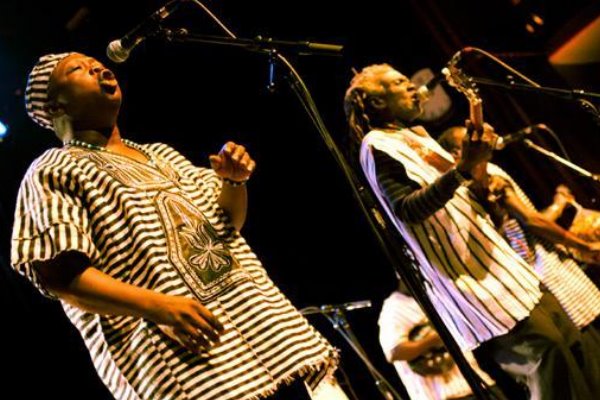
Historically, the active live music1 scene in Sierra Leone (SL) can be traced to the 1960s and '70s with the Morning Star Band (1965) formed by SE Rogers, the Sierra Leone Military Bands OAU 1 and OAU 2 (1980s) formed by Big Fayia, Sabanor 75, Afro Combo, Afro National, Magic System, Ebenezer Calendar’s Maringar Band and others2. Cultural music like bubu3 and gumbe4 by Dr Olor and the Milo Jazz emerged in the early '80s. These bands toured the country and beyond, performing their proprietary hits as well as renditions of zouk, Congolese soukous, Caribbean reggae, calypso and jazz, which were popular in those days.
Live music died out just before the new millennium, primarily due to the civil war. It was at the start of the new millennium that SL saw the revival of live music with the birth of new bands, the resurgence of old bands, the emergence of grand show promoters and the construction of new venues.
The live music revival
Only five years ago, there was no significant clamour for live music and concerts were mostly powered by playback. This has changed with the rise of young, energetic and trendy musicians labelled ‘new school’5 artists, among them Yung Sal, Drizilik, Empress Pee, Prodigy Sim and the duo Kracktwist & Samza.
It so happens that this new wave of entertainers started their careers practising and performing with live bands whereas many older artists’ on-stage experiences are limited to playback and miming. In some instances, the new school/old school stage performance contrast has been clearly laughable6. The new school artists have made some of the biggest hits in the past three years. Their tours and album launches have always been with a band – consequently making them live music evangelists.
Bands, gigs, venues
The live music scene is fueled by a handful of bands available for hire for tours and concerts throughout the year. Most live music concerts are held in festive seasons, notably in December (Christmas, Boxing Day and New Year) and April (Easter and SL Independence celebrations). Although there is a concentration of bands in the capital Freetown, there are many bands across the country.
The Groovy Colors Band owned by the Ballanta Academy of Music7, one of two music schools in the SL, boasts the most technically competent instrumentalists and vocalists in the country. Ballanta is the alma mater of some of Freetown’s most skillful instrumentalists such as multi-instrumentalist Christian George and vocalist and voice coach Jocelia Gbondo. This band is the choice for the show promoter whose aim is to produce a technically precise rendition of musical works with an added-value backup choir.
Another respected live band is MME8, owned by the aforementioned Christian George. MME comes with most of the instrumentalists who work with Ballanta and also has a sound system that can cater for a 2 000-seater closed auditorium. Like Ballanta, MME comes with professional musicians and can deliver at nearly the same calibre. MME plays at Quincy’s Night Club9 Reggae Night on Fridays and at Golden Tulip Kimbima Hotel on Saturdays.
The Prison Band10 is run by the Sierra Leone Correctional Services – a standalone band with vocalists and a mobile PA system available for hire. The Prisons Band plays at PaDemba Road Prison Canteen on Fridays and Saturdays.
John Bee Band11 is a well-equipped group available for hire. They are relatively new and usually hired for ceremonial occasions and not so much for concerts.
The Afro Combo Dance Band is one of the oldest operating bands in the country, reputed for producing the best experience for older audiences. They perform their proprietary hits as well as older SL music and (Congolese) soukous. Every Friday, they split into two – one set plays at China House12 for an entrance fee of Le5 000 (about 70 US cents) and the other plays at Dee’s Baza Bar (free entry).
There are two major bands in Bo, the second largest city in SL: After Work Band and Kakua Music Academy. After Work Band is the most popular in Bo. Every weekend, they play at the self-titled After Work Bar, located by the Town Center fuel station for which entrance is free. After Work plays mostly a mixture of ragga, dancehall reggae and highlife. Kakua Music Academy, the one of two music schools in the country, has the best band in the south and probably the only band from outside Freetown worth mentioning. They draw large crowds to Multipurpose Hall in Bo where they play on Fridays for an entrance fee of Le10 000 or ($1.40). They placed third in the 2016 Live Band Competition13.
Although the list of live bands builds up with time and their proficiency lends to an impressive learning curve, yet, searching SL far and wide, no band can stand the superior blaze of the incomparable Freetown Uncut Band (FUB). FUB is managed by Esther Kamara14 and owned by Tom Cairnes, a British fund manager who happens to be an avid singer and guitarist and also owner of the famous O’Casey’s Bar. Freetown Uncut is currently the most sought after band in SL having covered all the biggest musical concerts in the past three years – from visiting international artists to almost every major album launch and tour. FUB is mostly associated with the new school artists and are proficient in contemporary Afrobeat, hip hop and Afro-pop.
Freetown venues
Freetown has a number of live music venues. For lack of wider and more controlled venues, most bigger concerts15 are held at the 30 000-seater National Stadium, on the open Lumley Beach and other stadiums across the country. The foremost live music venue is O’Casey’s16, home to FUB. This bar has live music events throughout the week, the most popular night being on Friday when several live bands in the city perform back to back. FUB plays Afrobeat and Afro-pop, the Jeliba’s Band plays traditional music and Jah Man & the Sierra Wailers17 play reggae. There are a few other bands that also perform on Fridays. On Sundays, The Dreams Traditional Band plays live reggae music. Entrance at O’Casey’s18 is free.
Papaya Bar and Restaurant also hosts live music on Fridays with the Sundowners, which is a cover band that plays a variety of genres. Entrance is free.
Both O’Casey’s and Papaya are favorites for expatriates, tourists and the upper class Sierra Leoneans while China House hosts a more diverse audience of mostly middle class, white-collar Sierra Leoneans, civil servants and top government officials.
Festivals
Freetown hosts two major music festivals throughout the year: Ma Dengn19 and Freetown Music Festival. Ma Dengn combines live music, fashion, art, dance, spoken word and music performance in a two-day festival mostly held in December in Freetown for an entrance fee of Le3 000 ($5) per day20. Ma Dengn 2016 was its sixth edition. Ma Dengn attracts a high number of Sierra Leonean diaspora on holiday as well as tourists.
Freetown Music Festival21 is a two-day annual fashion, music and dance concert produced by Freetown Uncut. It is normally held on Lumley Beach in Freetown. This is the second biggest music festival in SL and is a huge tourist attraction, second only to Ma Dengn.
New School Uncut22 is live musical concert produced by Mastermind Group23 – reputedly the godfathers of the new school music. The first show, held in December 2016 at Family Kingdom Hall24, was sold out. It featured leading new school artists Yung Sal, Drizilik, Block Jones, Kracktwist & Samza, Empress Pee, Prodigy Sim and many supporting acts performing alongside the Freetown Uncut Band. It was reputedly the best produced musical concert of the year. It is planned to be a yearly event headlined by the best performing new artists of the reference year. The next edition is set for December 22, 2017.
Promoters
There are only about three known promoters strictly dedicated to producing live music concerts: Freetown Uncut, Ma Dengn and Mastermind Group. However, given the increasing demand for live music as opposed to miming and playback, the biggest show promoters – DJ Boxx25 and his Boxx Productions26, The Best Squad (TBS)27 and DJ Slow28 – are all beginning to adopt live music as revealed in recent radio interviews about their future concerts.
Conclusion
SL's live music scene is fast catching up with global trends when it comes to logistics, production and capacity. Promoters recruit both local and international hitmakers to grace their stages.
The constraints lie in the unavailability of high capacity closed venues and the apparent slow pace of appreciation for live music by people beyond Freetown. With the growing adoption of live music by the biggest Sierra Leonean promoters, Freetown has a chance of becoming a top live music destination in West Africa.
Notes


Most popular

Top Naija songs of 2026
31 Mar 2026

Top Afrobeats songs of 2026
19 Mar 2026
Ghana: Mr Eazi and MOLIY’s ‘Comfort’ earns Urban Music Awards nomination
21 Oct 2026

Top amapiano songs of 2026
16 Feb 2026
Open call: CANEX Music Business Lab and Songwriting Camp
15 Oct 2026
Nigeria: CANEX WKND unveils 2026 programme
21 Oct 2026
Disclaimer: Music In Africa provides a platform for musicians and contributors to embed music and videos solely for promotional purposes. If any track or video embedded on this platform violates any copyrights please inform us immediately and we will take it down. Please read our Terms of Use for more.

Subscribe to our monthly Newsletter
Follow us on social media


Please log in to post a comment.