















































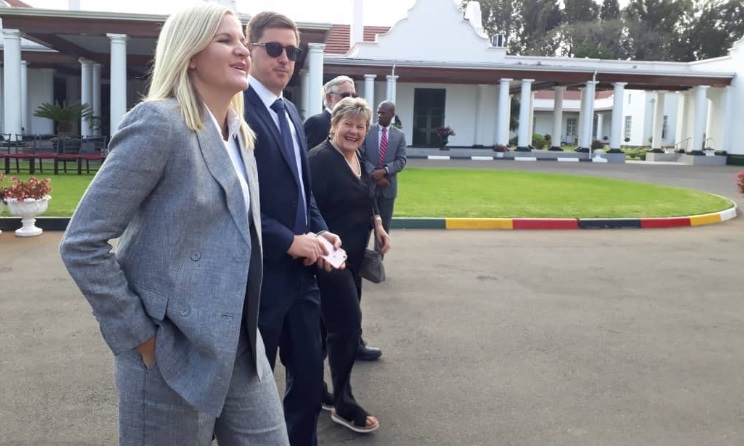
The appointment of former swimmer and Olympic gold medallist Kirsty Coventry as Zimbabwe's new minister of youth, sport, arts and recreation has ushered in a wave of hope among Zimbabweans. The biggest challenges in the country's arts industry surfaced during former president Robert Mugabe’s administration, which was characterised by corruption and poor policymaking. Many ministries went through a plethora of challenges including a regressive economic environment.
The incumbent President Emmerson Mnangagwa, who took over from Mugabe in November, appointed Kazembe Kazembe as the arts minister shortly after snatching power. During his 10-month tenure, Kazembe planned workshops and development programmes. But these never saw the light of day, despite numerous promises at a time when Zimbabwe was preparing for elections. Critics say Kazembe was paying lip service to the electorate ahead of August's elections, which Mnangagwa won despite an appeal from the opposition.
“I am honoured to be appointed by President Mnangagwa as Zimbabwe’s Minister of Youth, Sports, Arts and Recreation,” Coventry wrote on Twitter following her appointment last week Friday. “I will continue to carry our flag with pride and dedication of service so we can come together and take Zimbabwe forward. God bless you and God bless Zimbabwe.”
In a video interview with local media, Coventry said: “It’s an exciting time and opportunity to create empowerment for our youth through sport, art and recreation through creating platforms and support to our athletes and artists so that they can grow and shine and be recognised internationally.”
Ray of hope for the arts
Now that Coventry is at the helm of the ministry, most Zimbabweans are hopeful that the new minister will resuscitate the arts sector in the country. Music In Africa spoke to music critics, journalists and industry players about Coventry’s appointment.
“Her appointment speaks renewal, it speaks new possibilities and new imagination," music critic Plot Mhako said. "She has conquered the world of sport and I think that same spirit will positively impact music and arts. The sector will be definitely revived, it’s not business as usual.
“She is coming from a politically neutral background and I am optimistic that if allowed to work without impediment, she can revive the sector. The euphoric reception she has received speaks volumes. It is such energy and optimism that the arts sector longed for to move forward.”
Arts journalist and blogger Jonathan Mbiriyamveka said Coventry's appointment, albeit a positive development, constituted political grandstanding.
“The appointment is a great one on so many levels," he said. "Level one, it’s a cynical PR stunt to help the government project the perception of inclusivity using the Kirsty brand. "Level two, it’s sort of brings sanity to problematic areas in sport and arts whereby there was a sickening culture of corruption and other shenanigans by those in authority. Level three, Kirsty will be the face of the ministry locally and abroad such that wherever she goes people will listen. Insofar as policy and development is concerned her work is cut out.”
Mbiriyamveka said there was no doubt that Coventry would revitalise the arts sector. “There is definite hope for the future, not just in sports but across the ministry because she appears to be ready to learn. Where she needs to be firm is policy implementation and development. In the arts there is need for growth and turning the sector into an industry. In sports, well, she is hands-on.”
But arts and culture advocate Chamunorwa Mashoko said current policies, if not changed, would dent Coventry's efforts of improving the industry.
“Her delivery is going to be largely determined by a number of factors, chief among them effective sports and arts policies implementation. Hope is critical and I am optimistic that once firm systems are put in place, improvements will be realised,” he said.
Is the new minister a panacea for Zimbabwe's arts industry?
Change in Zimbabwe's creative industry will depend largely on policy formulation and implementation, which will establish the boundaries of ethical behaviour and set guidelines for best practices. Introducing an effective cultural policy would trigger clear standards on how industry players should operate in the sector.
"Coventry has exposure to international practices on the sports front and it’s the same ethics and values that apply to the arts," Mhako said. “The solution lies in the creation of an enabling environment by the government, which the new minister is part of. A new way of thinking and doing business will inspire confidence in the corporate world, the audience and the global arts community. Therefore, she is part of the solution but the onus is on us as creatives to rally behind her efforts.”
Mbiriyamveka said the solution to the country’s challenges in the arts industry should be tackled by employing a collective approach. “A minister is an individual but what the industry needs is a group of like-minded people. She's said that she is open for suggestions and advice. So an industry is about many individuals, not just one person.”
Mashoko concurred: “Teamwork and resources are critical, hence the need for financial support for sports and arts."
Where should Coventry start?
The minister this week said that she would work with the permanent secretary in her ministry to address the main challenges in the music industry, such as piracy.
“There are three vital things that need to be taken care of right away," she said without elaborating further. "That’s where I will be leaning on the permanent secretary and the staff within the ministry. We are also going to investigate a few different areas so that things can be put in place to stop that [piracy].”
Mhako said Coventry should look at a number of key areas in the arts sector as a matter of urgency.
“The first port of call should be engagement with the players to understand their needs," he said. "Secondly, there is need for an overhaul at the National Arts Council, the Zimbabwe Music Rights Association and the Board of Censors. I think the arts policy should be revisited and be driven by the stakeholders’ needs and aspirations. The policy should not exist in isolation but be in synch with the national vision and other policies in education, tourism, broadcasting and foreign affairs. This can help create a holistic approach that aids the creation of a viable industry which contributes to the fiscus, tourism, brand Zimbabwe and global diplomacy.”
Mbiriyamveka said: "An issue that she can lobby is taxation. Our arts sector is one of the most heavily taxed sectors in the country. Artists pay a lot of taxes to just perform and import instruments.”


Most popular
Open call: 2026 Gender@Work music industry training in Johannesburg
09 Oct 2026

Top amapiano songs of 2026
16 Feb 2026
Call for applications: ACCES 2026 Emerging Artist Spotlight Competition
01 Oct 2026

Top Naija songs of 2026
31 Mar 2026

Top Afrobeats songs of 2026
19 Mar 2026
AFRIMA 2026: All the winners
12 Jan 2026
Disclaimer: Music In Africa provides a platform for musicians and contributors to embed music and videos solely for promotional purposes. If any track or video embedded on this platform violates any copyrights please inform us immediately and we will take it down. Please read our Terms of Use for more.

Subscribe to our monthly Newsletter
Follow us on social media


Please log in to post a comment.